











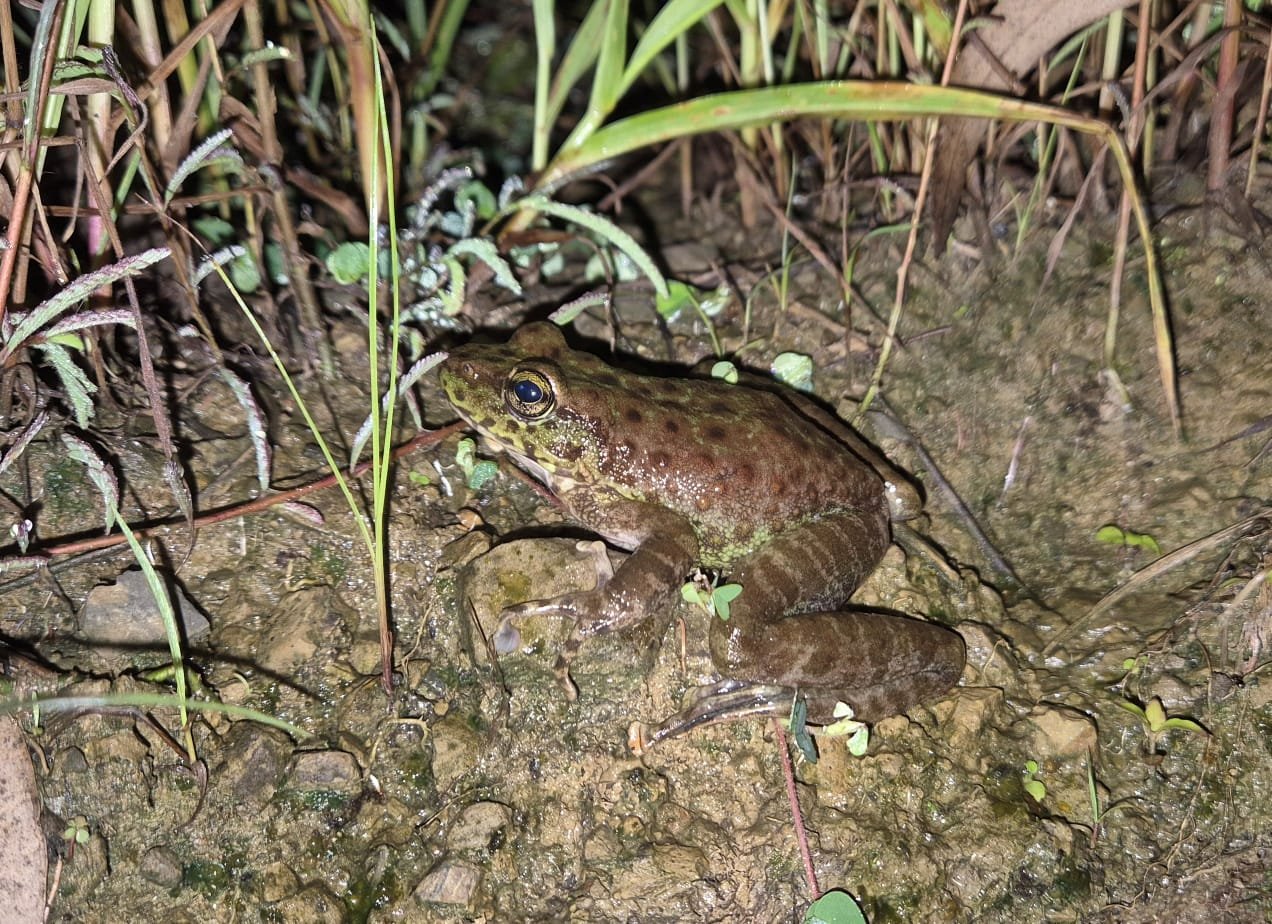
Shillong, May 29: A team of researchers has described a new species of cascade-dwelling frog from Nagaland.
The new species, named Amolops kamal, was discovered from hillstream habitats near Singrep village in Kiphire district during a field survey conducted in August 2024 by scientists of the Zoological Survey of India (ZSI) Shillong.
Integrative taxonomic analyses, including molecular phylogenetic studies carried out in collaboration with scientists from ZSI Pune confirmed that the specimens represent a distinct evolutionary lineage within the Amolops indoburmanensis species complex.
Speaking on the discovery, the ZSI Director Dhriti Banerjee emphasised that sustained faunal exploration and scientific documentation are vital for understanding and conserving India’s biodiversity. The discovery of A. kamal highlights the rich yet understudied faunal diversity of the North East and underscores the importance of long-term field surveys in biodiversity hotspots.
Bikramjit Sinha of ZSI Kolkata, who led the field expedition, noted that the frog was encountered from a fast-flowing hillstream habitat. He added that the rugged landscapes and isolated stream ecosystems of the region continue to harbour many poorly known amphibian lineages.
The lead author of the study, Bhaskar Saikia of ZSI Shillong, named the species after the late Kamal Choudhury, his teacher and mentor who inspired his interest in zoology and taxonomy during his undergraduate years at B Borooah College, Assam.
The research has been published in the latest issue of the journal Records of the Zoological Survey of India. The research team included Bhaskar Saikia, Bikramjit Sinha, A Shabnam, Prabir Narayan Konwar, Mridul Kumar Borthakur and KP Dinesh.