






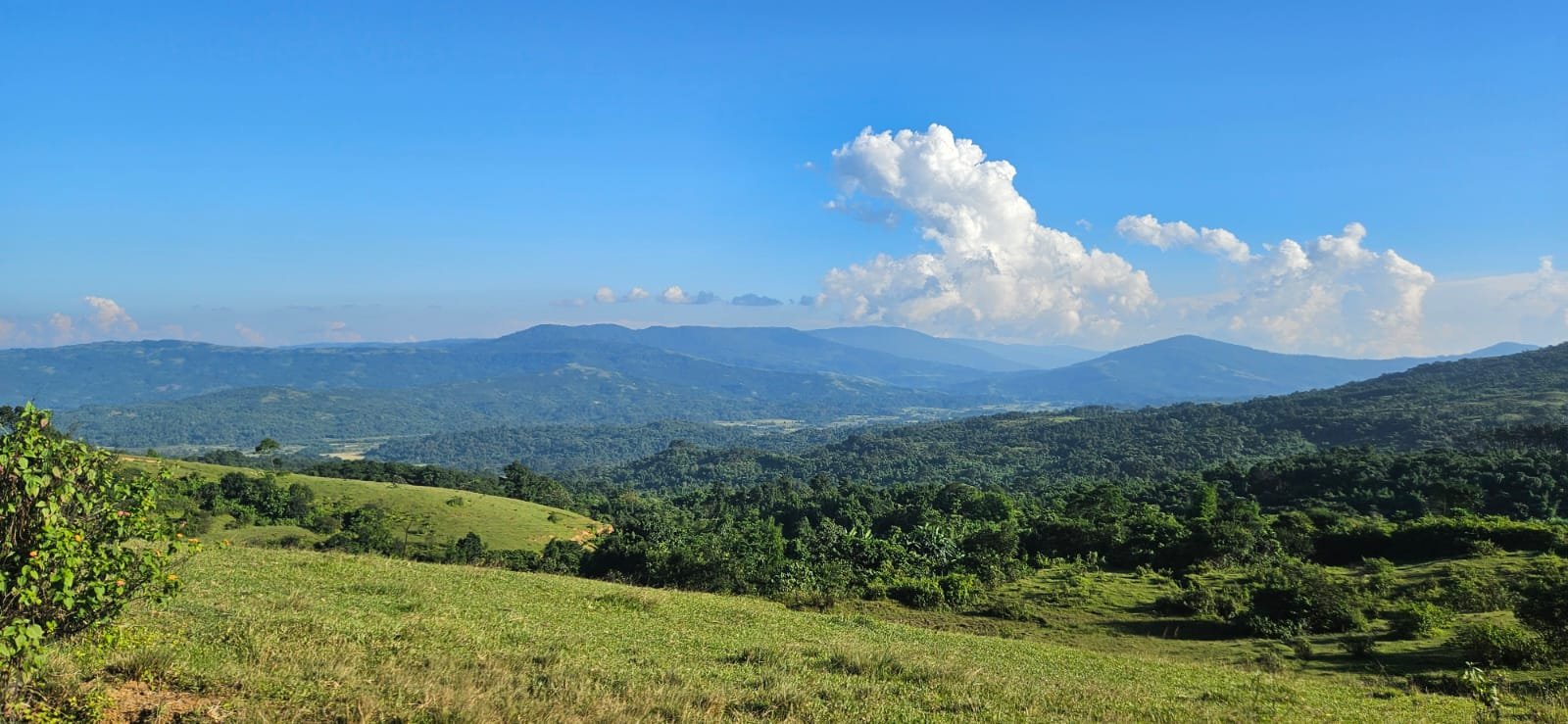
Khliehriat, May 1: Four local advocates have lodged a formal objection with the Meghalaya State Pollution Control Board (MSPCB) against the proposed limestone mining project by Shree Cement at Lum Syrman in East Jaintia Hills.
The advocates, Dawanmon Pachiang, Jimmy Pdang, Federick Muliar and Bebulme Sympli of the District & Sessions Court, Khliehriat, stated that this project poses a grave threat to the ecologically vital Litein River, a lifeline for local agriculture and biodiversity.
The objection submitted highlights that the project’s 217.394-hectare lease area directly abuts the Litein River. Advocate Pachiang said that the serene waters of the river and surrounding fertile paddy fields are under imminent threat. “The EIA admits that water bodies will be impacted, and without a mandated 1 km buffer zone, we risk turning our local river into a drainage channel for mine runoff,” he added.
The advocates firmly indicate several legal and environmental grounds for their objection. Firstly, they point out that the project should be classified under Category A, requiring more stringent evaluations. Instead, it has been misclassified as Category B1 to evade necessary scrutiny, contravening the EIA Notification, 2006.
They said that the Terms of Reference (TOR) falsely claim no rivers, streams, or reserved forests exist within 10 km. The EIA report itself contradicts this, acknowledging the Litein River touching the boundary and the Saipung Reserved Forest within 4 km. The report also admits to dense forest cover (49.78%), sacred groves, and 40 medicinal plant species, demolishing the claim that the area is barren wasteland.
The existence of caves like Krem Rynge, hosting rare aquatic species, has been allegedly concealed during field surveys. The EIA documents the presence of rich biodiversity, including Schedule I species under the Wildlife Protection Act, 1972 – Capped Langur, Leopard, Great Pied Hornbill, Himalayan Vulture – and threatened flora like Ashoka (Endangered). The forest is a community-managed sacred grove forming part of the Saipung Reserved Forest range.
Furthermore, the advocates have raised alarms regarding potential contamination of water resources, and they urge the public to scrutinize the draft Environmental Impact Assessment (EIA) report for potential flaws and contradictory disclosures.
The advocates are calling on citizens, community leaders, and environmental defenders to read the draft EIA and understand the potential irreversible damage this project may inflict.
“The truth is hidden in plain sight within the pages of that report — on pages 34, 50, 51, 96, 111, 136, 160, and 163–166 you will see the admissions of river impact, dense forests, sacred groves, and endangered species. We are calling on the people to arm themselves with this knowledge and raise their voice before it is too late,” Pdang, another signatory said.