











By Dipak Kurmi
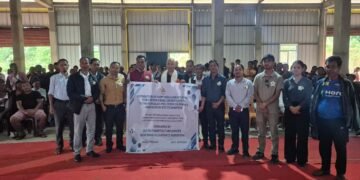
The mist that drapes the verdant folds of the Eastern Himalayas often conceals a profound tension between the ambitions of a burgeoning nation-state and the primordial rhythms of the indigenous communities that have guarded these slopes for millennia. At the heart of this atmospheric theater lies the proposed 11000 MW Siang Upper Multipurpose Project in Arunachal Pradesh, a colossal endeavor that promises to be the largest hydroelectric undertaking in Indian history. After years of simmering discord and resolute defiance from local tribes, the project has recently pivoted toward a definitive stage, marked by a significant shift in local sentiment where approximately 70 percent of the inhabitants likely to be impacted have finally appended their signatures to Memorandums of Understanding. These documents facilitate the commencement of preliminary feasibility studies and allied technical reports, yet the ink remains wet upon a canvas painted with historical skepticism. For years, this behemoth ran into tempestuous weather, with entire villages declaring a resolute and unanimous non-consent for any surveys or environmental clearances, fearing that the concrete curtains of a mega dam would permanently sever their connection to their ancestral lands, identities, and traditional livelihoods.
The impetus behind this monumental intervention is not merely domestic energy thirst but a complex tapestry of strategic posturing. The Indian government views the Siang project as a vital geopolitical countermeasure to Chinese dam-building activities on the Yarlung Tsangpo, the upstream progenitor of the Siang. By establishing prior use and securing water rights through this infrastructure, New Delhi hopes to fortify its position in a high-stakes hydro-diplomacy game where water is increasingly weaponized as a tool of regional dominance. However, the logic of national security often operates at a cold distance from the visceral realities of those living on the frontlines of ecological change. The concerns articulated by the indigenous Adi community and other local groups are far from trivial; they are grave anxieties regarding the alteration of the river flow regime, the potential for catastrophic downstream impacts, and the irreversible dilution of cultural heritage. Any study aimed at assessing these risks must transcend the narrow administrative confines of the National Hydroelectric Power Corporation (NHPC), as an internal audit by the implementing agency is inherently susceptible to confirmation bias.
To lend genuine weight and moral authority to the project’s progression, the subsequent phases of investigation must invite the participation of impartial scientific bodies and independent environmentalists. The region in question is one of the most geologically and environmentally fragile zones on the planet, situated within a high-seismic corridor where the Earth’s crust is still actively heaving and settling. The Eastern Himalayas are a sanctuary of biodiversity, home to countless endemic species and riverine ecosystems that are already under duress from global climatic shifts. A comprehensive Environmental Impact Assessment is not just a regulatory hurdle to be cleared at the Union Ministry of Environment and Forests; it must be a rigorous, soul-searching inquiry into whether such a massive modification of the landscape is even survivable for the local flora and fauna. Experts have long harbored apprehensions about the federal vision to transform Arunachal Pradesh into the electricity capital of India, arguing that such a monocultural economic approach ignores the multifaceted value of the state’s untouched forests and free-flowing rivers.
The persistent inclination of the Centre to impose a monolithic developmental will upon the periphery often relies on the oft-repeated logic of a national perspective. This perspective, however, frequently functions as a convenient veil, obscuring the intricate diversity of India’s landscape, geology, and ethnic tapestry. Adopting a one-size-fits-all formula for energy production in a region as unique as the Northeast is a maneuver that borders on professional arrogance and ecological folly. The life-giving water bodies that sustain agriculture and traditional riverine economies are already being depleted by upstream damming and large-scale irrigation projects elsewhere. To introduce an 11000 MW intervention without an exhaustive, transparent, and multi-disciplinary scientific study would be to invite a disaster of unprecedented proportions. The history of large dams in the Himalayas is littered with cautionary tales of siltation, unforeseen seismic triggers, and the social disenfranchisement of thousands who were promised progress but received only displacement and the erosion of their communal spirit.
For the Siang project to proceed with any semblance of ethical integrity, the dialogue must move beyond the mere procurement of signatures on MoUs. True consent is an ongoing process of consultation and mutual respect, not a transactional moment in a pre-feasibility stage. The scientific community must be empowered to look at the entire gamut of issues, from the micro-details of butterfly migration to the macro-consequences of altered sediment loads in the Brahmaputra plains downstream. If the objective is truly energy and water security, then that security must also extend to the smallest village in the Siang valley. A developmental paradigm that sacrifices the specific for the general, or the indigenous for the industrial, risks hollowing out the very nation it seeks to empower. As the project inches forward from its survey stage, the eyes of the world, and more importantly the eyes of the local guardians of the Siang, will be watching to see if the roar of the turbines will eventually drown out the ancient songs of the river.
The destiny of the Siang River should not be decided in the air-conditioned corridors of power in New Delhi or through the strategic lenses of military planners alone. It must be forged through a careful and sensitive approach that honors the sanctity of the Eastern Himalayas and the people who call them home. The transition from 100 percent non-consent to a tentative 70 percent agreement represents a fragile opportunity for the state to prove that it can be a partner rather than an interloper. If the subsequent scientific assessments are impartial, thorough, and inclusive, there may yet be a path that balances the country’s strategic necessities with the preservation of its most precious ecological and cultural treasures. However, should the process be rushed or the scientific warnings ignored, the Siang project may stand not as a monument to Indian engineering, but as a testament to the perils of ignoring the delicate balance between man, water, and the ancient earth that supports them both.
(The writer can be reached at dipakkurmiglpltd@gmail.com)