











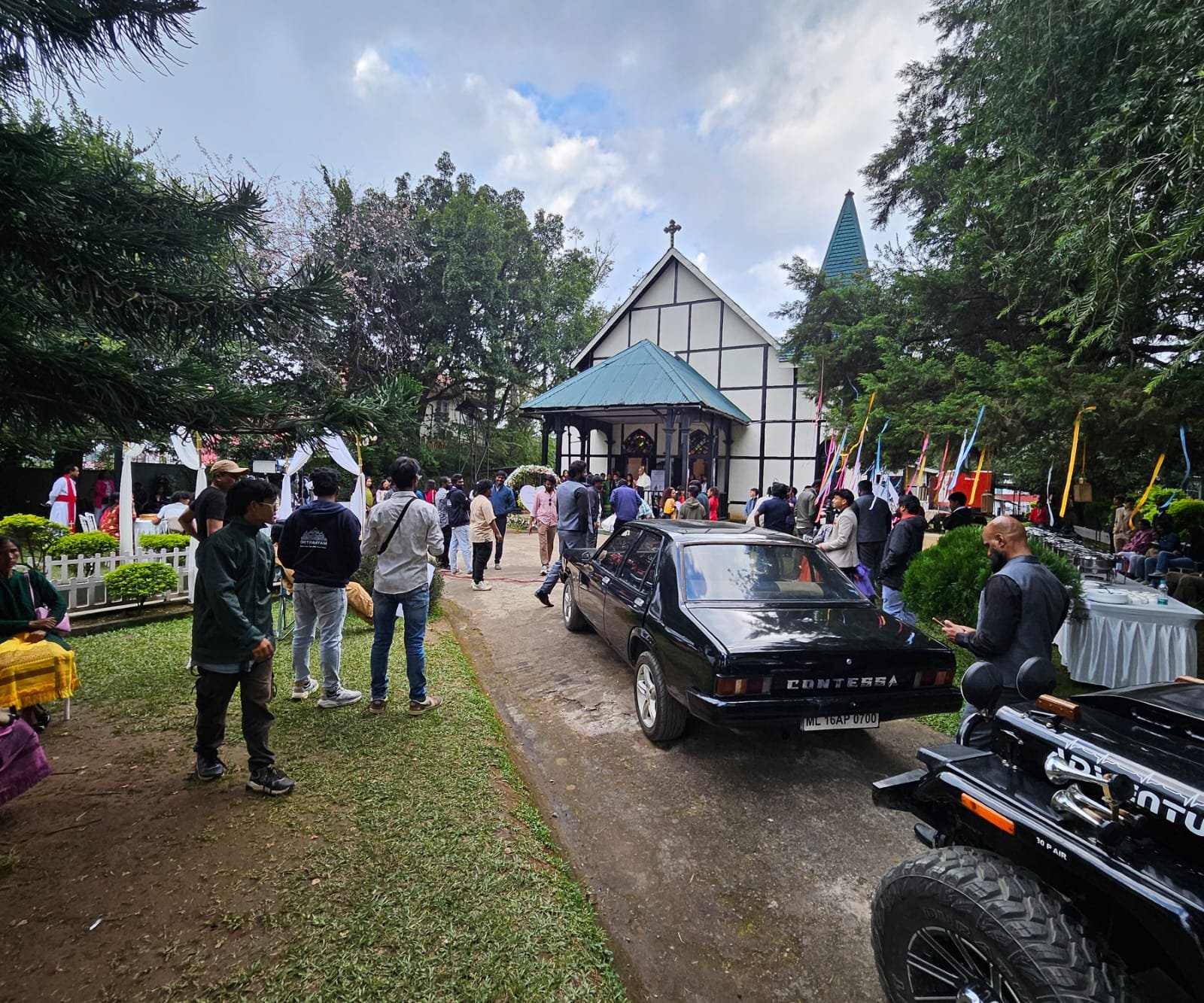
Shillong, Nov 22: Meghalaya completed its first full-length feature film under its Film Tourism Policy. Telugu feature Baa Baa Black Sheep, has finished its 25-day shoot in the State, particularly in the dramatic landscapes of Sohra.
The film directed by Guni Manchikanti and produced by Chitralayam Studios employed nearly 2,000 local youth across various departments.
Tourism Department officials said this makes it one of the State’s largest creative employment initiatives to date and a landmark example of Meghalaya’s growing film-production capabilities.
Chief Minister Conrad K. Sangma noted that the film symbolises the State’s creative ambitions, production readiness, and the powerful potential of the Film Tourism Policy.
Producer Venu Donepudi lauded the State’s support that enabled the project to be completed at record pace. He said the film is going to be released in Khasi and extended an invitation to the Chief Minister for the national premiere in Hyderabad.
The milestone aligns with Meghalaya’s Vision 2032, which identifies tourism and the creative economy as key drivers for its targeted $10 billion economy.
The objectives of the Meghalaya Film Tourism Policy 2025 include boosting tourism through films, upskilling local talent, strengthening cultural narratives, generating employment, and developing filmmaking infrastructure across districts. It offers subsidies of up to Rs 1 crore or 25 per cent of production costs for the first ten films, alongside additional incentives for local talent, local-language content, and premieres on Hello Meghalaya, the State’s official OTT platform.
According to the department, Hello Meghalaya, itself has emerged as a cultural engine, with over 4.40 lakh downloads and more than 2 crore views, carrying more than 500 titles, including 83 feature films in Khasi, Garo, and Pnar.
“As Baa Baa Black Sheep moves towards its national premiere, the film stands as a testament to Meghalaya’s growing readiness to host major productions. Its multilingual release, including a Khasi version, reinforces the State’s commitment to cultural visibility and inclusive storytelling,” the tourism department said.