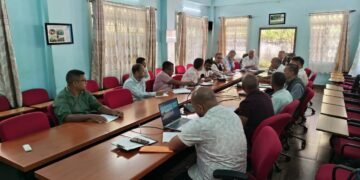
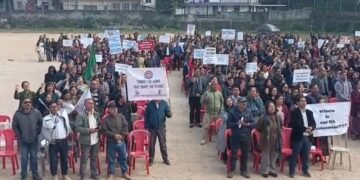
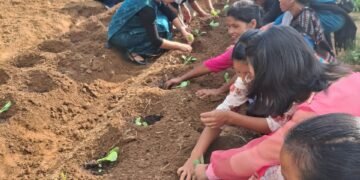







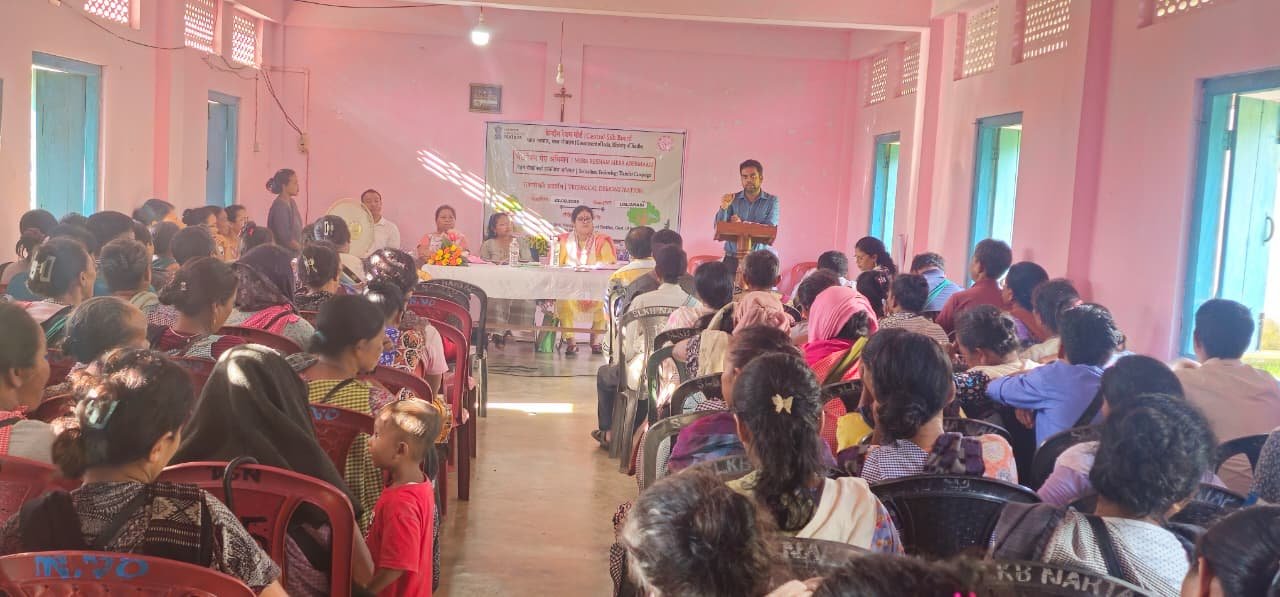
Shillong, Aug 22: Altogether 144 sericulture farmers attended an awareness programme on host plant cultivation and management organised at Nartap Umjarasi village in Ri-Bhoi district.
Organised by the Central Silk Board (CSB), Ministry of Textiles the initiative is part of the ongoing “Mera Resham Mera Abhimaan” (MRMA) campaign, the programme was jointly conducted by the CSB-Muga Eri Silkworm Seed Organization (MESSO), P-3 Unit, Nongpoh, in collaboration with the District Sericulture Office.
The programme aimed at creating awareness among farmers about improved Muga and Eri host plant cultivation practices and their role in sustainable silkworm rearing.
Abhishek Singh, Scientist-C, CSB-MESSO, Nongpoh, highlighted the importance of adopting scientific methods in Muga and Eri silkworm rearing. He emphasised systematic host plant management strategies, including timely plantation, pruning, soil fertility management as the foundation for higher yields and profitability.
District Sericulture Officer R. B. Lyngwa stressed the socio-economic benefits of sericulture farming and explained improved Eri rearing techniques that can help farmers increase production and income.
Deputy Director of the Department of Sericulture S. G. Momin appreciated the collaborative efforts of CSB and the department in empowering grassroots farmers through such training programmes.
Dr. Lopamudra Guha, Scientist-D, CSB-MESSO, Guwahati, highlighted the immense potential of Ri-Bhoi district in sustainable sericulture and encouraged farmers to adopt modern practices in silkworm rearing and host plant management for higher productivity. She urged farmers to expand their DFLs rearing capacity and conduct more rearings annually, thereby transforming sericulture into a viable and rewarding livelihood.
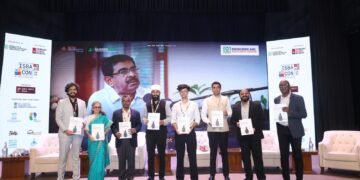
To make scientific knowledge more accessible, two pamphlets were also released during the programme: “Package of Practices for Castor Cultivation for Eri Silkworm Rearing” and a Khasi language pamphlet on “Package of Practices for Muga Silkworm Rearing.” These publications provide farmers with easy-to-follow guidelines, best practices, and location-specific insights, enabling them to implement scientific methods effectively at the field level.