









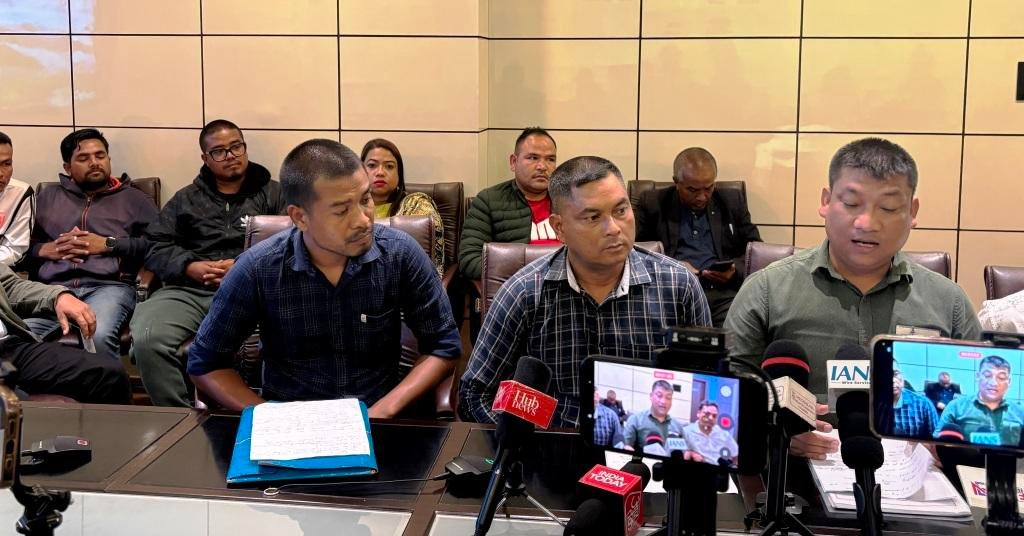
Shillong, Jun 17: The state government and coal mining organisations have agreed to form a committee that will work on preparing a small scale mining policy.
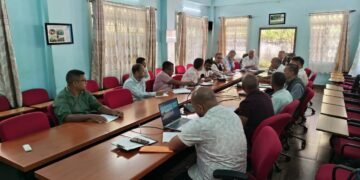
The demand for the resumption of coal mining in Jaintia Hills continued today as representatives of different social organisations met officials of the Meghalaya government.
Following the meeting, the organisations said the government has agreed to form a committee headed by the Chief Secretary. The committee will include Deputy Commissioners and representatives from the coal lobby. As part of its remit, it will examine the possibility of reducing the minimum land requirement for obtaining mining leases.
Rat-hole coal mining was banned by the National Green Tribunal in 2014. Restarting extraction legally involved the creation of a so-called scientific mining policy, which small landowners are unhappy with as the mining rules’ mandate a minimum landholding requirement, which most coal mine owners are unable to meet.
According to the coal groups, the government has asked for four to five members to assist officials in drafting the proposed policy. The organisations have also been requested to submit records of previous meetings and other relevant documents for reference.
However, the groups were not provided any assurance on when coal mining would resume. They noted that no decision is likely before the visit of the Supreme Court-appointed committee scheduled on June 29.
The organisations reiterated that the present requirement of nearly 100 hectares for scientific mining is difficult to meet for many landowners and coal-bearing areas in Jaintia Hills. They suggested adopting a system similar to limestone mining, where areas below five hectares are treated as minor mineral leases while larger areas come under major mineral regulations.
Leaders of the organisations said coal mining has supported the economy of Jaintia Hills for decades, especially in areas such as Wapung. They added that many families dependent on the sector have been facing financial difficulties since mining activities were halted.
The groups also urged the government to involve the Jaintia Hills Autonomous District Council (JHADC) more actively in discussions related to coal mining.
While the government informed them about welfare schemes available under the Meghalaya Programme for Rejuvenation and Formation of Livelihoods (MEPRF), the organisations maintained that such programmes cannot replace the income generated through coal mining.
The groups further announced that their hunger strike will continue until the government gives a clear commitment on the resumption of coal mining and introduces a workable framework for small-scale scientific mining.
They added that they remain open to further discussions after June 29 but stressed that issues affecting coal-dependent communities in Jaintia Hills should be addressed at the earliest.