











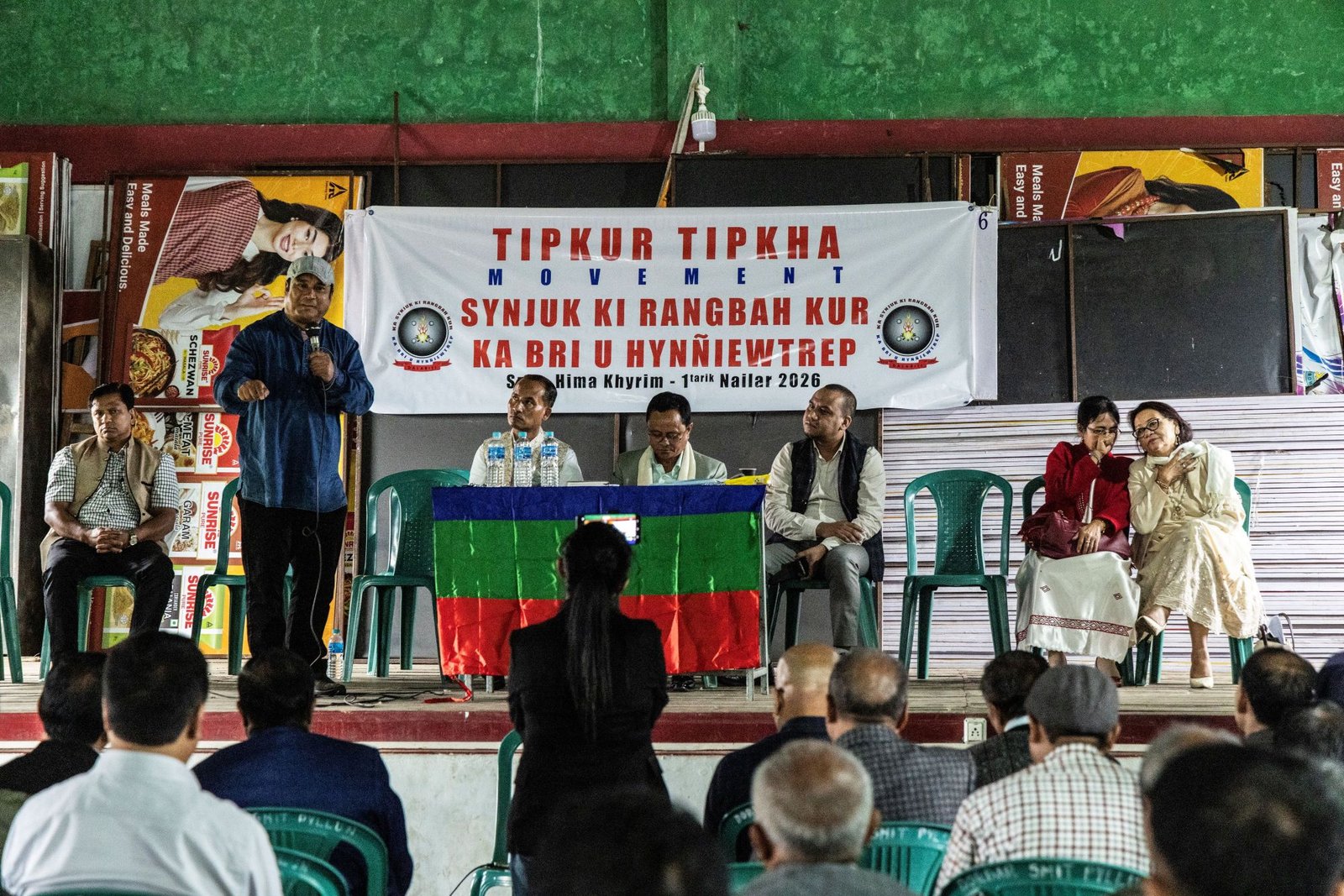
Shillong, Aug 1: The Synjuk Ki Rangbah Kur Ka Bri U Hynñiewtrep (SKRK) on Saturday strongly rejected growing attempts to introduce patriarchal practices into Khasi society during a major assembly at Dorbar Hall, Smit Village, as part of the regional ‘Tipkur Tipkha Movement.’
The meeting brought together clan elders, traditional heads and scholars from across the Khasi and Jaintia Hills under the Khasi and Jaintia Hills Autonomous District Councils.
Speakers said the movement seeks to unite indigenous clans by strengthening Clan Organisations (Seng Kur) and Clan Councils (Dorbar Kur), and to protect the three pillars of Khasi heritage: Land, Language and Maternal Lineage.
SKRK leaders reiterated that under Khasi custom, clan identity is derived strictly through the mother’s lineage. “An unbreakable umbilical connection” defines belonging, not the formal assignment of a surname, they said.
SKRK Spokesperson R.L. Blah and Legal Adviser Robert June Kharjahrin also criticised the current KHADC Executive Committee, accusing it of tolerating patriarchal practices and undermining traditional land tenure, in violation of the spirit of the Sixth Schedule.
Speaking after the meeting, SKRK leader Raphael Warjri said the movement seeks to “champion” maternal lineage and ensure it continues for future generations amid calls from some quarters to shift to a patrilineal system.
“Therefore, we wanted that this matrilineal culture has to be preserved and it has to be there for generations to come,” Warjri said, adding the campaign is meant to “enlighten our generation and our people” on the importance of maintaining the tradition.
Warjri stressed the system is balanced, with clan and lineage passing through the mother while administrative and public roles have traditionally been carried out by male members. “Outside the domestic sphere it is the male participation, but within the domestic sphere, it is the female participation,” he said.
Organisers said Tipkur Tipkha is an effort rooted in the ancestral kinship of the Khasi-Jaintia people to safeguard their indigenous way of life.