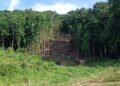















Shillong, Nov 15: With water such a central issue in the debate for and against the Shillong Peak Ropeway project, it may be pertinent to consider how much water will be consumed if the tourism initiative goes ahead in the sensitive water catchment area.
According to details presented by the Meghalaya Institute of Governance (MIG) in its public consultation, the ropeway will require an estimated 2,11,500 litres of water per day. To put this into perspective, India plans for an average domestic water consumption of 135 litres per person per day.
The bulk of this will be utilised for passengers, an estimated 2 lakh litres (or 200 kilolitres per day (klpd)). In this calculation the number of passengers has been pegged at 20,000. How this figure was arrived at is unclear as earlier in the report the estimated number of passengers using the ropeway range from around 3,800 to 8,100 per day by 2040. Whether the 20,000 includes taxi drivers who ferry tourists to the site, or even other visitors, etc who come to the site without actually riding the ropeway, is unclear.
Smaller water requirements of 10 klpd for cleaning and gardening and 1.5 klpd for staff have also been mentioned.
“Municipal water connection is available at both the terminal stations,” the MIG report says. “The concessionaire can take connection as per requirement.”
Not all of the water used would be drawn from municipal supply, it is envisaged as the project must also have a rainwater harvesting unit on site, as is mandatory under the Meghalaya Building Bylaws 2011.
“The plan submitted at the time of construction shall indicate the system of storm water drainage along with points of collection of rainwater in surface reservoirs or in recharge wells,” the report says.
All these thousands of people visiting the ropeway will invariably generate plenty of sewage waste.
A sewage treatment plant is mandatory for the sub-project but it has been left to the developer to adopt the “most appropriate and techno economical feasible treatment process technology”. The plant should ensure effluent quality that complies with the effluent discharge and disposal standards as prescribed by the Central Pollution Control Board and/or Meghalaya State Pollution Control board as may be applicable as per the law.
There has been much vocal opposition to the project because of the perceived threat to springs that feed parts of Shillong with fresh water. The government insists that the route of the ropeway will not be anywhere near a spring. The protection of springs is mentioned briefly in the MIG report as a topic raised by the headmen of the Riat Laban Dorbar Pyllun. The dorbar has wholeheartedly backed the project and is at loggerheads with the Joint Action Committee (JAC) formed of local residents who oppose the ropeway’s proposed location.