













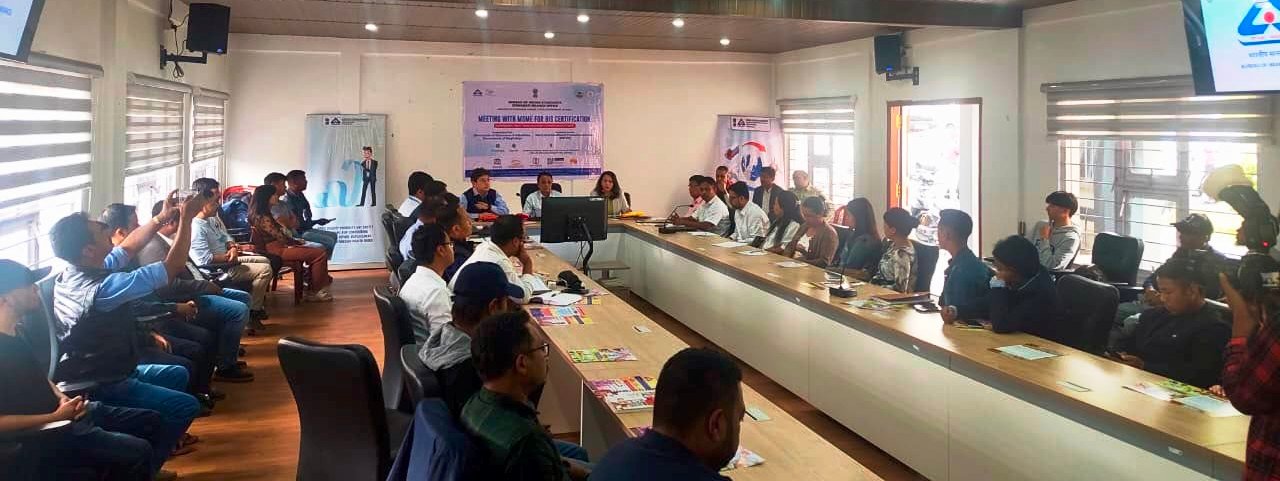
Shillong, Jun 12: A one-day sensitization programme on quality standards and the Bureau of Indian Standards (BIS) certification was organised at the conference hall of the Directorate of Commerce, aimed to empower micro, small, and medium enterprises (MSMEs) by educating them on the importance of quality certification in enhancing their market competitiveness.
Around 60 entrepreneurs, industry representatives, government officials, and technical experts attended the programme and learnt about the steps necessary to obtain certification, the benefits of recognized quality standards, and how these factors can lead to increased sales and market reach.
The programme highlighted several key aspects essential for MSMEs. Participants explored the latest trends in quality management, the procedures for obtaining BIS certification, and best practices for maintaining compliance with established quality standards. Additionally, speakers shared their experiences on how certification has positively impacted their businesses, encouraging MSMEs to pursue quality enhancements actively.
Organisers said the initiative not only provided valuable insights but also fostered networking opportunities among various stakeholders in the MSME sector, paving the way for future collaboration.
Director of Commerce & Industries Moonlander Wanshong emphasised the crucial role of quality standards in improving industrial productivity, market acceptance of products, and long-term business growth. He encouraged entrepreneurs to adopt standardized manufacturing practices and quality certification schemes to enhance customer confidence and competitiveness.
Director & Head, BIS Guwahati Branch Office Shouvik Chanda provided an overview of the Bureau of Indian Standards (BIS) and its role in promoting quality, safety, and consumer protection through standardization, conformity assessment, and certification activities.
Speaking on the importance of quality and safety standards in public health, Dr. Wadamika Lyngdoh, Deputy Commissioner of Food Safety (Technical), Health & Family Welfare Department highlighted the need for regulatory compliance and consumer protection through standardized quality practices.