









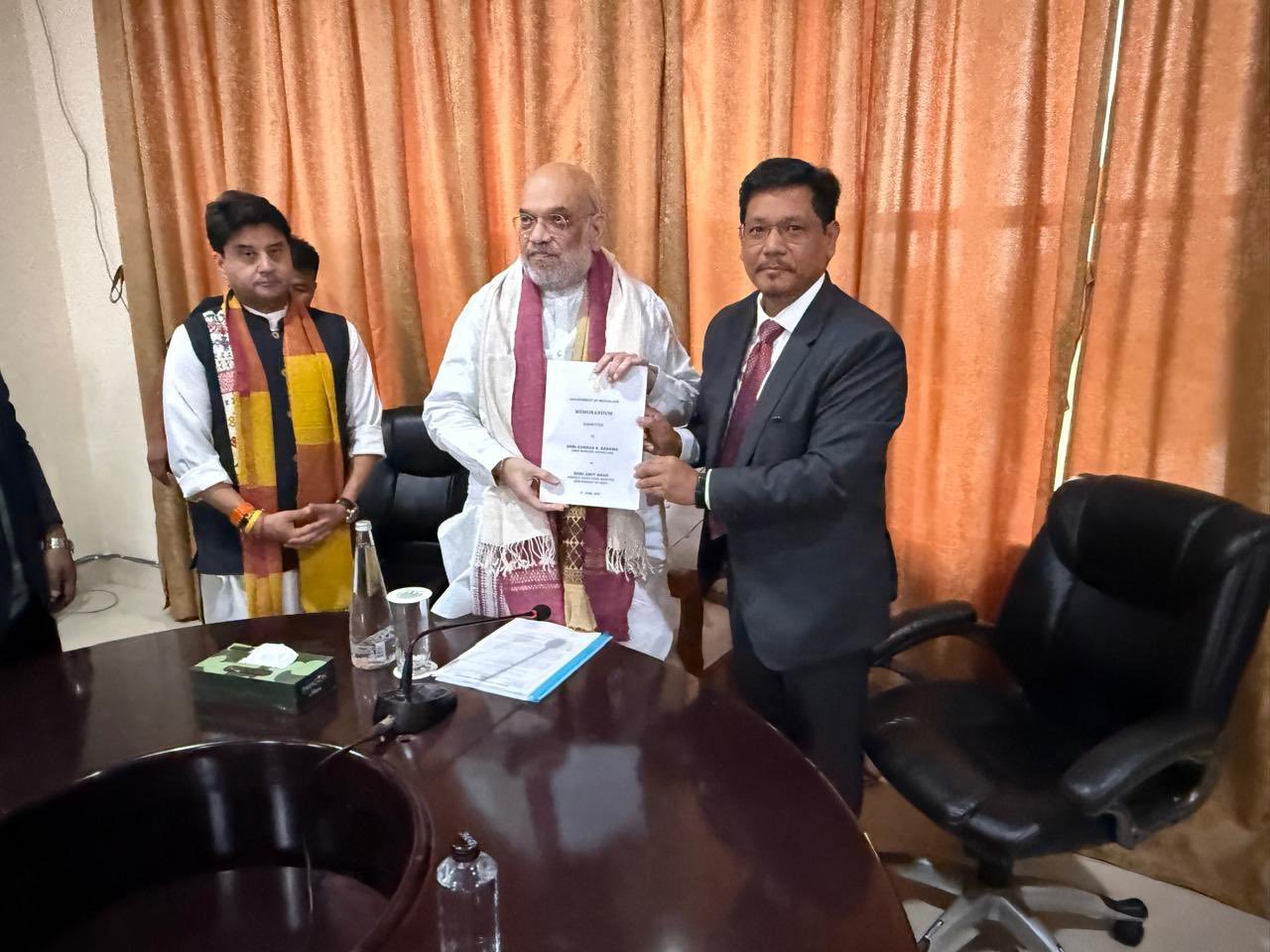
Shillong, Jun 4: The Meghalaya government today submitted a detailed memorandum to Union Home Minister Amit Shah, outlining its key demands on issues ranging from illegal immigration to constitutional amendments for autonomous district councils and proposed changes to the Foreign Contribution Regulation Act.
The memorandum placed strong emphasis on strengthening mechanisms to check illegal immigration in the state, namely the Inner Line Permit (ILP). Although the Meghalaya Assembly unanimously resolved to request ILP for the state, the central government has been sitting on its request since December 2019.
Alongside ILP, the government also pushed for the Meghalaya Residents Safety and Security (Amendment) Bill 2020. The original MRSSA of 2016 was enacted to ensure enhanced security vetting of tenants and prevent anti-social elements from finding shelter in the state. The 2020 amendment proposed that anyone wishing to stay in Meghalaya for more than 48 hours must furnish information through a digital app, with exemptions for permanent residents, MPs, MLAs and government servants. The bill was reserved by the Governor for President’s assent and sent to the Union Ministry of Home Affairs. The ministry raised objections, calling the proposed law constitutionally invalid, imposed restrictions akin to ILP, etc.
The memo also spelled out Meghalaya’s opposition to quotas for unrepresented tribes in its district councils, instead proposing that four nominated members to the KHADC and GHADC be drawn from categories such as reputed academicians, sportspersons, women representatives with administrative or judicial experience and eminent entrepreneurs or professionals. For the JHADC, it suggested two nominated members, one a woman representative and the other from the remaining categories.
On council strength, Meghalaya suggested capping the Garo Hills and Khasi Hills councils at 40 members each, with 36 elected and four nominated, at least two of whom should be women. For Jaintia Hills, it proposed 32 members, with 30 elected and two nominated, including at least one woman, citing its smaller population and size.
The state also expressed its position on electoral rolls and the State Election Commission, saying that except for Village Dorbars, the SEC should handle elections to district councils, while district councils should manage village-level polls. On village councils, it said every recognised village should have a Village Council or Village Dorbar, with the Sirdar, Nokma or Rangbah Shnong as ex-officio chairman and elected secretary and members, with powers as per existing district council rules. The government further requested that district planning committees and entrustment of economic development schemes to district councils would apply to Meghalaya only after approval by the Governor.
Finally, the memorandum raised concerns over the Foreign Contribution (Regulation) Amendment Bill 2026. Stakeholders in Meghalaya, particularly civil society groups, have flagged issues around the power of seizure of property. The state has urged the Centre to hold wider consultations with all stakeholders before finalising any FCRA amendments.
Meanwhile, members of the Khasi Authors’ Society also met the Union Home Minister and raised the issue of granting constitutional recognition to the Khasi language.
A Khasi Students’ Union (KSU) delegation also met Shah and submitted a memorandum that highlighted pending issues, including the implementation of ILP, the interstate border dispute with Assam, and the inclusion of the Khasi language in the Eighth Schedule of the Constitution.
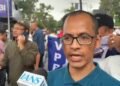
Speaking to reporters, KSU general secretary Reuben Anderson Najiar acknowledged that while the implementation of these demands hinges on decisions made by both state and central governments, the KSU remains committed to advocating for ILP and other significant issues concerning Meghalaya.
He said that the adoption of ILP is critical for safeguarding the indigenous Khasi, Jaintia, and Garo communities in light of increasing illegal immigration issues facing Meghalaya. He stressed that with no protective law currently in place, the community remains vulnerable.
On the border issue, the KSU expressed concern over recent developments in disputed areas, particularly Lapangap. Najiar alleged that Assam had acted as an aggressor in certain disputed locations where status quo was expected to be maintained.
“We informed the Home Minister that recent incidents have raised concerns about Assam not adhering to the spirit of maintaining peace in disputed areas. In response, the Home Minister assured us that the matter concerns two states, but if the Union Government finds that the issue is not being addressed through the proper channels, it will intervene,” he said.
Regarding the demand for inclusion of the Khasi language in the Eighth Schedule, Najiar said the Home Minister informed the delegation that the matter was under active consideration.
According to the KSU leader, Shah indicated that the centre may constitute a committee, potentially comprising retired Supreme Court judges, to examine the inclusion of several languages seeking recognition under the Eighth Schedule.
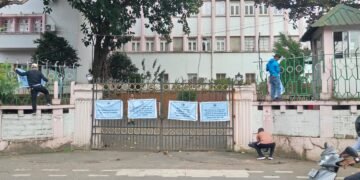
Earlier on the same day, KSU members staged protests across various locations, calling for the immediate implementation of ILP. Demonstrators raised slogans emphasizing that “ILP is the only solution to stop illegal immigration” and that “ILP is our right to protect ourselves.”