











Shillong, Apr 16: The Meghalaya cabinet today approved the Meghalaya Official Languages Ordinance 2026, paving the way for the Khasi and Garo languages to be recognised as official languages of the state alongside English.
Announcing the decision, Chief Minister Conrad K Sangma described the move as “historic,” saying it would significantly impact governance, promote indigenous languages and create new opportunities for the youth.
Under the new ordinance, the earlier Meghalaya State Language Act 2005 will be repealed. The move will allow the use of Khasi and Garo in government communications and, in due course, in legislative proceedings. Necessary amendments to existing laws, including the Meghalaya State Legislature (Continuance of English Language) Act 1980, will be introduced to enable members to speak and debate in Khasi and Garo during Assembly sessions.
The Chief Minister said the decision would also open the door for conducting government examinations in Khasi and Garo, although full implementation will take time due to logistical requirements such as manpower, infrastructure and rule-making.
He added that the decision aligns with the state’s push for inclusion of Khasi and Garo in the Eighth Schedule of the Constitution, which would make them official languages at the national level. “If we are demanding recognition at the national level, it is important that we first strengthen the status of our languages within the state,” the CM said.
Sangma further informed that arrangements such as translators in the Assembly will be required and discussions with the Speaker are underway. He noted that the Speaker has expressed support for introducing the system in the new Assembly, calling it a “historic beginning” for the state.
Sangma emphasised that while some financial and manpower requirements will arise, particularly for language implementation, the long-term cultural and social benefits outweigh the costs.
On the timeline for inclusion of Khasi and Garo in the Eighth Schedule, the Chief Minister said the decision rests with the central government and Parliament. He added that the state will continue to push the matter at the national level.
Highlighting the broader vision, Sangma noted that the government has already introduced measures to teach Khasi and Garo in schools and promote proficiency in local languages in examinations. “Taken together, these decisions reflect a larger effort to preserve, promote and mainstream our indigenous languages for future generations,” he said.
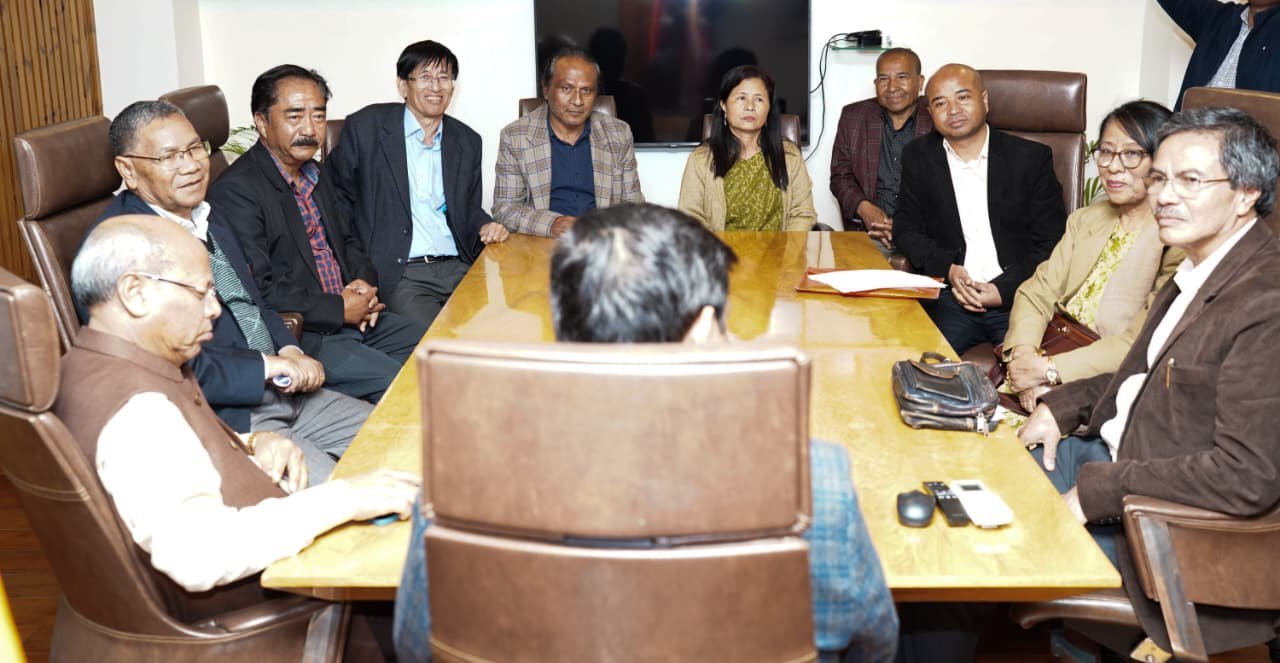
Later, the chief minister met a delegation of the Khasi Authors Society (KAS) and shared insights into the cabinet’s resolution. He stressed the need for active promotion of the languages in government transactions and communications to ensure their practical usage and acceptance among the populace.
Sangma assured that legislative discussions in these languages would commence in the upcoming autumn assembly session in the new assembly building. He expressed gratitude towards the Khasi Authors Society (KAS) for their unwavering commitment and contributions that have undeniably influenced this landmark decision and called upon them for support in drafting implementation rules.