
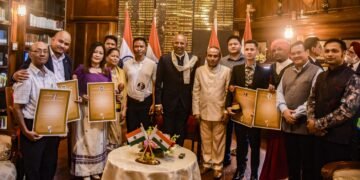



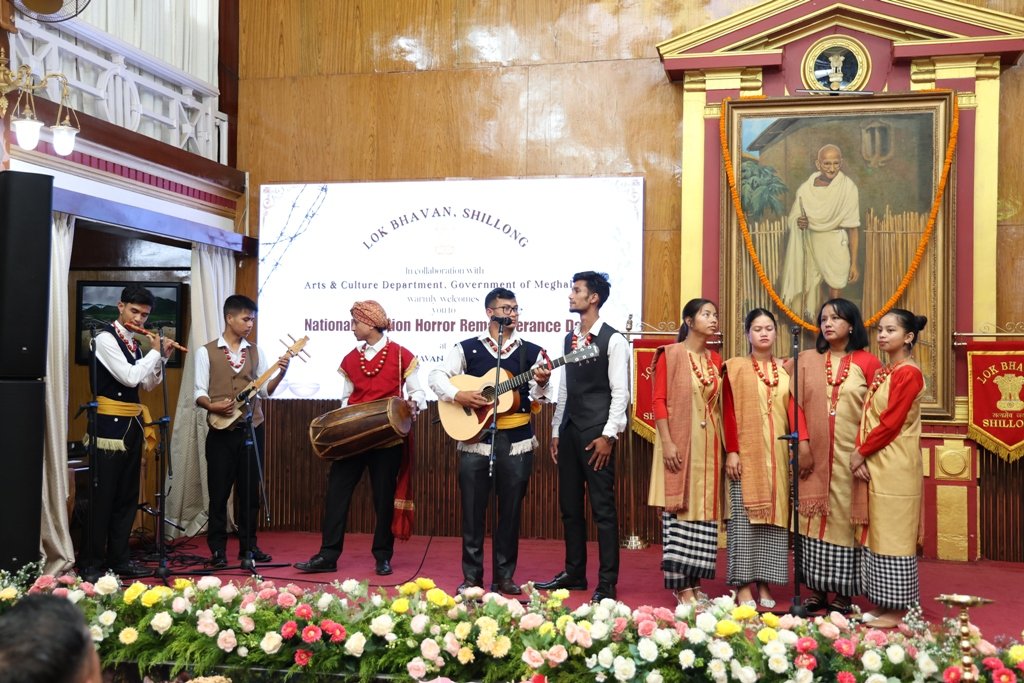
Shillong, Aug 14: Lok Bhavan Shillong, in collaboration with the Arts and Culture Department, observed Partition Horrors Remembrance Day today to commemorate the victims and survivors of the Partition of India in 1947.
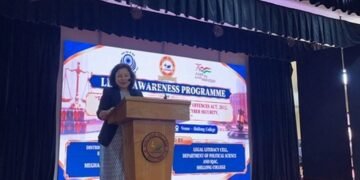
The programme commenced with the hoisting of the national flag by Governor CH Vijayashankar. Following the flag-hoisting ceremony, the gathering moved to the Durbar Hall, where cultural programmes were presented by students, followed by an address highlighting the human cost and lasting impact of Partition.
Speaking on the occasion, David Arnold Kharchandy, Assistant Professor at Synod College, said Partition should not be understood only as a political development that marked the end of British rule and the creation of India and Pakistan.
He said that for millions of ordinary people, Partition meant much more than the drawing of the Radcliffe Line on a map. It resulted in the loss of homes, separation of families, disruption of communities and the beginning of uncertain journeys for people who were forced to leave behind everything familiar.
He stressed that remembering Partition is important because history must go beyond statistics and political boundaries and recognise the experiences of the people who lived through the tragedy.
Kharchandy also cautioned against turning the suffering of Partition into a comparison between communities. He said people from different religious and social backgrounds suffered and that reducing the tragedy to “our people versus their people” would prevent future generations from learning the real lessons of history.
Drawing attention to Meghalaya and the North East, Kharchandy said Partition had significant consequences for the region, particularly following the creation of the border with what is now Bangladesh. Migration increased, trade routes changed, and families and communities found them separated by newly created political boundaries.
“Partition is not merely the story of Delhi, Punjab or Bengal. It is also part and parcel of the history of the North East,” he said, urging students to explore the regional experiences of Partition more closely.
He urged students to remember the victims and survivors of Partition, study history from different perspectives, question rumours and stereotypes, verify information and reject communal propaganda. He also called upon them to respect people belonging to different religions, communities, castes, classes and linguistic backgrounds.