











Shillong, Jun 5: Chief Minister Conrad K. Sangma today announced a shift in government protocols, advocating for a stronger focus on local communities during official events.
He underlined the importance of recognising the achievements of citizens over the traditional practice of honouring chief guests at gatherings.
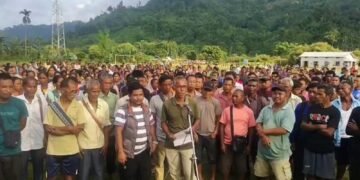
During an event in Mawrah village to mark World Environment Day, Sangma said that instructions will be issued to various departments that government programmes should prioritise community members while placing less focus on public representatives and officials.
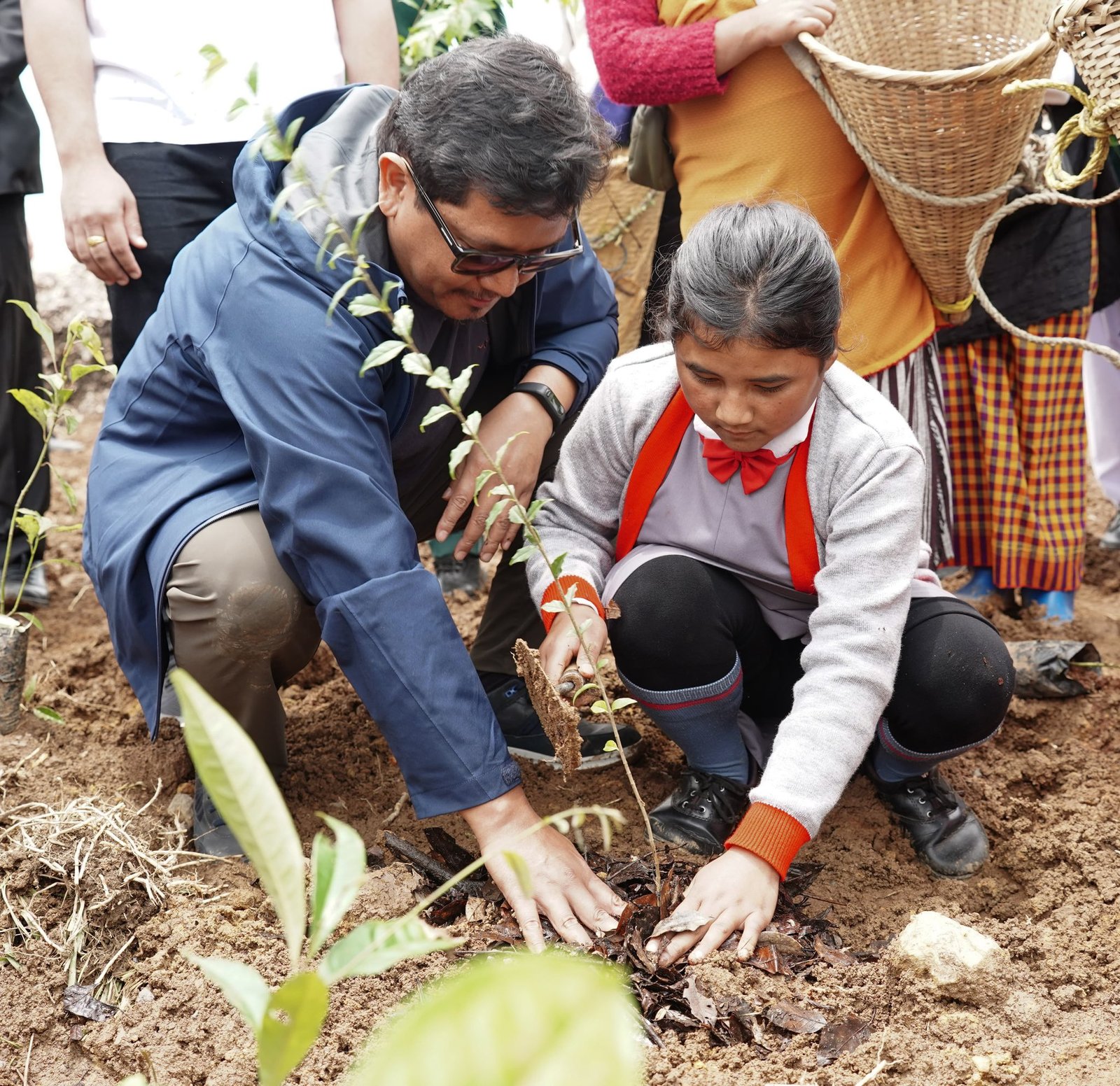
Sangma said that true ecological responsibility must transcend symbolic gestures to become a permanent fixture in our daily habits. “World Environment Day is a day in our lives. And therefore it should not stop with the one tree that we plant today, but it should continue with every action and every activity we do in our lives,” he stated.
During the event, the chief minister distributed Green Meghalaya cheques to beneficiaries under the State’s Payment for Ecosystem Services (PES) initiative—a grassroots-level initiative for ecosystem enhancement and sustainable management of Meghalaya’s natural resources, encouraging communities and individuals to actively participate in conservation efforts by recognising and incentivising environmental stewardship.
He also inspected and unveiled the newly developed Eco-Cottages and Glass House Restaurant at Mawrah Lake, aimed at strengthening eco-tourism in the region while generating sustainable livelihood opportunities for local communities.
He further participated in a plantation drive undertaken using the Miyawaki method, an afforestation technique designed to accelerate the growth of dense, native forests and support ecological restoration.
The chief minister also welcomed plans to develop similar environmentally sustainable and community-driven tourism destinations across Meghalaya, stating that the Mawrah model demonstrates how conservation and economic development can go hand in hand.
Situated in East Khasi Hills, the Mawrah Multipurpose Reservoir Project has been recognized by the Economic Survey 2024-25 as a model for integrated water resource management. The project is focused on rainwater harvesting, groundwater recharge, spring rejuvenation, and land mine rehabilitation. The Mawrah Reservoir has over 6 hectares of land under afforestation and 1 hectare Miyawaki plantation. The project showcases the state’s commitment to sustainable development and community-led environmental conservation.
MLA of Sohra Assembly Constituency Gavin Miguel Mylliem described Mawrah as a model village. He highlighted its achievements in water conservation and environmental stewardship through collective community effort and government support.
He acknowledged the support of the Soil & Water Conservation Department and other agencies in implementing development and conservation initiatives in the area.
Chief Secretary Shakil P. Ahammed described the Mawrah initiative as an example of how environmental conservation, tourism, livelihoods and community participation can be integrated for long-term benefits.
He noted that destinations conserving natural resources and local culture would gain increasing importance in the future, adding that Meghalaya was steadily progressing towards becoming one of the cleanest states in the country.
“In another ten years, people may come to Meghalaya not only for its beauty but also for something as simple and precious as pure oxygen,” he remarked.
He also urged communities to take ownership of public assets and preserve them for future generations, quoting a student message: “No forest, no water. No water, no life.”
Commissioner & Secretary, Tourism, Vijay Kumar D. noted that the State’s rich biodiversity makes environmental protection fundamental to its future. He informed that over the last five years, afforestation activities have been carried out across nearly 25,000 hectares, with an additional 14,000 hectares targeted this year, bringing the total to nearly 40,000 hectares under afforestation initiatives.
Sordar of Mawrah, Phrangsngi Nongrum requested additional infrastructure and safety measures, including footpaths and protective fencing, to further improve the visitor experience.