

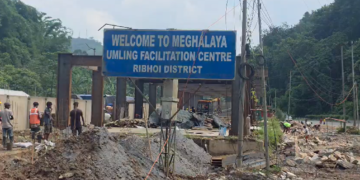











The reports of Bangladeshi nationals illegally entering India through Meghalaya has become routine and the pattern that emerges should alarm both the state and the Centre.
Many of those apprehended confess that they crossed over with the help of agents – Indian citizens living in border villages who, for personal financial gain, are willing to compromise national security.
The motive cited is familiar. Bangladesh is poor, employment opportunities are limited, and many cross in search of livelihood. The situation worsened after the outbreak of violence in August 2025 that forced Prime Minister Sheikh Hasina to flee, disrupting peace and stability and pushing more Bangladeshi citizens to seek refuge in India, either through visas or by illegal crossings.
India has fenced about 79 percent of the 4,096 km India-Bangladesh border to curb illegal immigration, smuggling and crime.
But some portions remain unfenced, largely due to opposition from landowners in Meghalaya who fear losing ancestral land. This has become a major obstacle for district authorities.
The state government has been trying to convince landowners and village authorities that fencing is protection against criminal activities that have long plagued border areas, but progress is slow.
However, the danger is no longer limited to porous borders. The recent arrest by Meghalaya Police of Bangladeshi nationals from Mumbai who were part of a network illegally bringing in Bangladeshi citizens exposes a deeper racket – the creation of fake PAN and Aadhaar cards to make foreign nationals appear as Indian citizens.
It suggests many may already be hiding in Meghalaya, evading detection through deception.
To their credit, village dorbars, youth organisations and pressure groups have remained vigilant, especially in border villages.
In East Jaintia Hills, groups have caught foreign nationals entering illegally and found them sheltered and employed in factories. If such incidents are genuine, police should not wait for formal complaints. Factories operating in Jaintia Hills must be thoroughly investigated and those violating the law arrested under relevant laws.
Illegal entry in search of employment directly takes away jobs from indigenous people and legitimate residents. The state cannot afford to wake up after the situation becomes uncontrollable. The government must exercise its powers and act strictly against illegal immigrants so that Meghalaya does not become a safe haven for them.
This concern is amplified by the coal mine collapse at Mynsngat-Thangsko in East Jaintia Hills earlier this year.
There are allegations that workers from Bangladesh had entered the coal mines as labourers, posing a serious danger and points to a nexus where illegal labour, unsafe mining and demographic change intersect.
Fencing the remaining stretch is urgent but not sufficient alone. Enforcement against agents, crackdown on fake document rackets, mandatory verification of labour in factories and mines, and coordination between BSF, police and village authorities are equally vital.