







One of the most important factors of the Khasi democratic principles is the care of the aged, young infants, and poor people. Hence, the elderly person and children are always taken proper care and the clan or neighbours would extend necessary help to the needy, that hardly any beggar is found in society. The culture is still prevalent today, especially in the rural areas, and perhaps modern education is the reason for the deterioration of this custom in the urban areas that gradually, vagrants and vagabonds emerged in the city. Nevertheless, there are occasions of excessive indulgence for such people that sometimes they become dependent and frustrated, due to a lack of ethical response and gratitude to every generous soul. The survival strategy of every person is to assert profit at the cost or rather loss of others. Therefore, the rich ascended and remained at the upper echelon, while the poor descended and stayed at the lower strata of society. Social occasions have drastically diminished and everybody is confined within their comfort zones that sometimes each individual can not be responsible for their own personal safety and security. The escalated incursion of migrants from the mainland and from the neighbouring regions has added more woes to the State and created a demographic imbalance. Moreover, a vacuum is generated in the social well-being of the communities due to ethnic diversity. The elite section of society tends to neglect the purpose and contribution of traditional institutions and rely on the State’s administrative machinery. These are a few of the reasons that the necessity of the local council or Dorbar Shnong became redundant.
Actually, the natural course of infiltration of different communities from the neighbouring region or from the mainland generated solidarity among the congenial existence and general well-being of the social fraternity. Moreover, the assimilation and social relations occurred in an atmosphere of camaraderie, without any consciousness of ethnic variation. It is the craze for economic, educational, and cultural superiority that generated social barriers among diverse communities. In the past, the migrant communities ventured into inaccessible terrains across the region and contributed to the growth of cattle farming enterprises apart from other agricultural activities. They mingled with the rural populace and gradually became part of the society, though they retained their individual identity without any conflict of interest. Later, the urban educated elite class, particularly the Nepali residents, asserted their rights and provoked resistance from the local indigenous community, and fomented social enmity and political unrest. Therefore, the aspirations of the few in the city have devastated the social and economic well-being of several other brethren in the rural areas. However, the situation in the urban conglomerate is generally exploitation and misappropriation primarily in trade and employment sectors, apart from other economic and educational opportunities; although some of them succeed with merit and sensible approaches. The migrant communities penetrated into the rural areas through trade and labour force also due to lack of expertise and insufficient availability of the local youth in the different skilled and ordinary workforce.
The affluent section of the indigenous community progressed in trade, employment, education, and cultural endeavours through interactive communication and involvement with the other regional and mainstream communities. They are more comfortable and convenient with the prevalent process and refrain from any ethnic assertion in commercial prosperity, educational excellence, and service efficiency. There are instances of unscrupulous exploitation and discrimination of local talents as much as there is undue demand for mediocre aptitude in educational avenues, employment opportunities, and trade prospects. Therefore, the resistance movement of the youth through the pressure groups on certain occasions negated the idea of performance with excellence and converted into communal tension and political chaos. The health services, education, and economic sectors are essential for the overall development and sustenance of society. However, the corporatisation of these sectors facilitated nepotism and deprived the legitimate rights of ordinary citizens. Further, the expansion of these sectors could be detrimental to nature and ecology. The pharmaceutical and medical equipment industries surpassed the healthy sustenance of people’s lifestyles and bred enormous amounts of diseases and ailments. The advancement of science and technology is confined to academic proficiency with limited exploration of the natural environment and produced by run-of-the-mill professionals. The escalated potential for economic prosperity disregarded the pristine environment, which resulted in innumerable natural calamities and contributed to climate change.
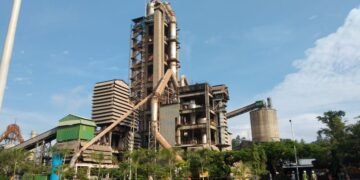
When the economy is given priority, everything else is held back, until disaster takes place and affects the general public. That is when the intervention of the administration is forthcoming to contain the situation. The modern administrative system may have advanced on several fronts and the repercussions are equally enhanced or could surpass the effectiveness of human-centric regulations. A glaring example is the cement factories in Jaintia Hills, where the initial establishment and subsequent expansion of the industry’s infrastructure have devastated the forest cover and polluted the rivers, and caused much environmental damage. Apart from the effect on the common people, the least attention but significant obliteration of natural herbs for medicinal purposes is colossal. The State administration is ignorant or purposely neglected, while the common people might not be aware, but the practitioners of alternative medicine are the silent sufferers at the behest of the authorities and the unscrupulous traders. Moreover, alternative medicine is being dominated and ridiculed by the modern healthcare system and pharmaceutical industry. There is no denial to the fact that modern medicine has been responsible for saving the lives of innumerable people all over the world through artificial means of curing methods with conscious consideration of economic sustainability. It is in the sentiment of every human being to desire a longer life for their near and dear ones, even as the method of the longevity of life span is at a cost; and that cost of forceful retention of life contributes to the economic sustenance of medical research laboratories, pharmaceutical industry and the invention of innovative medical equipment. The most significant factor is that the majority of the healthcare system is proven with science, apart from certain exceptions like the current pandemic. The irony is that the two-centuries-old medical sciences have created a tremendous impact on society through the ancient system of herbal healing systems that prevailed over several centuries.
The only drawback of alternative medicine is the lack of scientific evidence and almost every cure is based on a belief system and miraculous healing method, which only the genuine healer is well versed with the folk science of the curative properties of the herbs, chants and other intrinsic intervention of natural energy. The patients would never be able to comprehend the knowledge system derived by the shaman or herbal healer, and neither could the shaman explain it to the client. It is all based on the trust and reliability of the ancient healthcare profession. Almost every allopathic drug or vaccine or chemical compound is obtained from the organic substance of nature and the artificial source of power for treatment purposes is the derivation of natural energy. Therefore, alternative medicine is complementary to the modern medical system that the traditional herbal healers acknowledged, whereas the medical education fraternity never endorse or reciprocate it. The democratic rights of the public in the modern healthcare system are universal, though the implementation of that system is the prerogative of the specialized personnel with different expertise that the ordinary citizen will not be able to understand. For instance, the physicians prescribed medicine with their expert knowledge of the curative process that was prepared by other proficient personnel in the preparation of the chemical process that the physician would not know. Further, the function of medical gadgets and equipment is another profession where coordination is required between the respective skilled personnel.
On the other hand, the folk healthcare system is the procedure with clarity between the healer and the sick, even access to medicine is open to the public with conscious knowledge of the people. The shaman or the healer always learns the healing process from the ancestors and the traditional knowledge is usually passed on to someone responsible and dedicated aspirants, but restraints it to be shared with the general public because it might devastate or mislead the public. Therefore, knowledge is perceived to be associated with the divine, which essentially implies the natural forces of energy. That is why most of the folk healing methods is accompanied by chants and prayers, and some interesting folk techniques is the casting away of the malevolent spirit, the literal blow to douse the heat or blister from the burnt injury, the oral intervention with lime for stomach ailments and various other folk healing practices. Generally in the modern social situation, it is assumed as superstition and it is important to elucidate on the matter as compared with the conventional religious belief on the satanic curse and damnation in hell. These folk healing methods are still relevant today not only in remote rural areas but in the urban conglomerate also. The irony is that astrology is prevalent in most of the elite segments of society, which the rural folks are usually not acquainted with. In reality, all the healing methods are generally effective upon the general populace, including quackery; and the fact remained that in spite of the government’s effort to reach out to healthcare facilities in every nook and corner of the State, proper and absolute healthcare delivery could not reach to many remote areas and the people relied on traditional herbal healing services.