







Child labour is work that deprives children of their childhood, their potential, and their dignity. It harms children mentally, physically, socially, and morally. It interferes with their schooling, preventing them from attending or concentrating. It may involve them being enslaved, separated from their families, and exposed to serious hazards and illnesses. The United Nations General Assembly (UNGA) has unanimously adopted a resolution declaring 2021 as the International Year for the Elimination of Child Labour and has urged the international community to step up efforts to eradicate forced labour and child labour.
The resolution highlights the member States’ commitments “to take immediate and effective measures to eradicate forced labour, end modern slavery and human trafficking and secure the prohibition and elimination of the worst forms of child labour, including recruitment and use of child soldiers, and by 2025 end child labour in all its forms”. It also recognised the importance of “revitalised global partnerships to ensure the implementation of the 2030 Agenda for Sustainable Development, including the implementation of the goals and targets related to the elimination of child labour” (Source: International Labour Organisation (ILO), 2021).
Child Labour in 2021:
With classrooms shut and parents losing their jobs in the pandemic, thousands of families are putting their children to work to get by, undoing decades of progress in curbing child labour and threatening the future of a generation of India’s children. In rural India, a nationwide lockdown imposed in March pushed millions of people into poverty, encouraging the trafficking of children from villages into cities for cheap labour. The pandemic which is continuing is hampering enforcement of anti-child labour laws, with fewer workplace inspections and less vigorous pursuit of human traffickers (Bhaduri, Hindustan Times, 2020). A study conducted by Campaign against Child Labour (CACL) at Madurai, revealed that there has been a significant increase in the proportion of working children from 28.2 per cent to 79.6 per cent out of the 818 children who were surveyed, mainly because of the Covid-19 pandemic and closure of schools.
The study which was conducted in 24 districts showed that child labour had rapidly increased in North, South and Eastern districts of the state. The survey was conducted by interviewing children in the age category 6 to 18 during September and November 2020. The survey showed that child labour increased to around 280 per cent among vulnerable communities. “Children from Scheduled Caste and Scheduled Tribes and those from lower economic background had to work to financially support their families during the pandemic”.
The survey found that children were working in bakery shops, bookstalls, two-wheeler service workshops, newspaper distribution, ration shops, vegetable shops and as domestic helpers. Children were involved in at least 23 different types of occupations in the service sector. Most of the older children were found to be working for more than eight hours a day. This is the same scenario across the country. These children also reported facing physical, mental and verbal abuse from their employers and based on their age, their earnings vary from Rs. 100 and Rs. 400 as wages per day.
According to the survey, more than 94% of children have said that the economic crisis at home and family pressure had pushed them into work. Due to the pandemic, most of their parents had lost their jobs or are earning very low wages (Narayani, The Hindu, 2021).
Meghalaya’s scenario:
While May 1 is observed as Labour Day or May Day (International Workers’ Day) to remember the contribution of the working class across the country, we are in turn encountered with the bitter reality of increasing child labour. In India, the first Labour Day celebrations occurred on May 1, 1923, in Chennai. It was first initiated by the ‘Labour Kisan Party of Hindustan’. On this day, the red flag was used for the first time which symbolises Labour Day. The day is observed to mark respect for India’s workforce. May Day is also known as ‘Antarrashtriya Shramik Diwas’ or ‘Kamgar Divas’ in India.
In 2019, Meghalaya Deputy Chief Minister Prestone Tynsong admitted the prevalence of child labour in the State and also assured that a mechanism has been put in place to ensure that the State is completely free of social malaise. While child labour is a universal phenomenon, Meghalaya’s case hit the headlines, many years ago when a certain NGO claimed that there are some 70,000 children working in the coal mines of Jaintia Hills alone and in very dehumanising conditions. This is a very serious allegation that has drawn the attention of the whole NGO world in India and overseas, more so since the research was carried out for an international body based in Nepal. Although, the Labour Commissioner clarified later that the data was untrue and that the said report of the NGO was “far-fetched”, he admitted that instances of child labour have been detected from time to time in Jaintia Hills District.
The Meghalaya State Protocol on Child Labour published in May 2014 by the Labour Department, Government of Meghalaya elaborated on the strategic plans and implementation of Prevention, Rescue Operations, Post-Rescue Operations, Reports, and Roles of Key Stakeholders to combat the menace. Keeping in view the complexity of the problem, a comprehensive multi-pronged approach is required. This should cover not only the educational rehabilitation of these children to prevent them from re-entering such exploitative labour situations but also various preventive measures including awareness of labour laws. Considering that it is essentially a socio-economic problem inextricably linked to poverty and illiteracy, it requires concerted efforts not only from the Government but also from all sections of the society.
Digital divide:
According to UNICEF and Save the Children, developing countries are being hit hardest economically by the pandemic and the number of families falling into debt and poverty is increasing. In many cases, children of these families have little choice but to work (Day, 2021). The impact on children from deprived, disadvantaged, or vulnerable sections can be expected to be far more adverse than on children from privileged backgrounds (Padhi and Lalhriatchiani, 2020).
Schools across India have been closed since mid-March last year as a result of the pandemic. The government has encouraged classes to resume online, but access to the internet and to online classes is dependent on location and household income. Rural India would be the worst lot to suffer from proper connectivity, especially the interior areas. For marginalised children, poor connectivity is preventing them from learning, and for the large proportion of children, who do not have any device to connect to the internet, they are being completely excluded, therefore low-income families are being affected disproportionately.
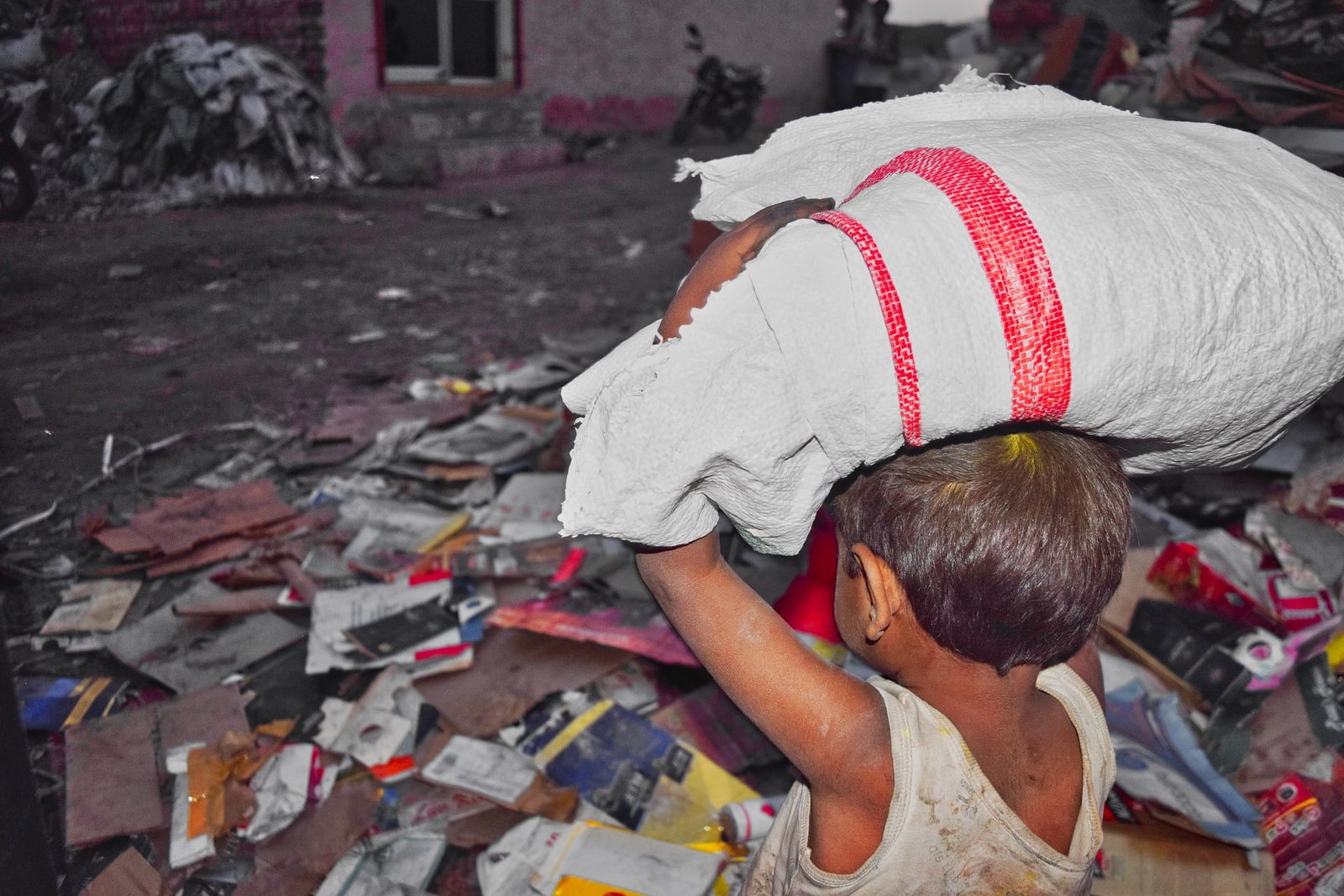
Reports suggest that many marginalised children in India appear to be going to work instead of school due to closures. In Tumakuru, Karnataka, for instance, children as young as six years old who are no longer in school, have been found rummaging through garbage dumps littered with broken glass and concrete shards in search of recyclable plastic to earn a few cents per hour (Day, 2021). A 2020 study by the Ministry of Human Resource Development (MHRD) found that across the Indian states, the learning of about 240 million children who are currently enrolled in school got severely affected amid Covid-19. Similarly, a study by NCERT (2020) reflects that approximately 27 per cent of the students do not have access to smart phones/laptops to attend classes in a virtual world. The use of the internet shows a vast disparity among the high, middle, and low-income countries in general. The information relating to individuals using the internet (World Development Indicators statistics) shows that in India, the use of the internet was only 7.5 per cent in 2010, and it significantly increased to 34.5 per cent in 2017.
Coming up with strategies to eradicate the problem of child labour at this point in time will be an easier said than done task. There are various dynamics entangled in the entire issue. The root cause responsible for this social evil as of now is ‘survival’ and this trend will continue for as long as the pandemic is there. The possibility of it continuing even beyond Covid-19 is high as the impact on such children will be long term. Different situations will demand different interventions. Perhaps referring to Rights, Acts and Wages Acts will not be as practical as it may seem for the situation that we are in now.
(The writer can be reached at maxwell.lyngdoh@gmail.com)