











The controversy over government support for two Gospel concerts in Shillong and Tura is not a debate about music. It is a debate about what secularism means in Meghalaya.
Chief Minister Conrad K Sangma has said his government’s support is part of a secular approach. The Presbyterian Church in Shillong and the Baptist Church in Tura sought help, and the government agreed. He has pointed out that the Bihari community in Tura, celebrating 100 years of Chhath Puja, has also received support, and that Durga Puja receives support in different ways. In this view, the state does not favour one religion. It stands with people in their celebrations, whichever faith they belong to.
The Voice of the People Party and the Sein Niamtre Ki Khynnah Purae have raised a different concern. They do not oppose the right of Christians to hold Gospel concerts. They oppose government involvement in religious events. Their argument is that a secular state should maintain a distance from all religions. If the state supports one, it must support all, and it will never be able to do so fully equally. The Sein Niamtre has also reminded the state that followers of Niamtre, Niam Khasi and Songsarek are citizens and taxpayers on equal footing, and that a Christian majority does not make Meghalaya a Christian state, just as a Hindu majority does not make India a Hindu nation.
Both positions deserve to be heard. Meghalaya has a long tradition of public leaders attending festivals of all communities and big church gatherings. Many people see this presence as a sign of respect and togetherness. It is also true that the state has a duty to protect and promote culture, and that religious music and festivals are part of that culture. A government that withdraws completely from community life can appear cold and disconnected.
Nonetheless, the concern about fairness cannot be dismissed. When public money, public venues or public platforms are used, the question is not only about intent but about access. Smaller faiths and indigenous belief systems often do not have the same organisational strength as larger churches or larger national festivals. They may not be able to approach the government in the same way, or receive the same response. Secularism is tested not by how the state treats the majority, but by how it treats the smallest.
The way forward is not to stop all celebrations, nor to support every event without a clear rule. The government should make its policy transparent. If support is given, it should be given on the basis of published criteria that apply to all faiths, with equal opportunity to apply, equal process to decide, and equal disclosure of what was given. Support for the Gospel concerts, for Chhath Puja, for Durga Puja, and for Niamtre and Songsarek programmes should all be visible in the same way.
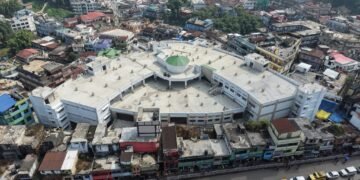
The state should also be careful about the use of public spaces like the Meghalayan Age Pavilion. If Gospel songs are performed there on Sundays for tourists, the same platform should be open to music and culture from other faiths and traditions on other days, on the same terms.
Meghalaya’s strength has always been its ability to live together with difference. That strength is protected not by the state being present at every festival, but by the state being fair at every festival. If the government can show that fairness clearly, the present controversy will pass. If it cannot, the controversy will return, in another form, at the next festival.
But there is a deeper question that the KJP Synod has yet to answer. How will this concert change lives?
A Gospel concert is not a cultural show. It is not about a stage, a crowd, or a venue. It is about faith — about hearts turning, lives being restored, and young people finding a new direction away from drugs, despair and emptiness.
So far, the debate has been entirely about the physical church — who organised it and who funded it. No one has explained what happens after the last song. Who will be followed up? Who will be discipled? What transformation will remain when the lights go off? What happens the next morning when the stage is dismantled?
If the concert is truly about the Gospel, its success cannot be measured in attendance or applause. It must be measured in changed lives. Until the Church speaks to that, the public will be right to ask whether this is about faith at all — or merely about the institution putting on a show.