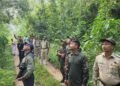











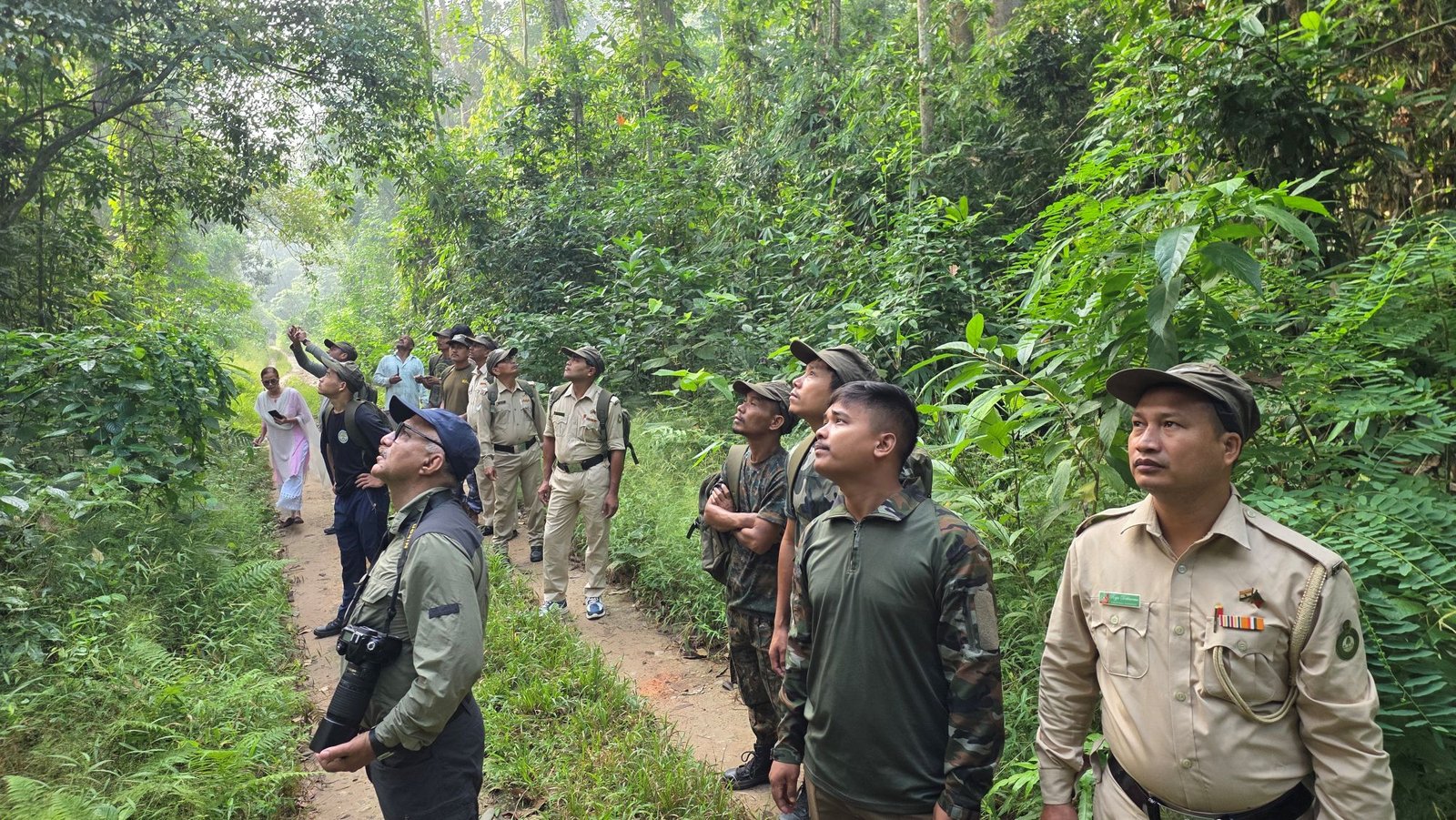
Shillong, Nov 3: In a major push to save India’s only ape, 16 forest guards from Assam, Meghalaya and Tripura were trained in conservation of the endangered Western Hoolock Gibbon at a week-long residential programme at Hollongapar Gibbon Sanctuary.
The programme, organised by biodiversity research organisation Aaranyak from October 24 to 30, aimed at enhancing field-level capacity of frontline forest staff battling habitat fragmentation, forest degradation and hunting threats to Hoolock hoolock.
Organised in collaboration with the Assam Forest Department’s Jorhat Forest Division, with support from The Habitat Trust and IUCN Primate Specialist Group, the training combined classroom lectures with field exercises.
Subjects covered included primate conservation, gibbon census and population estimation, habitat restoration, floristic survey, GPS application in field research, rescue and rehabilitation, and wildlife laws.
The programme was inaugurated by Range Officer Rupak Bhuyan, who said it was among the first specialised capacity-building initiatives of its kind in the Northeast, going beyond conventional forest school training.
Dr. Dilip Chetry, Director and Head of Aaranyak’s Primate Research and Conservation Division and Vice Chair, IUCN Primate Specialist Group – South Asia, flagged the alarming decline of Hoolock gibbons in the region and urged collective action.
Expert sessions were led by Dr. I.C. Baruah, former professor, Assam Agricultural University, DCF Gunin Saikia, Guwahati High Court advocate Ajoy Kumar Das, Dr. Bhaskar Choudhury of Wildlife Trust of India, and other resource persons from Aaranyak.
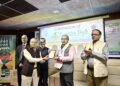
The training concluded with a convocation attended by Gitumani Das, Range Officer, Mariani as chief guest. He urged trainees to act as conservation ambassadors.
Participants were provided training manuals, books on Hoolock gibbons, awareness materials and certificates.
The initiative marked a key step towards building a skilled, collaborative frontline workforce and strengthening inter-state cooperation to protect the endangered ape.