









By Melarbor L Thabah
Innumerable arguments have been made that Reservation based on population and Section 16 of the KHADC Land Bill 2026 are not feasible. An elucidation in public interest is necessitated to clarify through this column.
- Reservation Issue: In the case of the Kerala Government versus M. Thomas in 1976, a five-judge bench initially heard the matter, during which two judges observed that the 50% ceiling on reservations was not an inviolable constitutional rule, but rather a rule of caution aimed at maintaining balance. The Supreme Court had stated that when a large number of the backward classes constitute 80% of the population belonging to the Scheduled Tribe, the Government can make reservations even if it exceeded this cautionary rule of maintaining balance in order to ensure adequate representation. The Court also ruled that reservations may be introduced in promotions to guarantee sufficient representation of Scheduled Castes (SCs) and Scheduled Tribes (STs) in public services and that Article 16(4) doesn’t violate the Right to Equality of Opportunity in public employment under Article 16(1). The Supreme Court has made it clear that the provisions of the constitution regarding equal opportunity rights and the provisions granting preferential treatment to backward classes are not contradictory. Instead, they complement each other. The ramifications of the judgement are that the State Government by way of Articles 15(4), 15(5) 15(6), 16(4), 16(4A), 16(6), 46 and 335 has the right to make reservation for the backward classes and that the 85% reservation is constitutionally legal and justifiable since Meghalaya has an indigenous ST population of around 86%. Furthermore, the Supreme Court highlighted that while interpreting the provisions of Article 16(1) and 16(2), it is important to emphasise Article 46 which directs the State Government to take measures to uplift the interests of backward classes, specifically the SCs and STs. The Court interpreted the provisions of the said Article 16 and explained that a guaranteed right to equal opportunity in public services with a provision which provides privileges to SCs and STs is a positive approach to achieve the principles of equality. The Court interpreted the grounds of discrimination under Article 16(2). It was explained by the Court that the word “Caste” in Article 16(2) does not include SCs and STs. The SCs and STs are recognized under Article 366 (24). Intrinsically, under justifiable grounds, reservation can go beyond the 50% threshold.
On May 5, 2021 while delivering its judgement on the Maratha Reservation Case, the Supreme Court while hearing the reservation case pertaining to Maharashtra had ordered the Maharashtra Government to stick to the 50% limit but after hearing from the counsels of Meghalaya, Assam, Jharkhand, Chhattisgarh, Andhra and other states which have high tribal population percentages, granted exemptions once again, of increased reservation for the tribal populace of those states. The Attorney General of Meghalaya submitted to the Supreme Court that reservation in Meghalaya is in accordance with Paragraph 810 of the Supreme Court’s judgement of the Indra Sawhney case of 1992 which stated explicitly that the 50% limit is a rule which can be breached under extraordinary circumstances which have to be put into consideration inherent in the great diversity of this country and its people. It may happen that in far flung and remote areas, the population inhabiting these areas might, on account of their being out of the national mainstream and in view of the conditions peculiar to and characteristic to them need to be treated in a different way, relaxation in this strict rule may become imperative. In doing so, extreme caution is to be exercised and a special case made out. This judgment establishes that while the 50% reservation ceiling is the standard rule of thumb, extreme and extraordinary situations involving isolated or remote populations like the remote landlocked North Eastern states may require rare relaxations with a well-established special justification.
After hearing the arguments of the counsels of those states which have high percentages of tribal population, the Supreme Court adopted as a precedent to be followed of the criteria spelt out in the said Indra Sawhney 1992 judgement. The Maratha Reservation Quota case judgement of May 5th, 2021 contains paragraphs 131 and 133 which reads as follows:
Para 131: “Thus, the greatest common measure of agreement in six separate judgments delivered in Indra Sawhney is that (i). Reservation under Article 16(4) should not exceed 50%, (ii). For exceeding reservation beyond 50%, extraordinary circumstances as indicated in paragraph 810 of the Indra Sawhney case for which extreme caution is to be exercised.” Para 133: We, thus, do not find any good ground to revisit the Indra Sawhney case or to refer the same to a larger Bench on the above ground urged.”
Therefore, taking the Kerala Government versus NM Thomas case of 1976, taking the Indra Sawhney versus Union of India case of 1992 and finally taking the Government of Maharashtra versus Innumerable Petitioners case of 2021, it is visibly evident that the 50% reservation ceiling limit rule laid down by the Supreme Court is not unalterable thereby allowing special considerations, exemptions and exceptions. Since the issue which I am clarifying here pertains to Meghalaya, hence, taking the submitted representation by the Attorney General of Meghalaya to the Supreme Court in the Maratha Reservation Case, I, most, emphatically state that reservation based on population does not hold water is a fallacy.
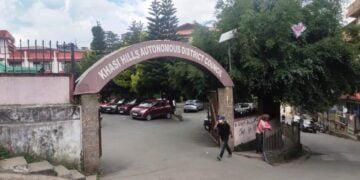
Land Bill Issue: The main function of the raid land is to provide a piece of raid land to the indigenous household populace of the area who do not have a land in order to prevent landlessness of the indigenous populace falling under the raid which is the true essence, intent and utility that the Raid Land meant to serve. However, we have seen many a times in the print and media that the “Raid Land” was misused or allegations of misuse by community leaders belonging to the Dorbar Shnong, Dorbar Raid and Dorbar Hima where large swathes of Raid Land have been sold to rich people consequently destroying the rural landless people belonging to those communities falling under the raid from getting free pieces of Raid Land which is their due right. The Executive Member (EM) Land in his press conference had stated that on opening the files of past Executive Committees (EC) of the Land Department, it was glaringly espied that whenever the Rangbah of the Dorbars were called to solicit their opinion on regulation of Raid Land that this issue “lands” nowhere and was not met with a positive response. Hence the EC was forced to regulate the Raid Land via Land Ceiling which it further classified as “Raid Land Types” so that the poor, the needy and the landless will get a fair share of their in the Raid Land by way of systematized selling or handing over of this raid. This is the very intellection as to why Section 16 was removed because the Rangbah Dorbars allegedly failed to work together for the benefit of the people living under the Raids thereby stalling the entire process. Apparently, they do not want any regulation of the raid land. Readers, ask yourself this pertinent question, if removal of Section 16 from the Land Bill was so bad, why haven’t the people belonging to those raid land areas throughout the Khasi hills come forth in droves to protest in front of the KHADC office? The answer is that the action that the EC had taken is pro poor and is the right choice.
Like any other bill subject to scrutiny, two amendments to the Land Bill 2026 are needed. Firstly, the term “Breach” has to be abrogated since it has the potential to be misused by the people connected to the current MDCs or ex MDCs or future ECs or the ex and current MDCs themselves will take advantage of this word for which they will show cosmetic formality causes for such a breach when in fact the true intent for such a breach was never actually implemented in reality. Secondly, the Land Bill does not address clearly the issue of “Land Types” whereby the same person can buy different land types or when friends or family members can buy the same land type or different types of land which the current Executive Council has classified. Hence, further clarification on these complexities is needed. These two points are glaring inducers to subvert the system which warrants necessary changes when the government will send its views to the KHADC.
It is hoped that clarification on these two important topics will enlighten the public in matters of reservation and land whereby reservation will have an effect on the job and education perspectives and land will have an effect on the downtrodden which as per National Socio-Economic studies reportedly state that 76% of the rural people of Meghalaya are landless.