








Shillong, Aug 25: The opposition Trinamool Congress (TMC) today raised its concerns regarding child nutrition and severe anaemia among mothers in the state on the second day of the Autumn session of the Meghalaya Assembly here today.
Rajabala MLA Dr Mizanur Kazi submitted three questions on the total number of Anganwadi centres operating from temporary or rented buildings, measures taken to improve infrastructure and measures taken to improve nutrition among children in rural areas.
In response, Chief Minister Conrad K Sangma informed that Meghalaya has 6,188 Anganwadi centres in the state, of which 666 (10.76 per cent) operate from rented or temporary buildings. He said the government faces difficulties in constructing permanent buildings for these centres mainly because of the lack of available land, particularly in urban areas.
The other 5,522 are located in buildings owned by the government or local community. There are 2,148 centres where construction or renovation is ongoing (478) or has been completed (1,670). The CM said Rs 64 crore has already been spent on the project, while an additional Rs 83 crore has been sanctioned for the remaining work.
The government is taking up construction and upgrades of Anganwadi centres in convergence with the Community and Rural Development (CRD) Department and under the Meghalaya Early Childhood Development Mission.
Responding to a supplementary question from Dr Kazi, Conrad Sangma informed that Selsella has 299 Anganwadi centres, of which 211 are owned and 27 operate from rented buildings. The CM said water supply is available in 1,371 of the state’s 6,188 Anganwadi centres, while 561 have toilet facilities.
On kitchen facilities, Sangma said the government did not have details on whether each centre had a separate kitchen. However, he said all centres providing hot cooked meals have a space where food can be prepared.
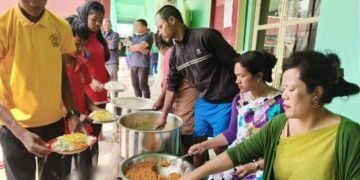
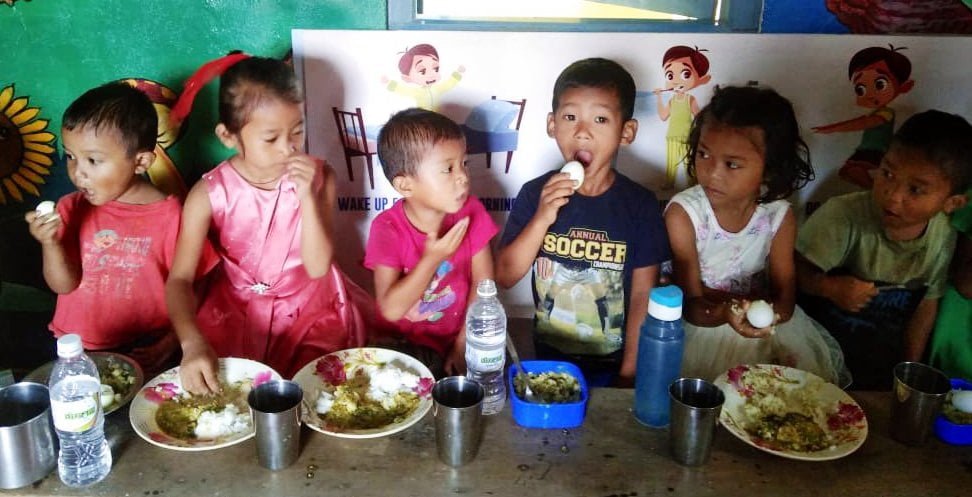
Under the Anganwadi Services Supplementary Nutrition Programme, supplementary nutrition is provided for 25 days a month. This includes hot cooked meals for children 3 to 6 years old and take-home rations for children aged 6 months to 3 years, pregnant and nursing mothers and adolescents.
Sangma said the government has also taken steps to expand the hot cooked meal programme, with meals to be provided twice a week along with eggs.
Dr Kazi also raised concerns over complaints regarding the quality and timely supply of nutrition to children.
Conrad Sangma said regular checks are carried out by the department to monitor the quality, timely implementation and distribution of nutrition. He acknowledged that concerns may arise given the large network of 6,188 centres, but said corrective action would be taken whenever specific problems are brought to the government’s notice.
On the implementation of Poshan Abhiyan and Saksham Anganwadi, Sangma said the schemes are being implemented at the grassroots level and cited National Family Health Survey data showing a decline in child stunting.
According to the figures cited by him, the percentage of stunted children below five years has fallen from 46.5 per cent three years ago to around 36 per cent in the latest figures.
Sangma said the government has also introduced the Thousand Days Programme, which tracks a child’s health from conception until the age of 2 and provides interventions at different stages.
He said the government aims to bring stunting and malnutrition levels down further, including below the national average.
Leader of the Opposition and Songsak MLA Dr Mukul Sangma, also of the TMC, raised concerns over high levels of anaemia among pregnant women, particularly in East Garo Hills.
He said that during his visits to hospitals, community health centres (CHCs) and primary health centres (PHCs), he had found that more than 70 per cent of mothers admitted in hospitals in East Garo Hills were anaemic. He claimed that some mothers had haemoglobin levels of around 6–7 (indicating severe anaemia) and often had to be referred outside the district for blood transfusions.
Dr Mukul Sangma urged the government to conduct a special survey and develop a focused strategy to address maternal anaemia in the district.
Responding to the concern, Conrad Sangma said the government has an online, real-time tracking system for pregnant women and identifies those considered high-risk. He said around 10 to 15 per cent of pregnant women are classified as high-risk at any given time, with anaemia being one of the major factors.
The government provides additional nutritional and medical interventions to high-risk mothers and facilitates their stay in safe motherhood houses or transit homes before delivery, he said. The CM agreed to conduct a special study and audit of maternal health in East Garo Hills, saying the district would receive special attention.
He also said Meghalaya’s maternal mortality rate has declined by 55 per cent, which he described as the highest reduction in the country.