




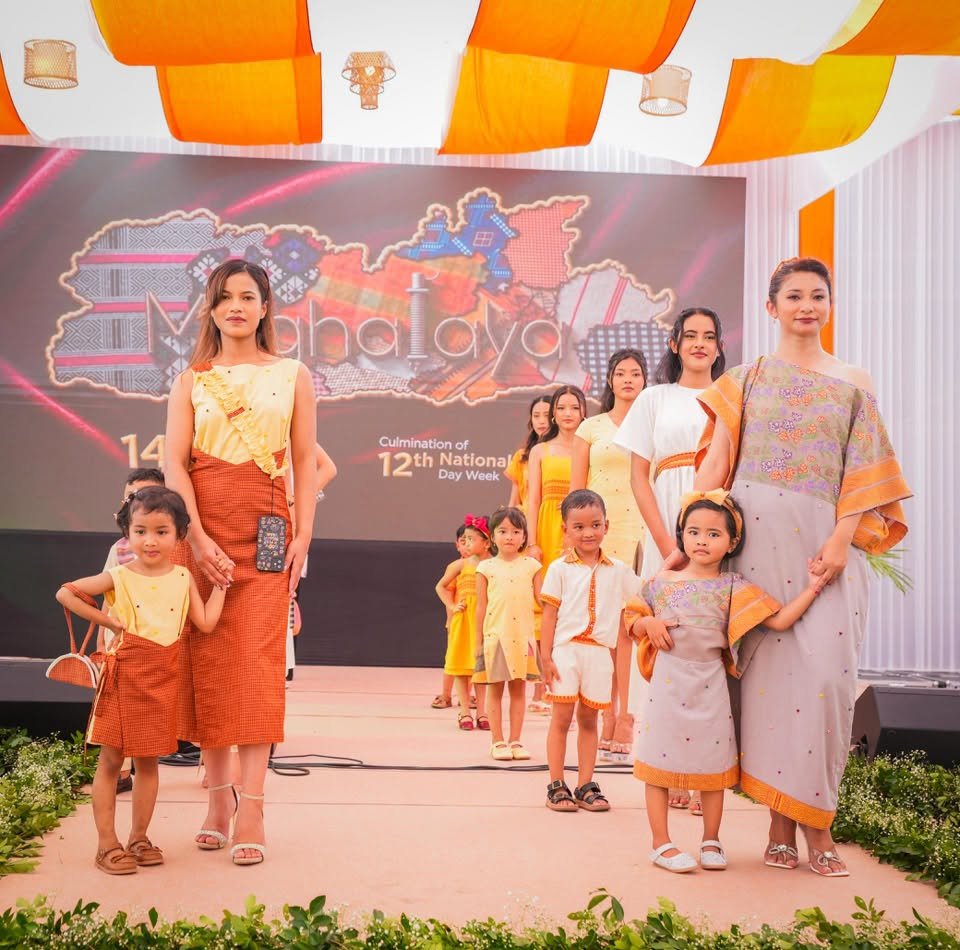
Shillong, Aug 14: National Handloom Day was observed today to mark the culmination of the 12th National Handloom Week.
In Meghalaya Chief Minister Conrad K Sangma was present at an official programme at the Integrated Textile Tourism Complex at Nongpoh.
Addressing the gathering, Sangma stated that the textile designs on display – Dakmanda, Dharashat, Mukhli and Thoseru – are not merely fabrics or attire, but representations of the identity of the diverse communities of Meghalaya. He added that for the state government, supporting weavers is not only about livelihood generation but also an investment in culture and identity. “This is a celebration of Meghalaya and a message to the country and the world that we are proud of our heritage,” he said.
The CM added that over the past six to seven years, his government has worked to keep identity, culture, language and tradition at the core of the state’s progress. He highlighted that Khasi and Garo were accorded the status of official state languages after 54 years, a decision aimed at protecting the dignity and identity of the people.
Emphasising the broader vision, he remarked, “Our endeavour has gone beyond textiles and weaving. We are weaving our culture. We are protecting it. That is how we are investing in our people.”
During the programme, the CM hoisted the national flag as part of the Har Ghar Tiranga initiative.
On the occasion, Sangma inaugurated the Centre of Excellence, which will help preserve and pass on the skills and traditions of Eri weaving to future generations. With its ‘Ahimsa Silk’ training and design centre, restaurant, cottages, and retail plaza, the complex integrates craft, cuisine, culture, trade and tourism within a single campus.
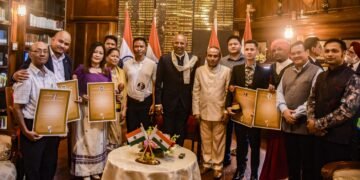
The CM also handed over awards to textile entrepreneurs, weavers and farmers in recognition of their exceptional efforts in promoting Eri silk and its products.
Government figures show that the textile sector supports the livelihoods of more than 50,000 households across the state, with over 70 percent of the workforce being women. In Ri-Bhoi alone, of the approximately 4,000 registered weavers and 3,200 registered sericulture farmers, nearly 90 percent are women.
The Meghalaya Ryndia Producers Organisation now holds the GI on behalf of the weavers who created its value.
Under the Income Generation Programme, the state government distributed looms, accessories and yarn to 2,141 weavers in 2024–25 and to 2,448 weavers in 2025–26.
Under the Cluster Development Programme of the National Handloom Development Programme, a project worth Rs 571.15 lakh is currently under implementation, of which Rs 260.35 lakh has been released as the first instalment. The project targets 981 beneficiaries and includes the provision of 300 looms along with working sheds supported at Rs 1.20 lakh each.
Since 2022–23, Meghalaya has received Rs 2,198.24 lakh under Silk Samagra-2 from the Central Silk Board, including Rs 201.61 lakh in the current year.
The CM concluded by reiterating the government’s commitment to strengthening the textile sector while preserving Meghalaya’s cultural heritage.