













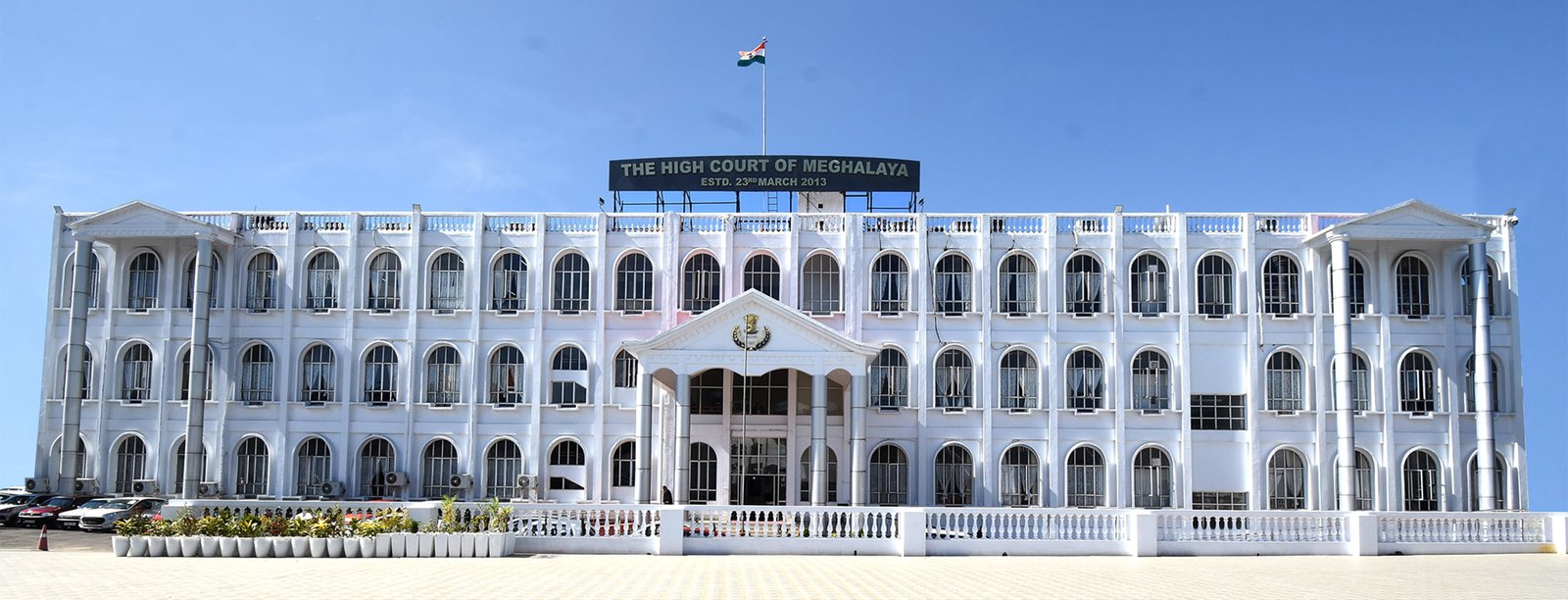
Shillong, Mar 26: The High Court of Meghalaya has struck down the state government’s decision to reduce the profit margin of liquor retailers from 20 per cent to 15 per cent, ruling that it is in violation of Article 14 of the Constitution as well as being arbitrary.
The judgment was delivered by a division bench comprising Justice HS Thangkhiew and Justice B Bhattacharjee on a writ petition filed by the East Khasi Hills Wine Dealers Welfare Association.
The petitioners challenged the introduction of the Integrated Excise Management System (IEMS), a digital track-and-trace mechanism involving QR-coded holograms on liquor bottles, that reduced the maximum profit margin of retailers by 5 per cent.
Under the IEMS, additional costs, amounting to around 4-5 per cent per bottle, were introduced for implementation, including charges for QR codes, holograms and system management.
The grievance of the petitioners is that though these costs are initially borne by the manufacturers, bonded warehouses, etc, the same is ultimately passed on to the retailers and it was contended that the said charges lacked proper statutory backing under Sections 21 and 36 of the Meghalaya Excise Act.
The state, represented by the Advocate General, contended that the trade in liquor is a privilege not a fundamental right and is subject to strict state regulation. The Meghalaya government also argued that the IEMS is a policy decision aimed at ensuring transparency, preventing pilferage and safeguarding revenue.
According to the court, however, the petitioner proved a link between the increase in cost and the reduction in the maximum profit margin to 15 per cent from 20 per cent.
“The state, though vested with the rule making power under Section 36 of the Meghalaya Excise Act, to make rules relating to excise revenue, even without any criteria or standard being laid down, this however, cannot be said to mean that the state government formulates a policy or acts in exercise of delegation of powers which would offend Article 14 of the Constitution. Though normally, delegated legislation cannot be challenged on the grounds of unreasonableness, however, if the same is anchored to Article 14, the considered view of this Court, such delegated legislation can be challenged on the ground of unreasonableness and arbitrariness,” the ruling said.
Article 14 guarantees that the government shall not deny any person equality before the law or equal protection of the laws. By reducing the profit margin of retailers without any discernible impact or reduction in the profit margin on the other stakeholders the government has taken “unreasonable and arbitrary” action that is “against the principles of equality and fairness”. Therefore, the court ruled that the state government’s move was violative of Article 14.
However, with regard to the challenge to the application of the IEMS system and the applicable rates, the court took the view that this was well within the powers of the state but its implementation has to be regulated in a fair and transparent manner.