












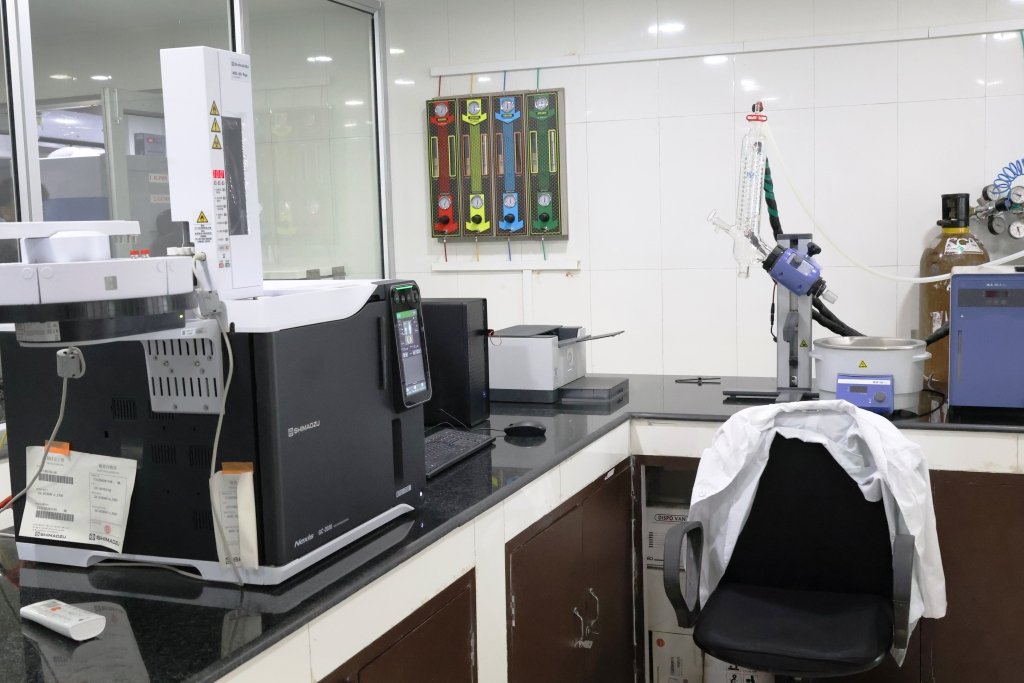
Shillong, Mar 23: Two state-of-the-art analytical instruments – Automated Water Analyser and GC-FID (Gas Chromatograph with Flame Ionization Detector) were launched today at the State Food Testing Laboratory, under the Commissionerate of Food Safety.
The launch marked a pivotal moment in the state’s efforts to build a robust food safety ecosystem driven by science and technology.
The Automated Water Analyser will facilitate rapid and comprehensive testing of water quality, addressing a critical need for safe drinking water across the state.
The GC-FID, a high-precision instrument will strengthen the laboratory’s capacity to detect organic compounds, including fatty acid composition, flavour analysis, and ABV (alcohol by volume) testing, ensuring stricter quality control.
Health & Family Welfare Minister Wailadmiki Shylla unveiled the new equipment in the presence of Additional Chief Secretary Sampath Kumar and East Khasi Hills Deputy Commissioner Rosetta Mary Kurbah.
A session themed, “Strengthening Food Safety Ecosystem through Science & Awareness,” was also held on the occasion. Policymakers, scientists, food safety officers, and stakeholders attended the session for in-depth deliberations on the role of innovation, scientific advancement, and public awareness in ensuring food safety across Meghalaya.
Shylla said that food safety is not only a regulatory requirement but also a fundamental health priority. He said that with the complexity in the food system, the role of science-based testing, surveillance and risk assessment has become more critical than ever.
A strong food safety ecosystem rests on three key pillars – robust laboratory infrastructure, skilled human resources and effective coordination among stakeholders.
“Laboratories like yours play a central role in ensuring that food reaching out to our citizens is safe, compliant and of high quality,” Shylla said.
The minister said that strengthening through science and awareness is a multi-dimensional approach aimed at building sustainable, resilient and equitable food systems that combat hunger, malnutrition and environmental degradation.
He said that awareness is important since food safety is not only the responsibility of the regulator but also of food business operators and consumers alike.
Meghalaya has potential to emerge as a model in food safety governance and initiatives like this conclave are a step in the right direction, he added.
“In an era of complex food supply chains, timely and accurate testing safeguards consumers from hidden risks and builds trust in the food system,” Shylla said.
The Additional Chief Secretary said that the government aims to help entrepreneurs and farmers to get more value out of their agricultural base products. Exporting the world-famous Lakadong turmeric to foreign countries requires a lot of testing and high standards, he explained. Similarly, as tourism grows in Meghalaya, safe and high quality food for visitors is a must.
Kumar also informed that the government conducted random tests of blood lead levels among 1,900 children and mothers. Lead, a heavy metal, can cause myriad health problems if high enough levels are found. Kumar said that 30 per cent of those who were tested have higher levels. He pinpointed cosmetics and even aluminium utensils as possible sources of lead in the human body.
Kumar also said that spring waters are being tested by authorities and it has been found that a significant percentage of these water sources are contaminated.
Kurbah said that the State Food Testing Laboratory had on a number of occasions tested and detected many cases of contamination in food. The DC said that strengthening the lab is a key to building a robust food safety ecosystem.