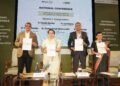








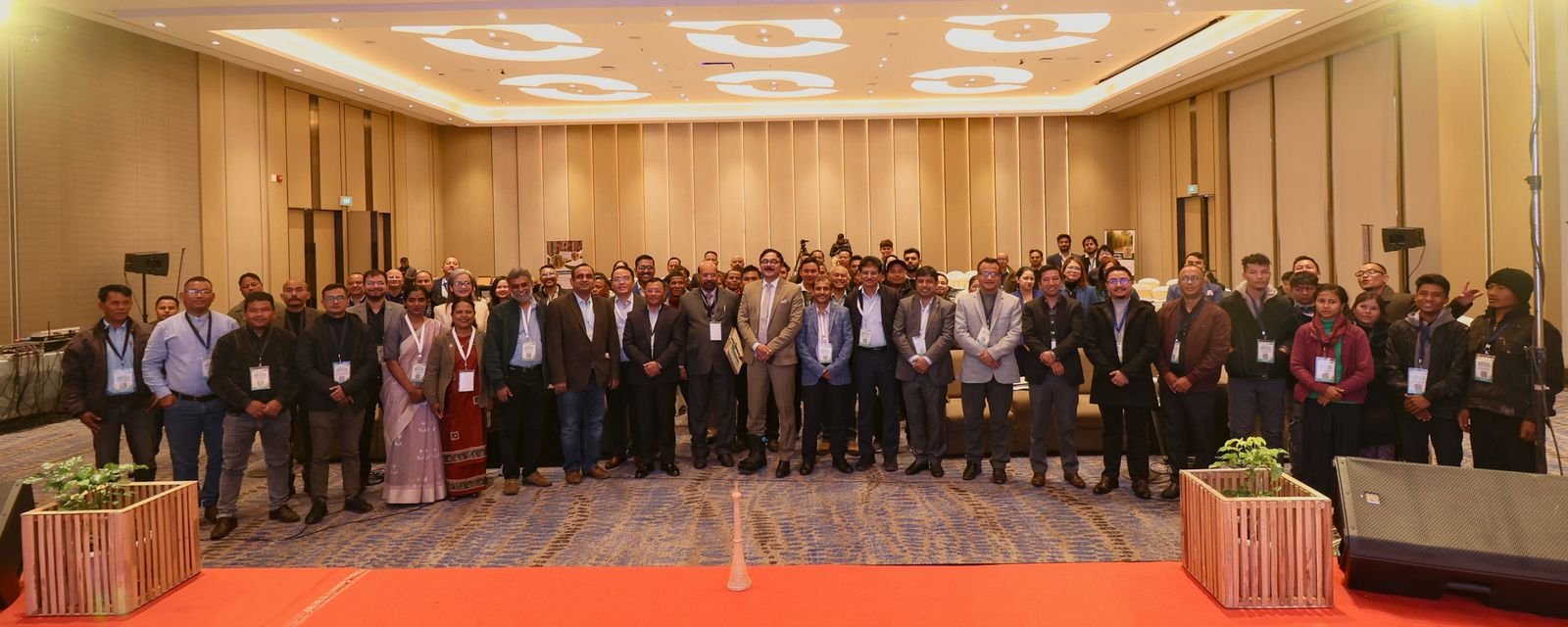
Shillong, Dec 10:A two-day workshop on sustainable bamboo management for a Green Economy in Meghalaya was organised by organised by the Meghalaya State Bamboo Mission (MSBM) under the Meghalaya Basin Management Agency (MBMA), in collaboration with MegLIFE of the Meghalaya Basin Development Authority (MBDA), and supported by the National Bamboo Mission.
The workshop brings together leading scientists, forestry experts, research institutions, government departments, entrepreneurs, and community representatives to strengthen sustainable bamboo resource management and promote bamboo-based green livelihoods in Meghalaya.
Chief Secretary Dr. Shakeel P. Ahammed addressed the gathering and officially launched the Meghalaya State Bamboo Mission Website, marking a significant step toward improving access to bamboo-related knowledge, best practices, and resource information.
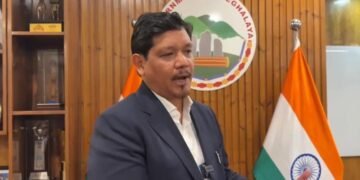
He highlighted that the Northeast requires stronger technical support and clearly defined deliverables to enable meaningful growth of the bamboo sector. He further stressed the need for deeper collaboration with institutes and researchers—beyond just Centres of Excellence —so that the work genuinely benefits communities at the grassroots.
MSBM Mission Director Sachin Gavade emphasised that bamboo utilisation in Meghalaya remains limited and that there is an urgent need to build a green economy by creating more value-added opportunities and bringing bamboo into the mainstream economic sector.
The technical session focused on Bamboo Forestry & Agroforestry Models for Meghalaya. The session featured experts from the Kerala Forest Research Institute (KFRI), Rainforest Research Institute (RFRI), CSIR–NEERI, and included a case study from Rajasimla Rongdal A•timbo, showcasing community-led bamboo conservation efforts in North Garo Hills.
Key discussions explored bamboo species selection, quality planting material, genetic improvement, cane propagation, and the restoration of degraded and mining-affected areas.
A session on Sustainable Bamboo Harvesting & Resource Management was conducted where experts shared insights on FSC certification, socio-economic and ecological resilience, sustainable bamboo harvesting and management, challenges faced by the bamboo industry in India, and logistics, transportation, and post-harvest processing of bamboo in hilly terrains.
A case study by the Syrwet U Barim Cooperative Society highlighted traditional bamboo forest management practices in the Living Root Bridges (LRB) villages, including Shlem Jingtip (spaces of learning), Iing Mariang (nature homes), and traditional weaving practices, demonstrating how bamboo is sustainably managed in these communities.