













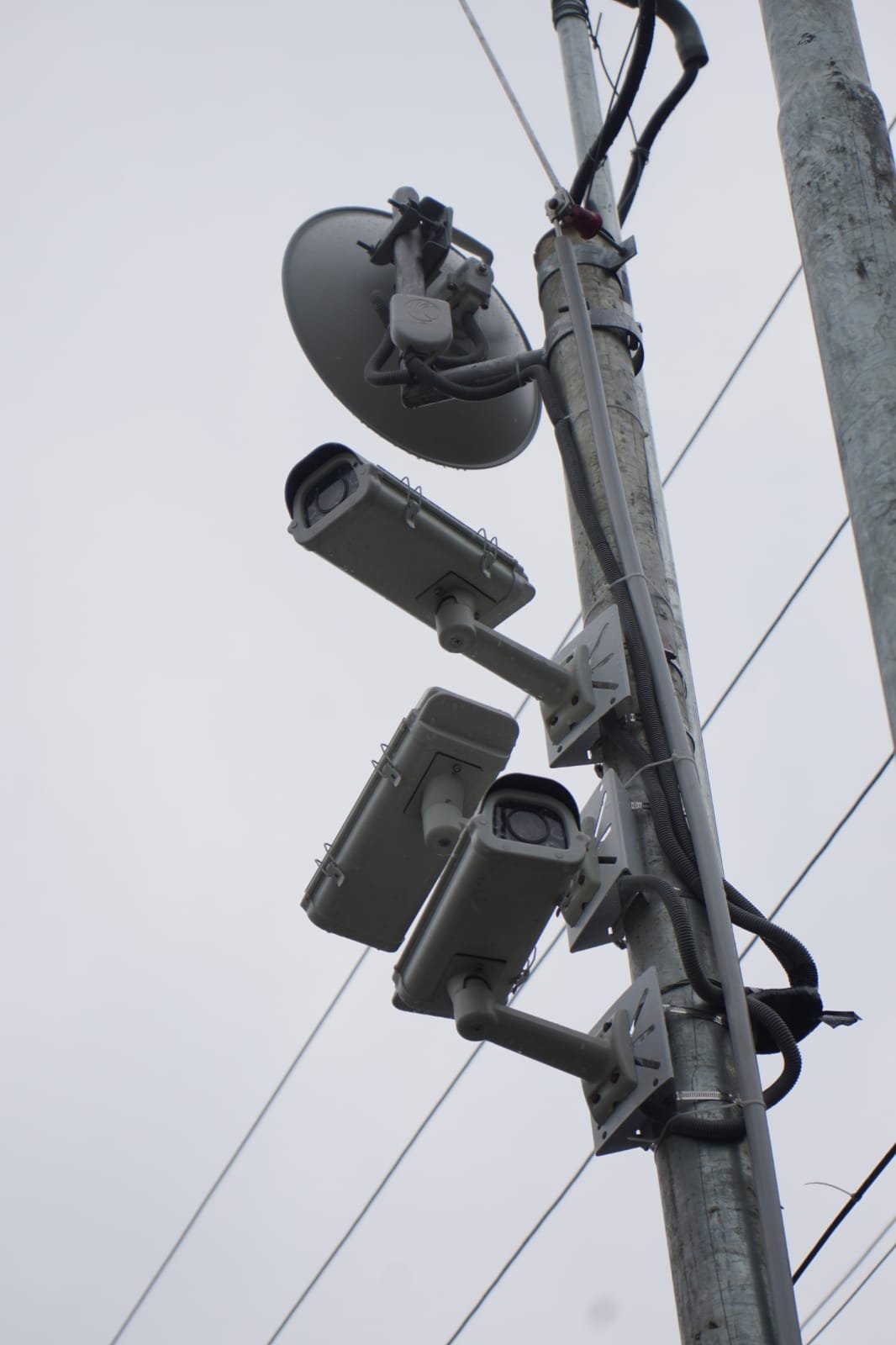
Shillong, Jul 30: The Meghalaya High Court on Thursday expressed dissatisfaction over the state government’s affidavit on the status of CCTV cameras in police stations, saying it does not give the correct picture of the number of functional cameras.
A division bench comprising Chief Justice Revati Mohite Dere and Justice Wanlura Diengdoh heard a public interest litigation (PIL) on the state’s non-compliance with Supreme Court guidelines mandating installation, operation and storage of CCTV footage in all police stations.
The Supreme Court mandated CCTV cameras in police stations to curb custodial torture, prevent human rights violations and ensure accountability in police actions.
The court noted that the affidavit filed by Assistant Inspector General of Police SR Marak, dated July 29, pursuant to the court’s order of June 18, annexed a chart showing a large number of non-functional cameras.
It cited examples including around 50 non-functional cameras in Williamnagar in East Garo and 129 in Shillong.
The affidavit also stated that cameras at Laban Police Station were struck by lightning and that several others were down due to mechanical defects.
The bench observed that the police headquarters had written to the concerned firm on March 9 asking for inspection and estimates for repairs, but “till date, it appears to be no course correction nor the issue addressed seriously, for reasons best known.”
The court further noted that the police HQ has submitted a proposal under the Assistance to States and Union Territories for Modernization of Police (ASUMP) scheme for 2026-27 seeking Rs 25.24 crore for upgradation, additional cameras and a centralised monitoring dashboard. The proposal is pending with the Union Ministry of Home Affairs.
Finding prima facie non-compliance with the Supreme Court judgement from 2021, the bench directed the state to file a detailed affidavit at the next hearing, August 20.
It must specify when cameras were installed in each police station, how many are functional and non-functional, since when they are down and their locations.
The affidavit should also state the period for which CCTV footage is preserved, details of budgetary allocation and the annual maintenance contract.