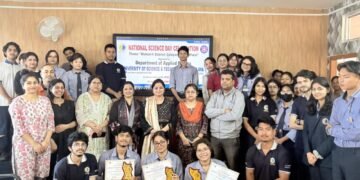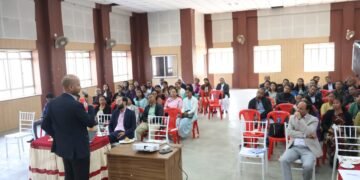


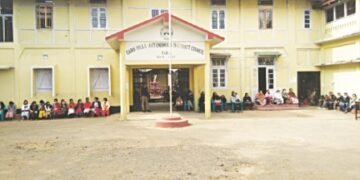
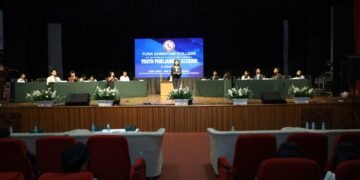







A state level dissemination workshop on findings of micro-nutrient rich and climate resilient crop species was held in Khweng village yesterday.
The workshop organised by NESFAS was aimed at sharing the findings of the participatory mapping, production plan and assessment of increase production with the communities.
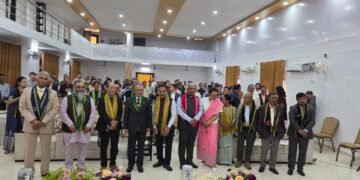
Community representatives from Khweng, Khliehumstem, Madanrtiang and scholars from ICAR attended the workshop that was graced by Umroi MLA, George B Lyngdoh and Bhoirymbong BDO, Clifford Warjri.
Senior Associate, Research, NESFAS, Dr. Bhogtoram Mawroh highlighted the key factors of mapping study which was held in Khweng and Khliehumstem from Bhoirymbong Block. He informed that Khweng has the highest agrobiodiversity with over 319 crops followed by Marmain, which are both from Ri-Bhoi district indicating the rich biodiversity in these communities.
He said these were ranked based on different indicators and found that most of the traditional crops were micro-nutrient rich species (MNRS) and climate resilient species (CRS). However, the dietary diversity score (DDS) in all the study area was below the average of five which is considered adequate to meet the minimum nutrient requirement of the body.
Under the REC funded project “No One Shall Be Left Behind Initiative” activities like production plan was an intervention to increase the production of such species and also focused at increasing the consumption of those food groups that are missing from the diets. This has shown a positive impact with a 30 per cent increase, both in the production and consumption of MNRS and CRS in the partner villages.
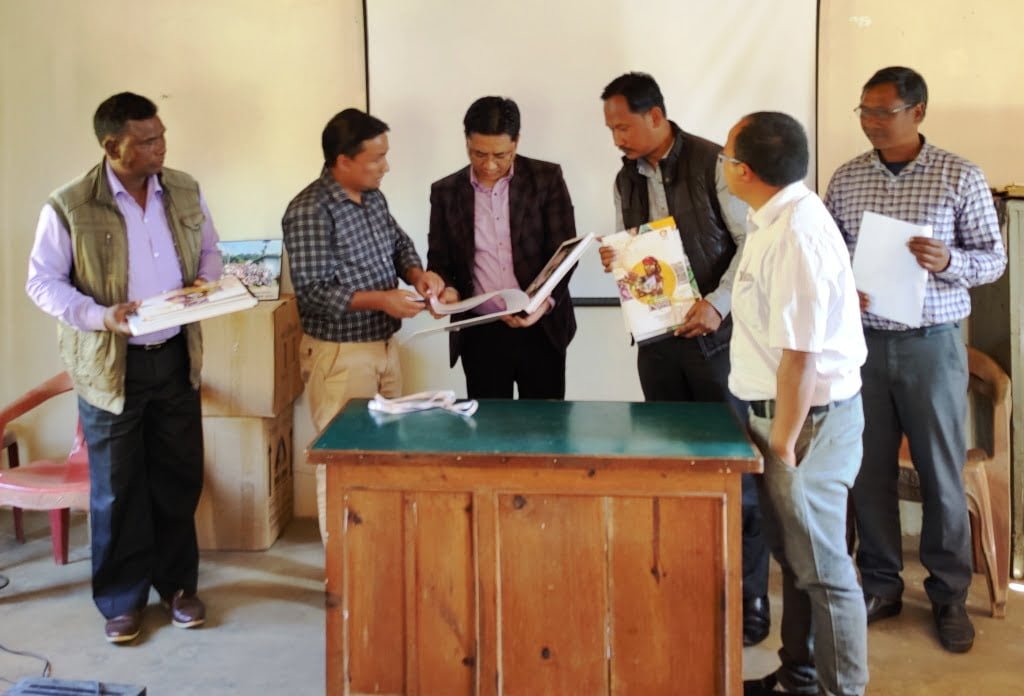
The workshop was followed by the official launch of the Agrobiodiversity Book of Meghalaya and Nagaland -Volume I, produced by NESFAS.
The book is considered an encyclopaedia of food plants that are found in the Indigenous Food Systems (IFS) of Meghalaya and Nagaland.
The guests at the workshop have expressed their commitment to collaborate with NESFAS and also urged it to scale up and expand the project to 145 villages under their districts. Additionally, NESFAS will also be piloting the procurement of local food in five villages within the mid-day meals and supplementary feeding programmes.