
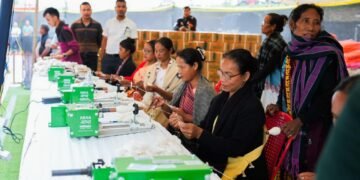

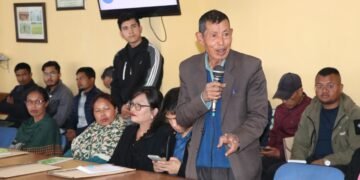
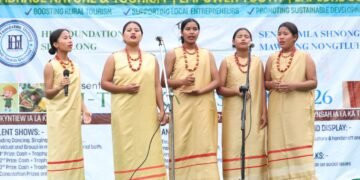
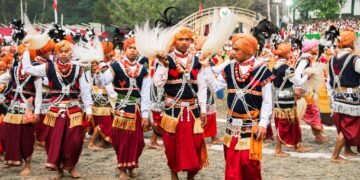







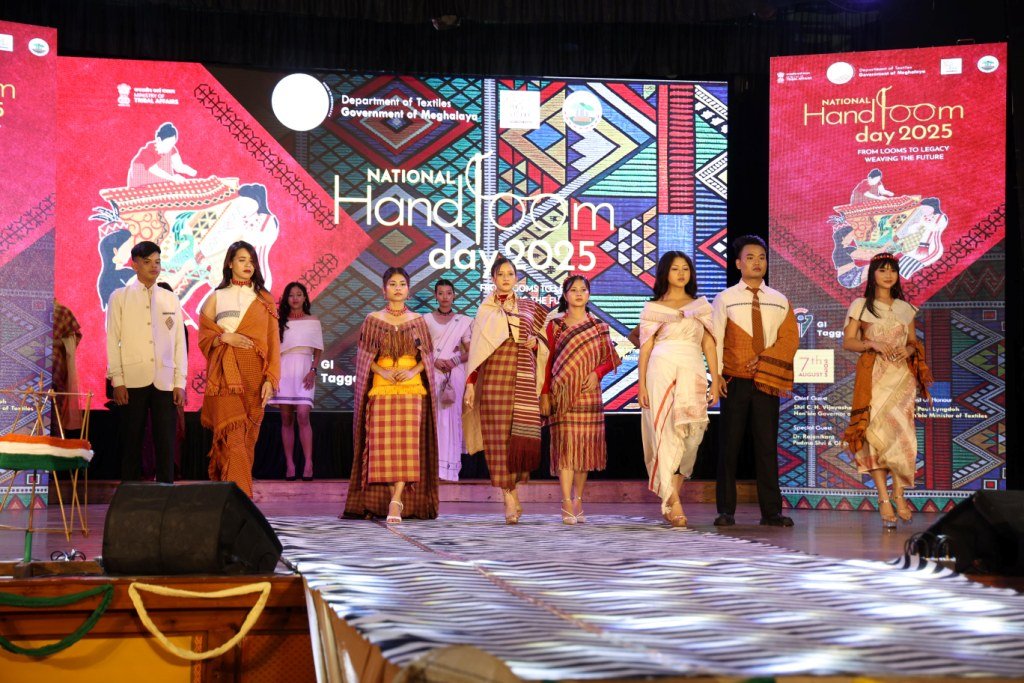
Shillong, Aug 7: The Department of Textiles celebrated National Handloom Day today with a special focus on the recent achievement of Geographical Indication (GI) tagged status for two traditional products Ryndia and Khasi handloom.
Governor Chandrashekhar H Vijayashankar in his address, described the recognition as a matter of pride not only for the state but also for the nation. He emphasised the need for continued cooperation and support for the holistic development of the handloom sector in Meghalaya.
“It is a moment of celebration for all of us. The GI tagged for Ryndia and Khasi handloom reaffirms the unique identity of our traditional weaving culture,” he said.
He said over 40,000 farmers and more than 42,000 individuals are directly or indirectly engaged in the handloom sector, the majority of whom are women.
Textiles Minister Paul Lyngdoh said the enduring spirit of the Swadeshi movement remains deeply rooted in Meghalaya. Highlighting the growing prominence of the department, the Minister said, “What was once considered a minor department is now taking center stage, even drawing attention from the Prime Minister, who acknowledged our products in his Mann Ki Baat address.”
As part of the celebrations, the Minister launched a new website titled “KHNENG – Woven with Heritage, Worn with Pride”, and unveiled the cover, “Looms to Legacy”. The event also saw the distribution of State Handloom Awards to outstanding artisans from various districts across Meghalaya.
The National Institute of Fashion Technology (NIFT), Shillong, celebrated the day with a vibrant celebration showcasing the cultural and textile richness of Northeast India. The day was filled with activities including a Saree Draping Workshop, an ethnic fashion show highlighting traditional handwoven textiles of the region, and a spirited Bihu dance performance that brought alive the essence of Northeast heritage.
Director of Census Operations of Citizen Registration, Arunachal Pradesh and Meghalaya Dr. Pooja Pandey in her address underscored the importance of the ‘Make in India’ initiative and emphasised that the handloom sector is the second-largest employment generator in the country after agriculture, especially for women, allowing them to work from home while preserving cultural traditions. She stressed the need for widespread support to sustain and promote India’s indigenous weaving traditions and urged everyone to champion handloom by incorporating it into everyday fashion and lifestyle.
The Department of Textiles and Apparel Designing, College of Community Science, Tura, in collaboration with the All India Coordinated Research Project on Women in Agriculture (AICRP-WIA) felicitated selected weavers and handloom allied workers, recognizing their outstanding contribution to preserving and promoting traditional handloom crafts in the region.
Captain Williamson Sangma State University Vice Chancellor Dr. Vasanthi Vijayakumar emphasised the importance of ‘Vocal for Local’ and the handloom sector’s close ties to India’s Swadeshi movement. She lauded the dedication of women weavers in sustaining the cultural heritage of the region.
Professor of NEHU Tura Campus Dr. C.P. Suresh highlighted the handloom sector’s role in rural livelihoods, while Dr. Ivone M. Sangma, DMCHO (DIO) underscored how weaving has been instrumental in empowering women, both economically and socially.
A handloom exhibition featuring products created by local artisans and students was also inaugurated on the occasion. Dignitaries and visitors appreciated the quality and cultural richness of the showcased items.