













By Anu. P. James
Shillong, the capital of Meghalaya, offers a stunning, unique twist on the globally celebrated cherry blossom phenomenon. While the world flocks to see the iconic pink blooms in spring, Shillong transforms into a canvas of pink and white every autumn, celebrating a special Indian species that dances altogether to a different seasonal rhythm.
Species of Cherry and its Characteristics
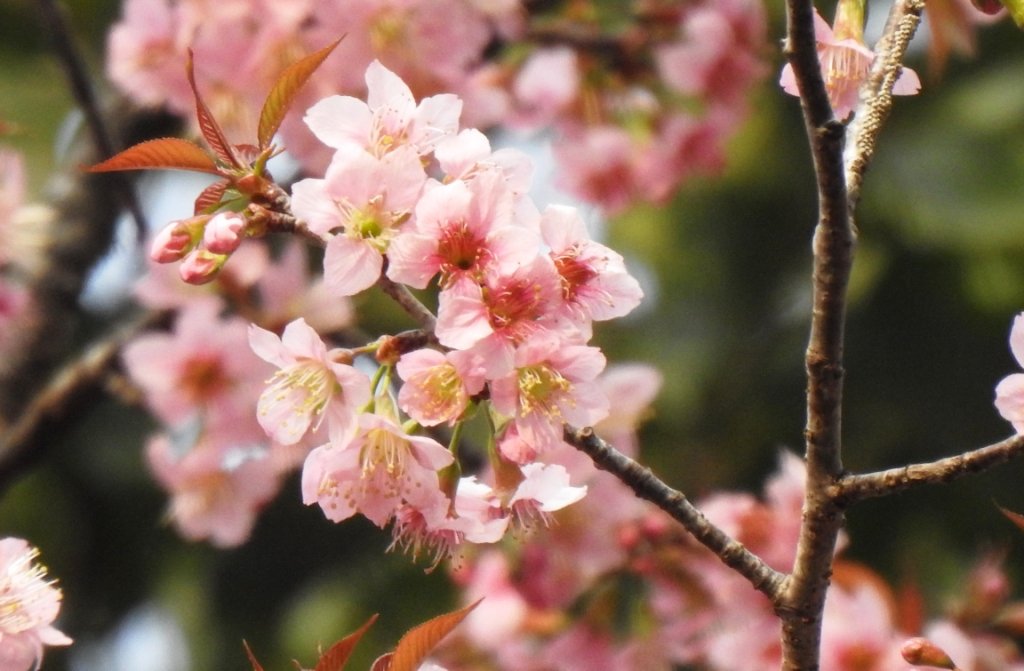
The cherry tree gracing the hills of Shillong is the Wild Himalayan Cherry, scientifically known as Prunus cerasoides. This species is native to the Himalayas, and unlike many cultivated Japanese varieties, it is a hardy, wild tree. The tree is an indigenous species of the Himalayan region and extends its natural range into the subtropical highlands of South and Southeast Asia, including the hills of Northeast India.
Prunus cerasoides grows naturally in the forests of the Himalayas, covering a vast area from Himachal Pradesh in the west to regions like Meghalaya (including Shillong and East Khasi Hills), Nagaland, and Arunachal Pradesh in the east. It is naturally found in temperate forests at altitudes between 1,200 to 2,400 meters an elevation range that perfectly matches the Shillong plateau. While the large-scale planting of these trees has been done in Shillong to enhance the annual autumn spectacle, the species itself is a natural part of the local flora.
The bark of the tree is glossy, ringed, and often dark, giving the tree a distinguished appearance even when not in bloom. It can grow up to 30 meters, making it a substantial forest tree, not just an ornamental shrub. The flowers are hermaphroditic and range from light pink to rosy pink and white. They typically begin flowering at 4–5 years of age, with peak blooming capacity reached around 8–10 years. Beyond aesthetics, the tree has medicinal properties. Its bark and leaves are used in traditional remedies for respiratory ailments and skin conditions. The wood is lightweight and occasionally used for carving and fuel.
The Science of Autumn Bloom Versus the Spring Bloom
The flowering season of Himalayan Cherry is Autumn to Early Winter (typically October to November-December), which is its most distinctive feature of this species.It has evolved to bloom in autumn due to its unique physiological adaptations.
The key difference between the Shillong cherry (Prunus cerasoides) and the classic Japanese cherry (Prunus serrulata) is the timing of their bloom, which is linked to evolutionary pressure and climate.
The Japanese Cherry trees require a period of winter dormancy called vernalization. The buds are set during the previous autumn but remain dormant until they receive a sufficient number of cold hours (chilling requirement). The subsequent rise in temperature in early spring then triggers them to burst into bloom. This ensures the flower is protected from the harshest winter weather.
The Wild Himalayan Cherry, native to a region with milder autumns and dry winters, has evolved to bloom just as the monsoon season ends and the temperatures begin to drop, a signal for the onset of the dry season.These natures hues trigger hormonal changes, particularly in gibberellins and abscisic acid, that initiate flowering in late October to November.This unusual autumn flowering allows it to bloom when other plants are starting to go dormant, giving it a reproductive advantage by attracting scarce pollinators before the cold fully sets in. Thus, the Shillong bloom signals the onset of winter, whereas the Japanese Sakura bloom signals the arrival of spring.
The Symbolism of Cherry Blossom
Across the world, especially in Japan, the cherry blossom, or Sakura, carries profound cultural meanings.The most significant meaning is the aesthetic appreciation of impermanence and the fleeting nature of beauty‘Mono no Aware’‘The pathos of things’ or ‘an empathy toward thing’. Since the blossoms last for only about two weeks, they are a powerful metaphor for the short but brilliant nature of life itself. Also, historically, the falling petals symbolized the life of the Samurai warrior, a magnificent but brief existence, willing to sacrifice itself for honour at its peak. The spring bloom coincides with the start of the Japanese fiscal and school year, making Sakura a symbol of hope, renewal, and new beginnings.
For Shillong, the cherry blossom has quickly developed a unique cultural significance that blends its natural beauty with the region’s vibrant identity.
Unlike the quiet, contemplative viewing which is called Hanami in Japan, the Shillong bloom is an occasion for boisterous celebration. It has become the centrepiece of the annual International Cherry Blossom Festival.
The Shillong cherry blossom is more than just a beautiful display; it is a celebration of a distinctive ecological phenomenon, firmly planting India on the global map of floral tourism and giving the city a joyous, pink highlight just before the year ends.
A Message of Reverence
As Shillong turns pink each autumn, it offers more than visual delight—it invites reflection and contemplation. In a world grappling with climate change and ecological loss, the cherry blossom is a gentle reminder of nature’s rhythms and resilience.
Ecologically the Himalayan Cherry plays a vital role in pollination support, the unique timing creates a critical ecological niche, helping to build reserves before the winter dormancy and also act as a critical “bridge bloom” helping pollinators transition from post-monsoon abundance to winter scarcity. Apart from this the cherry trees play an important role in carbon sequestration, soil stabilisation of the hilly slopes and improve the urban aesthetics.
As we celebrate the Cherry Blossom, let this bloom be a reverence to nature, a celebration of harmony between climate, culture, and community. May each bloom inspire stewardship, each cherry tree root deeper ecological consciousness, and each festival renews our commitment to protecting the landscapes that cradle such miracles.
(The writer is an officer of the Indian Forest Service and is presently working as Divisional Forest Officer, Forest Utilisation Division, Shillong. Views expressed in this article are her own.)