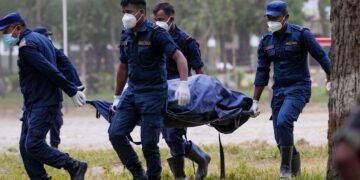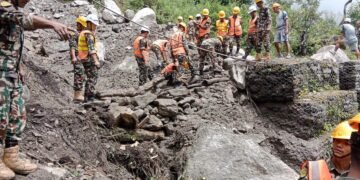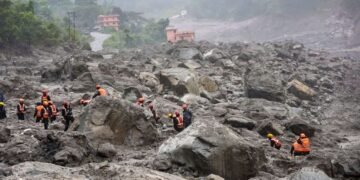












Kathmandu, Sep 1: The death toll from the devastating flash floods in Nepal surged to 1,050 on Tuesday, with security forces recovering more bodies from eight districts of the country, officials said.
Rescuers struggled to trace those stranded amid intermittent rainfall and a fresh flood alert as water levels rose in rivers across eastern, central and western parts of Nepal.
Nearly 4,000 people, including 583 foreigners and 83 security personnel, still remain missing the National Disaster Risk Reduction and Management Authority (NDRRMA) said.
Around 12,000 people have been rescued, it said.
Flash floods, triggered by a collapse or avalanche of ice and rock near the Nepal-Tibet border, devastated towns and villages in northern and central Nepal on August 26.
The Bhotekoshi River, which flows south from the Himalayan border region, carried the floodwaters downstream, sweeping away homes, vehicles, roads and bridges and damaging hydropower projects.
The disaster also killed 16 people on the Chinese side, while nearly 550 people remain missing in Tibet, according to Chinese media reports.
In Nepal, 321 bodies were recovered in Chitwan district, followed by 216 in Nawalparasi East, 170 in Nawalparasi West, 142 in Nuwakot, 65 in Gorkha, 57 in Dhading, 41 in Rasuwa and 38 in Tanahun, according to NDRRMA.
Nepal’s hospitals are struggling to cope with the growing number of unidentified bodies.
Large gatherings were witnessed at medical facilities, with people carrying photographs of missing relatives and scrutinising images of the dead pasted on the walls.
Unidentified bodies have been kept at 21 hospitals across the country, officials said.
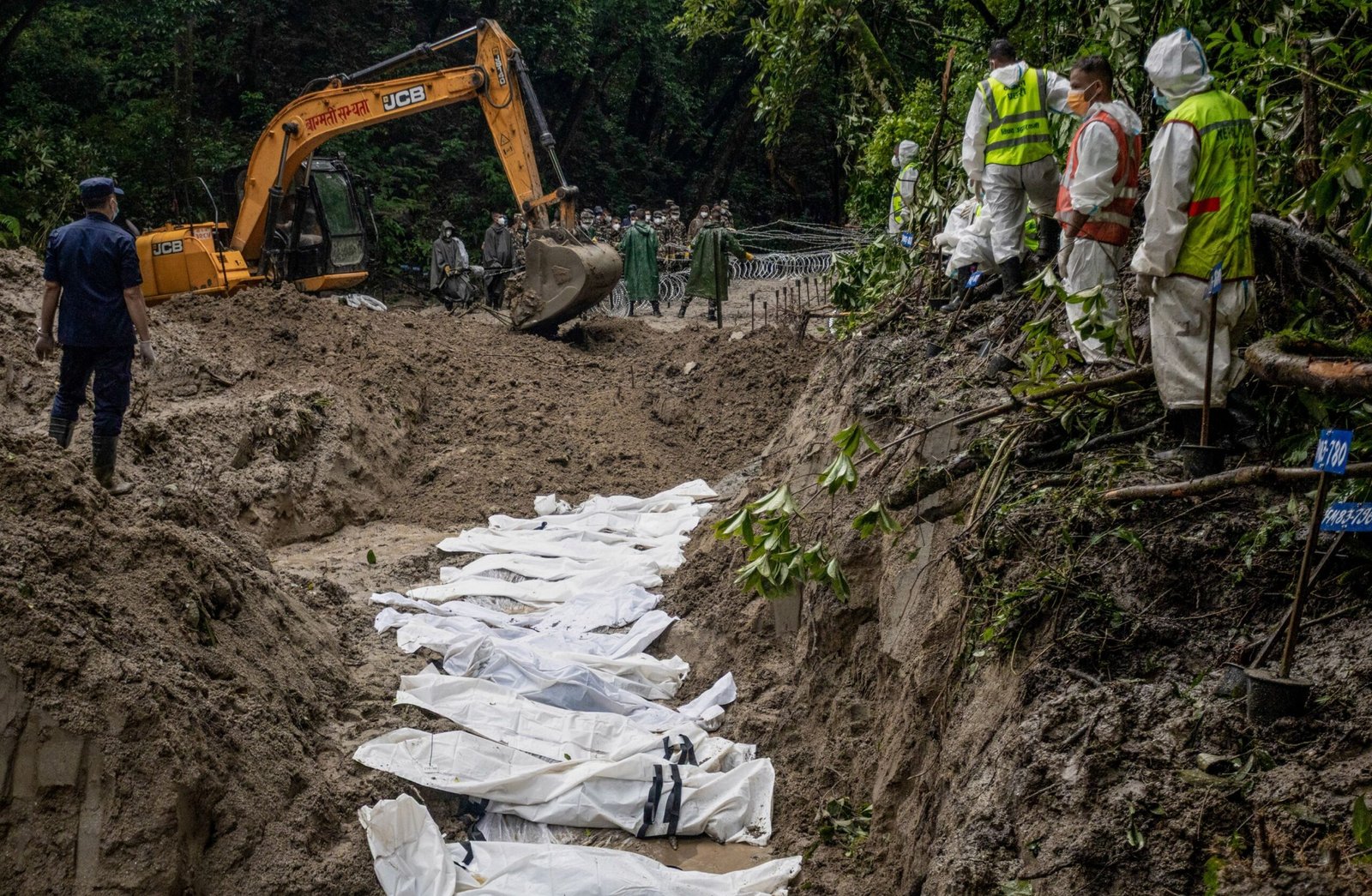
Identification remains a major challenge, with many bodies badly decomposed or recovered only as partial remains after being swept downstream.
Of the total bodies recovered so far, only around 60 were handed over to relatives after identification, while nearly 700 were buried after documentation and preservation of identification records, officials said.
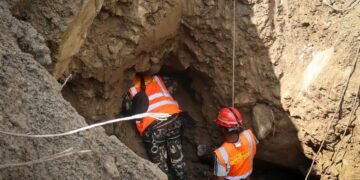
Rescue teams are still trying to trace 683 workers and employees in various hydropower project sites in flood-hit areas, of which many are believed to be trapped in tunnels.
Expert teams from India and China are assisting the Nepalese rescuers in these operations.
India’s specialised tunnel rescue team made progress at two hydropower sites, establishing a foothold inside a tunnel at Chilime and probing up to 185 metres at Langtang, Indian Ambassador to Nepal Naveen Srivastava said in a post on X.
The team worked at the two sites in coordination with the Nepali Army despite inclement weather and difficult access conditions.
Rescuers are being slowed by water, mud and debris blocking tunnel entrances, difficult terrain and damaged access routes, while the lack of specialised equipment and technical expertise at some sites is further complicating efforts to reach workers who may still be trapped underground.
For the families, however, the search has become a race against time, with conflicting accounts of their loved ones’ last movements and little certainty over whether they are buried under debris, trapped inside tunnels or still alive but missing.
Nepalese authorities on Tuesday issued a fresh alert over the risk of floods in several districts across eastern, central and western parts of the country, urging people living near rivers to remain vigilant and take precautionary measures.
There is a high possibility of flash floods in Nuwakot and Rasuwa districts, where water flow in smaller rivers and streams is expected to rise, according to a notice issued by the NDRRMA.
There is also a risk of rising water levels and a moderate risk of flash floods in districts, including Taplejung, Sankhuwasabha, Solukhumbu, Khotang, Okhaldhunga, Ramechhap, Dolakha, Sindhupalchowk, Kavrepalanchok, Lalitpur, Bhaktapur, Kathmandu and Dhading in central Nepal, it said.
In western Nepal, the districts under alert include Gorkha, Lamjung, Dolpa, Rukum East, Rukum West, Jajarkot, Darchula, Baitadi, Dadeldhura, Doti, Kailali and Kanchanpur, the authority said.
Water levels in several rivers — including Koshi, Narayani, Bagmati, Karnali, Mahakali and their tributaries, as well as Kankai, Kamala, Babai, Eastern Rapti, and Western Rapti — are being closely monitored, officials said.
A real-time CCTV camera has been installed at Timure in Rasuwa district to directly monitor river and flood conditions in the area. The camera has been installed to provide timely information on flood risks in the border area and strengthen the effectiveness of the early warning system.
Nepal’s Energy Minister Biraj Bhakta Shrestha on Tuesday held discussions with senior officials in the energy and meteorology departments as well as with experts, focussing on weather conditions and fresh flood risks in flood-affected areas, including Rasuwa and Nuwakot.
The discussions also focused on continuous river monitoring, strengthening the early warning system and expediting preparations for risk reduction, according to the minister’s office.
Work is underway to manage the VSAT (Very Small Aperture Terminal) and communication systems needed to make the system fully operational. VSAT systems can help in flood monitoring by transmitting critical real-time hydro-meteorological data from remote field sensors to central modelling and forecasting stations.
Footage and information received from the real-time CCTV camera will be integrated with the 24-hour flood forecast and early warning service. This will facilitate continuous monitoring of river conditions and help identify early signs of potential flooding, officials said.
The Nepalese government has mobilised more than 21,300 security personnel for search and rescue operations, while helicopters have been making repeated sorties to evacuate stranded people and deliver relief supplies.
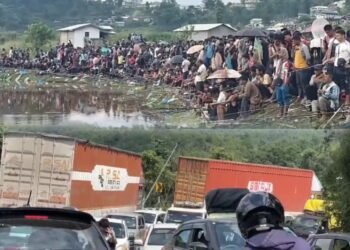
Nineteen motorable bridges and several highways and arterial roads were washed away. One of them was Nepal’s main land trade link with China as well as the Rasuwagadhi border crossing connecting the two nations.
With traffic pressure increasing following the devastating floods in Rasuwa, Nuwakot and Dhading districts of central Nepal, authorities have imposed one-way traffic rules on the Prithvi and Tribhuvan highways linking Kathmandu with other parts of the country.
Under the new traffic arrangements, vehicles with a maximum capacity of 14 seats travelling from Kathmandu to Hetauda have been directed to use the Farping-Fakhel-Kulekhani-Bhimfedi route. Vehicles travelling from Hetauda to Kathmandu should use the Bhimfedi-Kulekhani-Sisneri-Dakshinkali route, according to the authorities.
Larger cargo and passenger vehicles with up to 10 wheels travelling from Hetauda to Kathmandu have been asked to use the Tribhuvan Highway, while those returning to Hetauda should take the Kanti Highway. The one-way traffic arrangements were imposed after floods washed away sections of the highway at Krishnabhir in Dhading district, disrupting traffic along the route. (PTI)