











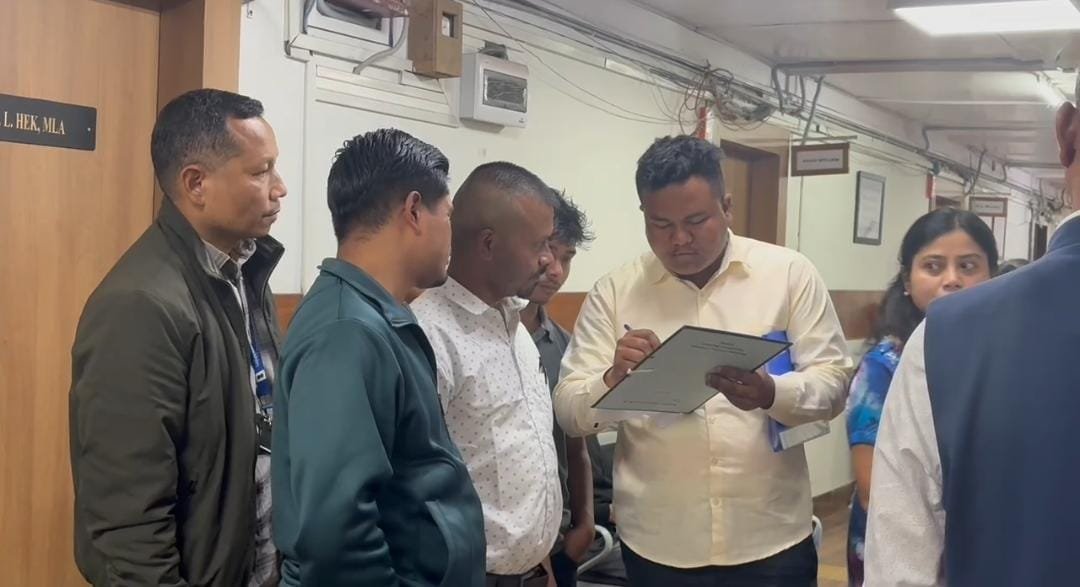
Shillong, Oct 16: The Meghalaya government’s fact-finding committee on the proposed Shree Cement project in Daistong village in East Jaintia Hills has begun examining representations from both supporters and opponents, with reports from various departments also to be considered before it reaches any conclusion.
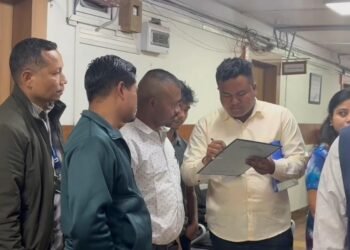
Commissioner and Secretary of Home (Political) Cyril V Diengdoh said the committee held a hearing today during which 15-16 representations were heard from individuals and organisations with differing views on the proposed project.
“Whatever hearing we have done today, all this will be taken on record and we are examining all of this,” Diengdoh told reporters.
The hearing was originally meant to be held in Khliehriat on October 13 but was moved to Shillong and rescheduled to today.
Diengdoh said the committee would examine all relevant documents and reports, including those from the Meghalaya State Pollution Control Board, the Deputy Commissioner and the Superintendent of Police, before deciding on its next course of action.
“This is not the conclusion. All the facts will be examined. All the documents, all the reports from the Pollution Control Board, from the DC, from the SP, everything will be examined in toto,” he said.
Diengdoh said the committee had not yet decided when it would hold its next sitting, adding that it would first examine the representations and documents received.
Asked about concerns that the hearing should have been held at the project site to enable more affected residents to participate, he said the committee had taken note of the submissions made during the hearing and would act accordingly. “It is premature to comment on all these issues,” he said.
Meanwhile, president of the Meghalaya Indigenous Women’s Council (MIWC) Bythegrace Dkhar expressed hope that the committee’s report would address the concerns of farmers and residents who could be affected by the proposed cement project.
Dkhar said both supporters and opponents of the project had attended the hearing, adding that she had faith in the committee to examine the concerns raised by residents.
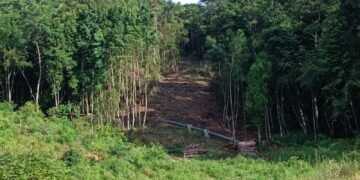
She said the proposed project could affect agricultural land cultivated by families over generations, threatening their livelihoods and the future of farming communities in the district.
“If Shree Cement comes to Daistong village, the farmers over there will be very affected. It will touch their livelihood, and the farms which have been cultivated from generation to generation will be affected,” she said.
Questioning whether the project would bring meaningful development to the region, Dkhar said industrialisation should not come at the cost of agriculture and the livelihoods of local residents.
“I don’t see Shree Cement coming to East Jaintia Hills as development. There may be some benefit for someone, but it is not development for the people,” she said, suggesting that industries such as agricultural processing units could instead support local livelihoods.
The Rs 1,800 crore integrated cement plant and mining project has been facing fierce resistance.
Pressure groups and others alleged that Lum Syrman is not free land but ancestral farmland of Shnongrim village under Elaka Nongkhlieh cultivated for generations, with landowners holding patta, district council and Doloi certificates.