

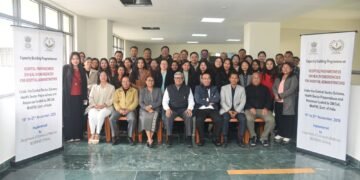







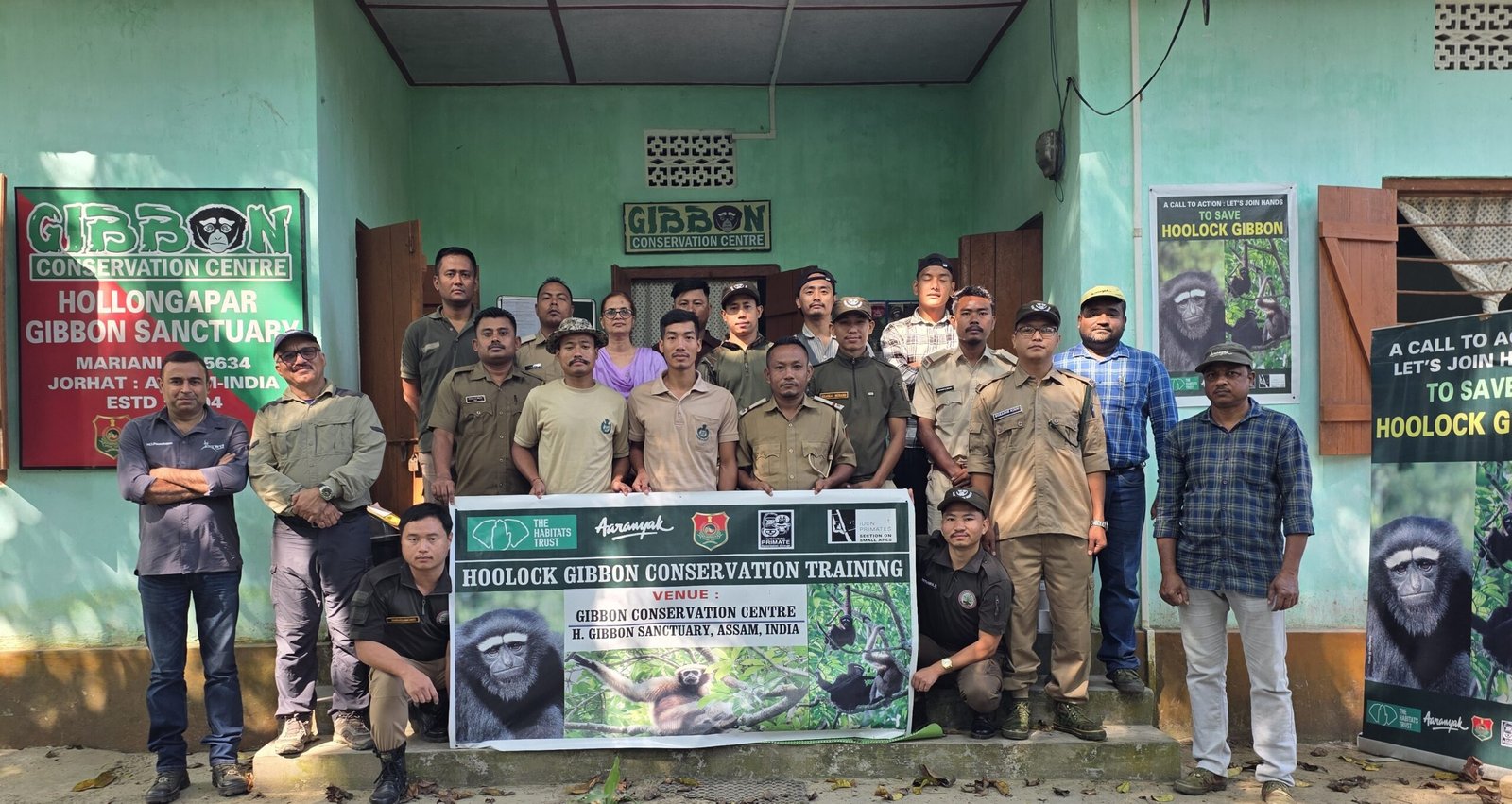
Shillong, Nov 21: In a concerted effort to strengthen hoolock gibbon conservation in the North East, conservation organisation Aaranyak held a week-long residential training programme for forest guards from Assam, Meghalaya and Nagaland.
The initiative, conducted in collaboration with the Assam Forest Department, received support from The Habitats Trust, the IUCN Primate Specialist Group and the IUCN Section on Small Apes.
The western hoolock gibbon is distributed across the seven North East states, south of the Dibang-Brahmaputra river system. However, habitat fragmentation and hunting remain major threats to its survival. The lack of basic information about the species and inadequate conservation awareness among various sections of society, including frontline forest personnel, further compound the challenges, Aaranyak said in a press release yesterday. Despite being directly involved in field-level protection, many forest guards have limited exposure to the different aspects of hoolock gibbon conservation strategies.
Recognising these challenges and the need to strengthen conservation efforts across Assam, Meghalaya and Nagaland, Aaranyak conceptualised the training series aimed at enhancing the knowledge and field-level capacities of frontline forest personnel.
The week-long residential training covered a comprehensive range of subjects, including biodiversity and conservation in North East India; primate conservation with special reference to the hoolock gibbon; gibbon census and population estimation; data collection, maintenance and reporting; techniques of floristic studies; gibbon habitat characteristics and restoration; population and habitat monitoring; gibbon rescue and rehabilitation; the use of GPS technology in fieldwork; and legal orientation covering wildlife laws and their application.
Through classroom lectures and field-based exercises, the programme introduced participants to the fundamental principles of primatology and provided practical exposure to the methods and techniques used in field research and conservation.
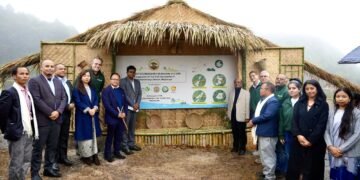
The programme was organised at Hollongapar Gibbon Sanctuary with 16 forest guards from the three states participating.