













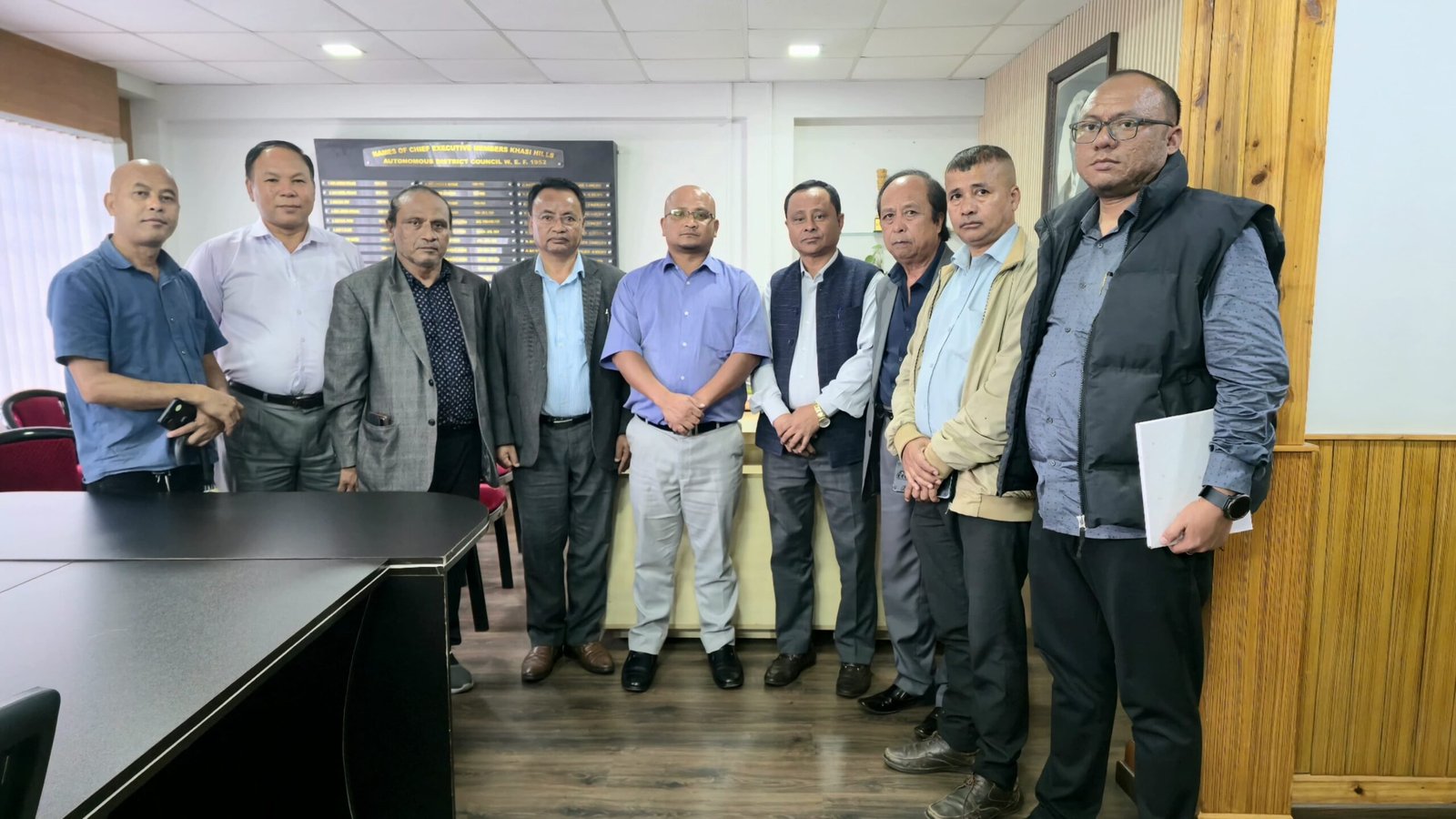
Shillong, Aug 7: A confederation of Khasi clans, under the banner of Synjuk Ki Rangbah Kur: Ka Bri U Hynñiewtrep today met with Chief Executive Member of Khasi Hills Autonomous District Council (KHADC) Shemborlang Rynjah to formally extend their support to the district council in connection with the Public Interest Litigation (PIL) filed by Syngkhong Rympei Thymmai (SRT).
The SRT is challenging the validity of the Khasi Autonomous District (Khasi Customs Lineage) Act 1997 seeking Scheduled Tribe status to Khasis who adopt the surname of a father.
Spokesperson for the Synjuk Ki Rangbah Kur, RL Blah officially conveyed the support of the affiliated clans to the KHADC in opposing the SRT petition. He emphasized the vital need to safeguard the age-old matrilineal traditions of Khasi society, noting that these customs are intricately woven into various aspects of tribal life—from inheritance and land tenure systems to the election of traditional functionaries, which is mandated to be based on matrilineal clan representation.
Blah cited the legal chaos that followed the 2014 High Court verdict, which had earlier questioned the authority of headmen and village councils. He recalled that the traditional institutions were only restored after a successful appeal in the Supreme Court, which reaffirmed their authority—thereby underscoring the importance of preserving indigenous customary frameworks.
Addressing the rationale behind SRT’s demand for ST certificate eligibility under patriarchal lineage, cultural commentator Raphael Warjri pointed out that the organization seeks to reform Khasi customs in alignment with the mainstream “general category” structure of mainland India. He argued that such aspirations run counter to the spirit of constitutional protections for tribal communities. He further stated that customary law is the product of a society’s collective conscience and should not be diluted by the liberal choices of a minuscule patriarchal minority, especially when they contradict the deeply rooted matrilineal mandate of the Khasi people.
The clan elders reaffirmed their commitment to protecting and upholding the traditional matrilineal system of Meghalaya.