











By Dipak Kurmi
Bangladesh has delivered a political earthquake. The Bangladesh Nationalist Party has emerged from a landmark general election with a commanding mandate, claiming more than two-thirds of the seats in parliament in what is being described as the most consequential vote in a generation. The scale of the victory marks a dramatic reversal of fortunes for BNP leader Tarique Rahman, who spent 17 years in self-imposed exile in London and once faced life imprisonment in absentia. These were the first national polls since the student-led protests of 2024 forced Prime Minister Sheikh Hasina from office amid allegations of a brutal crackdown that left an estimated 1,400 people dead—charges she has denied. With Hasina’s Awami League barred from contesting and Jamaat-e-Islami emerging as the second-largest force, Bangladesh now stands at a pivotal crossroads, navigating domestic repair and delicate regional recalibration.
The election was held alongside a referendum endorsing sweeping constitutional reforms, underscoring the electorate’s appetite for systemic change after years of political turbulence. The Chief Election Commissioner, Nasir Uddin, called the process “neutral and credible,” asserting that authorities had delivered a festive, participatory exercise that met national expectations. He publicly thanked voters, political leaders and journalists for their cooperation, insisting the outcome reflected a broadly acceptable mandate. Yet the boycott by supporters of the banned Awami League cast a long shadow, and Jamaat-e-Islami later voiced dissatisfaction with aspects of the vote-counting process, urging patience even as it consolidated its strongest parliamentary showing to date. The tension between celebration and contestation captures the paradox of this transition: a decisive result achieved amid lingering mistrust.
The numbers themselves tell a layered story. Official tallies show the BNP securing 151 of the 300 seats required to form government, while other updates indicated 130 seats confirmed at one stage, placing the party within 21 seats of a majority before subsequent results edged it past the threshold. Jamaat-e-Islami stands in second place with 46 seats, a significant leap from its previous high-water mark of 18 seats and roughly 6 percent of the vote in 1991. Analysts attribute Jamaat’s surge to a convergence of structural opportunity and strategic agility. With the Awami League barred, Jamaat became the only large alternative on the ballot outside the BNP and its allies, drawing voters reluctant to back Rahman’s party. The Islamists also mounted an early and sophisticated social media campaign, critics say amplified by misinformation, while religious messaging resonated in key constituencies. In several districts, rebel BNP candidates split the anti-Jamaat vote, further magnifying its gains.
For Tarique Rahman, the ascent is both personal and political. Once arrested on corruption charges in 2007 and sentenced to life over an attack on a Hasina rally—allegations he dismissed as politically motivated—Rahman left for London in 2008 and remained abroad for nearly two decades. The upheaval that followed Hasina’s ouster in August 2024 saw multiple convictions overturned, enabling his return to Dhaka. His trajectory is inseparable from a storied and turbulent family legacy. His father, Ziaur Rahman, a leading figure in Bangladesh’s war of independence, served as president until his assassination in 1981. His mother, Khaleda Zia, was a three-time prime minister who herself endured repeated arrests and imprisonment under Awami League rule. Khaleda Zia had intended to contest the latest election but died in December, days after her son returned home, adding an elegiac note to the BNP’s resurgence.
The political transformation has unfolded against a fraught economic backdrop. Before the pandemic, Bangladesh was among Asia’s fastest-growing economies, with projections suggesting it would overtake several larger emerging neighbors in income growth within a few years. Covid-19 disrupted vital export industries and arrested momentum, while the instability following Hasina’s ouster further eroded business confidence and slowed investment. The incoming government inherits stubborn inflation of 8.5 percent—the highest in South Asia—intensifying cost-of-living pressures that dominated voter concerns. The garment sector, which accounts for roughly 80 percent of exports, has also faced external headwinds. Former U.S. President Donald Trump imposed a 37 percent tariff on Bangladeshi imports last year, later easing it in stages before agreeing this week to a reduced 19 percent under a new trade arrangement. The tariff turbulence has compounded anxieties in a sector that anchors employment and foreign exchange earnings.
BNP leaders have framed the victory not as triumphalism but as a solemn trust. Senior figure Amir Khasru Mahmud Chowdhury said the party’s immediate priority would be to restore democratic and financial institutions “destroyed over the last decade,” emphasizing stability and peace as prerequisites for reform. He indicated that members of parliament could take their oaths between February 14 and 16, paving the way for government formation. Mirza Fakhrul Islam Alamgir, the BNP’s secretary-general, went further, contending that the suppression of democracy under the Awami League created the conditions for the rise of Jamaat-e-Islami. “Whenever democracy is obstructed, other extremist forces start to rise,” he argued, casting Jamaat’s surge as a byproduct of authoritarian drift. Whether this diagnosis proves persuasive will depend on the BNP’s capacity to reconcile pluralism with order in a society strained by polarization.
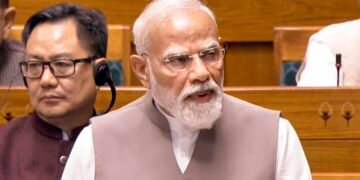
Regional diplomacy now enters a sensitive phase. India, where Sheikh Hasina sought refuge after fleeing Dhaka, has watched relations plummet amid accusations among many Bangladeshis that New Delhi enabled her authoritarian consolidation. Prime Minister Narendra Modi congratulated Rahman, affirming India’s support for a democratic, progressive and inclusive Bangladesh and expressing readiness to strengthen multifaceted ties. Yet trust will not be rebuilt overnight. The BNP has pledged friendly and constructive relations with all neighbors, insisting that foreign policy will rest on mutual respect, mutual interest, non-interference and strategic autonomy rather than country-centric alignments. Delhi’s anxieties are sharpened by Dhaka’s parallel thaw with Islamabad. Pakistan’s Prime Minister Shehbaz Sharif and President Asif Ali Zardari both congratulated Rahman, voicing hopes for deeper cooperation in trade, defense and cultural exchange. In recent months, direct flights resumed between Dhaka and Karachi for the first time in 14 years, Pakistan’s foreign minister visited Bangladesh after a 13-year hiatus, and bilateral trade reportedly rose by 27 percent in 2024–25.
The recalibration with Pakistan marks a striking departure from the frost that defined relations during Hasina’s 15-year tenure. For Delhi, which regards Islamabad as its principal regional adversary, a closer Dhaka–Islamabad axis introduces new strategic complexity. Historically, the BNP has maintained warmer ties with Pakistan than the Awami League did, yet it cannot afford to alienate India, a key trading partner and the regional power that geographically envelops Bangladesh. The new government will thus have to walk a diplomatic tightrope, balancing competing expectations while projecting sovereign agency. Chowdhury’s formulation of strategic autonomy suggests an effort to de-ideologize foreign policy, but the domestic optics of engagement—particularly with a former adversary—will require careful choreography.
At home, the euphoria of victory coexists with sober warnings. Dhaka’s newspapers heralded a “big win,” a “landslide,” and a “certain victory,” celebrating festive queues and the return of long-denied ballots. Yet commentators caution that the first test will be restoring law and order after 18 months of turbulence marked by mob violence, fraying social cohesion and early signs of armed extremism. Women and minorities have borne disproportionate burdens during the unrest, and the durability of reform will hinge on whether the new administration can guarantee security without repeating the heavy-handedness it decried. Jamaat’s assertion that it is dissatisfied with aspects of the vote-counting process injects another note of vigilance, reminding the government that legitimacy is sustained not merely by margins but by the perception of fairness.
Bangladesh’s electoral upheaval is therefore more than a transfer of power; it is a reckoning with the architecture of governance and the geometry of the region. The BNP’s parliamentary dominance, achieved in the absence of its principal rival, offers both opportunity and risk: opportunity to enact constitutional reform and institutional repair, risk of overreach in a landscape where opposition has been thinned. Tarique Rahman’s return from exile to the threshold of the premiership symbolizes a generational shift and the resilience of a political dynasty, yet it also reopens debates about accountability and the uses of power. As inflation bites, exports recalibrate under revised tariffs, and neighbors recalibrate their expectations, the mandate delivered at the ballot box will be measured less by its scale than by its stewardship. In that stewardship lies the promise—or the peril—of Bangladesh’s next chapter.
(The writer can be reached at dipakkurmiglpltd@gmail.com)