









By Roy Kupar Synrem
Meghalaya was born out of a powerful regional movement. Yet, more than five decades after attaining statehood, we find ourselves confronting an uncomfortable paradox: regionalism appears to be losing ground in the very State that was created through its strength.
The question we must ask ourselves is simple but deeply troubling: Have we begun to forget the very ideals for which our forefathers struggled? Have the collective aspirations that once united our people gradually given way to individual political ambitions, shifting loyalties and the pursuit of power?
The weakening of regional political forces, the changing political allegiances of elected representatives and the growing influence of national political establishments are not developments that should be viewed merely through the narrow lens of party politics. They demand a much deeper reflection on the political identity, self-respect and future aspirations of the people of Meghalaya.
I write not as an advocate of any particular political party, nor to defend one political establishment against another. I write as someone who is regional at heart, deeply attached to the land and identity of our people, and genuinely concerned about the direction in which our State is heading.
To me, regionalism is much more than a political ideology. It is a sense of belonging, a responsibility towards our land and people, and an enduring conviction that the legitimate interests and aspirations of our indigenous communities must remain at the centre of our political and developmental priorities.
The real question, therefore, is not simply who governs Meghalaya today, but whether we still possess the collective political consciousness that made Meghalaya possible in the first place.
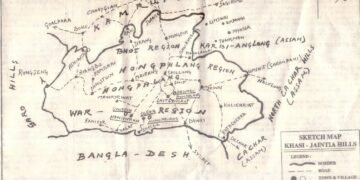
In the 1960s, when Meghalaya was part of Assam, our forefathers recognised the need to protect the hill communities’ distinct identity, language, culture and political aspirations. The Assam Official Language Bill of 1960 intensified these concerns.
The All Party Hill Leaders’ Conference (APHLC), formed on 6 July 1960, brought leaders from different political backgrounds together to secure a distinct identity and greater self-governance for the hill people.
The movement was not about one party’s survival or individual ambition. It was a collective effort to protect the people’s identity, preserve their heritage and ensure their voices were heard. Through democratic and constitutional means, it led to the creation of the Autonomous State of Meghalaya on 2 April 1970 and full statehood on 21 January 1972.
Meghalaya was born of conviction, sacrifice, mobilisation and a shared belief in a common future. Our forefathers showed that differences could be overcome for a larger cause, and that collective determination could change history.
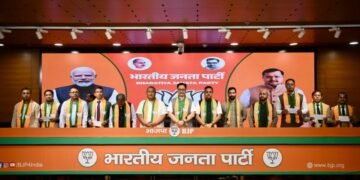
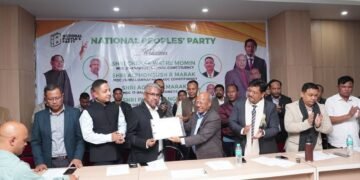
More than five decades after statehood, our political situation demands serious reflection. Recent developments surrounding the United Democratic Party (UDP), once a significant regional political force, have brought the vulnerability of regional politics into sharp focus. The movement of eleven of its twelve legislators to the BJP and NPP, leaving the party with only one legislator, represents a significant political realignment.
This is not merely one party’s internal difficulty. It raises a larger question about independent regional representation. Parties may face disagreements and leadership challenges, but when a regional force is weakened, what happens to the space through which regional aspirations are articulated and defended? The concern is whether regional consciousness is losing influence in the very State born of a regional movement.
Many are pessimistic, believing regional parties have lost relevance and national parties have made regionalism outdated. Their disappointment is understandable, but the failure of regional leadership must not be mistaken for the failure of regionalism.
Parties are institutions; leaders, governments and alliances change. But a people’s identity and aspirations endure. Had our forefathers surrendered to pessimism in the 1960s, Meghalaya might never have attained its present political identity. Why should we abandon regionalism because some entrusted with its legacy have failed its ideals?
Regionalism was not created by political parties, and no party owns it. It emerged from the collective aspirations of the people. The weakening of a political party cannot be allowed to determine the future of an entire political philosophy. I may be disappointed with the state of regional politics, and I may have lost faith in certain leaders, but I have not lost faith in the aspirations of our people.
Meghalaya needs renewed regional consciousness and leaders who place principles above personalities and public interest above convenience. Regionalism needs the conviction of the people, not permission from political parties.
One of the greatest misconceptions is that regionalism must be identified with a particular political party. It is much bigger than that. Regionalism means protecting indigenous identity, land, resources, language, culture, customs and constitutional rights. It means a meaningful voice in decisions affecting our future, accountable governance, local economic opportunities and development that respects our communities.
This is not hostility towards national parties, rejection of cooperation with the Union Government or isolation from the country. It means that every alliance and government arrangement must recognise that Meghalaya’s interests cannot be secondary. We can cooperate with any government while retaining the courage to question decisions that harm our people.
Regionalism must not be reduced to election-time rhetoric. It must be reflected in everyday decisions affecting our land, economy, institutions and the future of our children. We must ask how our natural resources are managed, how public money is spent, how employment opportunities are distributed, how indigenous interests are protected and whether our institutions are accountable.
Statehood gave us the opportunity to shape our political, social and economic future; it did not guarantee that this opportunity would automatically be used in the interests of the people. That responsibility remains ours.
Regionalism’s revival is not the responsibility of politicians or young people alone. It belongs to every indigenous person, irrespective of age, profession or political affiliation. Traditional institutions, elders, intellectuals, professionals, religious leaders, business communities, students, civil society and elected representatives all have a role.
Our elders preserve the memory of our struggles; intellectuals and professionals can offer solutions; traditional institutions must safeguard customs, land and community interests; and civil society must raise public concerns. Political representatives must put public interest before convenience. Every generation inherits the duty to protect what earlier generations secured.
Political differences are natural in a democracy, but our indigenous identity, land, constitutional rights, resources, heritage and children’s future must never become casualties of rivalry. This is not a call for blind unity, but for informed participation and accountability. We must look beyond the number of regional-party MLAs and ask whether our institutions and representatives truly protect the people’s interests.
We must also recognise that the Khasi-Jaintia and Garo communities, despite their distinct histories and identities, share a responsibility to safeguard the future of this State. The regional consciousness that helped bring Meghalaya into existence must continue to encourage cooperation, mutual respect and a shared commitment to the welfare of all its indigenous communities.
Meghalaya’s future requires informed citizens, responsible leadership, strong institutions and a population that refuses indifference. Statehood on 21 January 1972 gave us a political identity and the opportunity to shape our destiny. These must not become ceremonial memories as the principles behind them fade.
We need not romanticise the past or overlook earlier leaders’ shortcomings. We must learn from history, acknowledge present failures and build a regional consciousness that is mature, accountable and relevant.
To those who have lost faith, I say: do not write the obituary of regionalism merely because you are disappointed with its present leadership.
To every indigenous person of Meghalaya, I appeal: do not allow political differences, party loyalties or individual ambitions to make us forget our shared responsibility towards our land and future generations. We may not agree on every political issue, but we must never lose sight of the common interests that bind us together.
I do not claim to have all the answers, but I refuse to watch regionalism disappear without trying to preserve its spirit. Our forefathers fought for a State where our people could shape their destiny. We must keep that voice strong, independent and accountable.
The Hill State Movement gave us Meghalaya. The responsibility of preserving its spirit belongs to every one of us. Let us not allow the failures of individuals to defeat the aspirations of an entire people.
“Regionalism is not dead. it is our collective responsibility to keep it alive.”
(The author is an advocate and activist)