




How a party like the United Democratic Party (UDP) once a powerful force in Meghalaya politics, has been decimated by one person’s ego is a story of political self-destruction.
The UDP, which reached its electoral peak in its debut election in 1998, was founded in 1997 through the merger of three regional factions.
The party achieved its greatest political success right out of the gate, winning 20 seats in the 60-member Meghalaya Legislative Assembly.
While it remained an influential kingmaker in the state’s fractured coalition politics for more than two decades — securing 12 seats as recently as the 2023 elections — it never again matched the 20-seat threshold or the dominant vote share it enjoyed during its 1998 peak.
By late 2026, the party faced near-obliteration in the Assembly following a series of mass defections by its MLAs to national parties.
In 2018, the UDP emerged as the kingmaker and for unknown reasons decided to make Conrad Sangma the Chief Minister even though he wasn’t an elected MLA at that time.
It was a decision that would eventually come back to haunt the regional force.
Fast forward to November 2, 2026, the same person whom the UDP had anointed as Chief Minister in 2018 pushed the last remaining MLA of the regional party to quit, maybe at the behest of a new-found friend.
After the swearing-in on Monday, Sangma stated that in politics sometimes decisions are made that are not always easy.
It is not simple for him to take those decisions, he said, adding that tough decisions need to be taken and even in the past such decisions were taken.
But on the UDP president resigning from the Cabinet, the Chief Minister claimed that it was the former’s decision to withdraw and there was no pressure from his side.
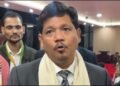
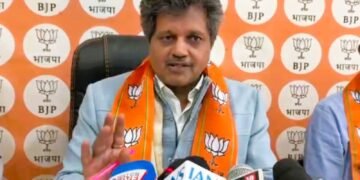
The latest chapter in this decimation is written by Paul Lyngdoh, whose urge to remain in power at all cost has been an open secret.
Lyngdoh had served as Tourism Minister in the Conrad Sangma cabinet but was dropped in September 2025 in a reshuffle.
His frustration at being out of power was evident when he subsequently questioned his own party president during the Budget Session in February 2026 while still being in the UDP.
It exposed his restlessness and ambition, unable to reconcile with being out of the cabinet.
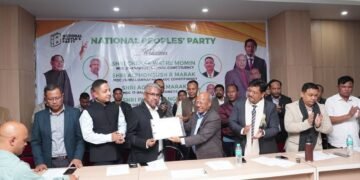
For a leader who had built his image as a guardian of regional aspirations, the move to cross over to the National People’s Party on October 19, along with Renikton Lyngdoh Tongkhar and Nujorki Sungoh, marked a complete ideological surrender.
It was not about principles or regionalism, but about reclaiming a ministerial chair.
The UDP’s tragedy is that it created its own destroyer, as it had accepted Paul when he was with the KHNAM.
When the general council of the KHNAM crossed over dissolving the party he had formed, Paul in 2011 decided to merge with the UDP.
That one act of political generosity slowly eroded UDP’s relevance. From being a party that could dictate terms, it became a party that was dictated to.
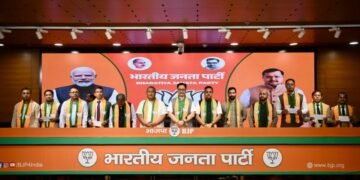
What happened on October 19 and November 2 was not just a defection, it was the final nail in the coffin. Eight former UDP legislators had already merged with the BJP on September 23, but the exit of Paul and his colleagues to the NPP effectively finished the party’s legislative presence.
The party that once represented Khasi-Jaintia Hills’ regional pride is today left without a voice in the Assembly.
The UDP’s downfall is a lesson in how regional parties lose their way when personal ambition overtakes collective interest.
Paul’s return to the cabinet on Monday may be a personal victory, but it is a historic defeat for regional politics in Meghalaya.
However, the UDP’s decimation is also from within. The failure of the president to hold on to his team is another story which will be told later…