














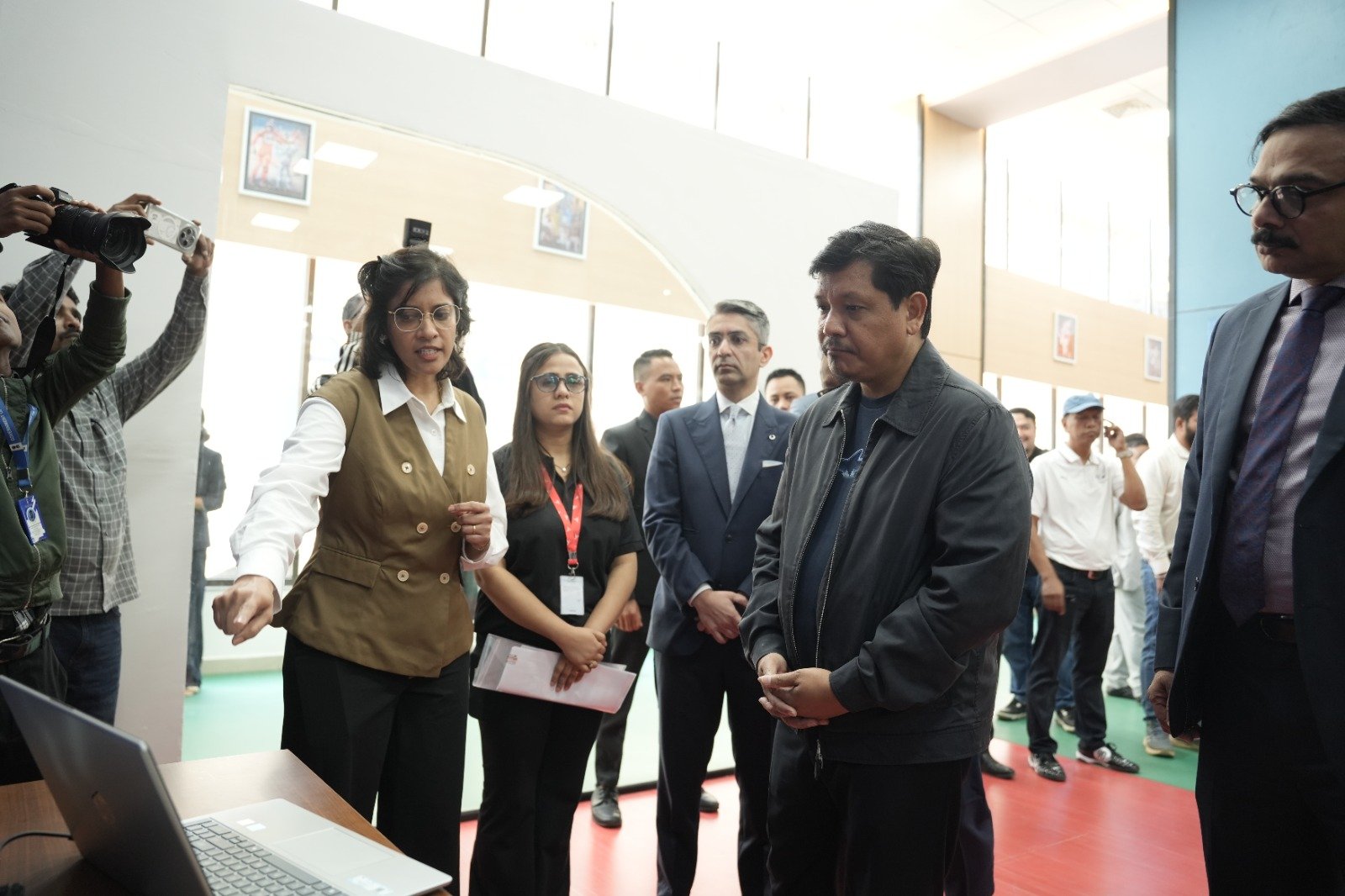
Shillong, Oct 17: The Meghalaya government opened the High-Performance Sports Science Centre at the Integrated Multipurpose Indoor Hall in Shillong yesterday.
The new facility is meant to bring scientific training, performance assessment and integrated athlete support within reach of the state’s sportspersons.
Present at the opening was Chief Minister Conrad K Sangma, cabinet minister Marcuise N Marak, Olympic gold medallist Abhinav Bindra, Chief Secretary Shakil P Ahammed and Secretary of Sports and Youth Affairs Isawanda Laloo.
Sangma said the centre forms part of the government’s long-term strategy to invest in the state’s youth and strengthen its sporting ecosystem. Emphasising the importance of science and technology in modern sport, he stated, “If we have to compete with the best in the world, we need the best here in our state, whether it is the processes, the technology or the manpower.”
The CM expressed hope that scientific training and athlete support would gradually extend to the grassroots, with similar centres envisaged in Nongstoiñ, Jowai, Tura and Williamnagar.
The sports science centre will provide scientific support across strength and conditioning, physiotherapy, nutrition, recovery and performance assessment to help athletes improve performance, reduce injury risks and recover more effectively. Operational since September, the centre has been conducting tests for athletes preparing for the upcoming National Games. This marks a welcome change to normal government practice, which is to inaugurate a building before it is actually ready.
Bindra, who founded the eponymous Abhinav Bindra Foundation, commended the government’s approach to investing in sporting infrastructure and athlete development. Highlighting the importance of supporting athletes before they achieve recognition, he said, “It is easy to celebrate an athlete after a medal has been won. It is much harder, and far more important, to invest in that athlete before anyone sees their name. That is what true vision looks like.”
He also emphasised that the success of the National Games should be measured by the opportunities they create for young people long after the event concludes, underlining the importance of building a sporting ecosystem that delivers lasting benefits.
Ahammed highlighted the importance of developing scientific systems that support consistent sporting excellence. He noted that the Centre represents a shift towards a more scientific and athlete-centred approach to training, performance development, injury prevention and long-term recovery, with benefits extending beyond the upcoming National Games.