









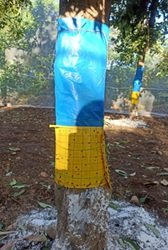
Shillong, Aug 22: A simple innovation — Yellow Sticky Trap — is bringing new hope for Muga farmers in West Khasi Hills facing red-ant infestation during silkworm rearing.
The farmer-centric technology intervention was demonstrated under Mera Resham, Mera Abhiman (MRMA 2.0) by Mahasankar Majumdar, Scientist-C, Central Silk Board (CSB), Muga Eri Silkworm Seed Organization (MESSO), P-4 Unit, Mendipathar.
The demonstration was held at the Muga rearing garden of farmer H. K. Kharbani of Nongdiengkain village, after he raised concerns about red ants attacking Muga silkworms from chawki stage up to fourth stage.
During a field visit, the scientist observed ants moving from ground to host plants, aided by weeds and vegetation on the sloping hilltop garden.
The demonstrated technology combines yellow sticky trapping surface, physical plastic barrier, field sanitation and regular monitoring. A 1-1.5 feet plastic band is fixed around the host plant with sticky surface to intercept crawling ants before they reach the worms, without damaging the plant or coming in contact with silkworms.
Farmers were advised to clean the garden before brushing, remove weeds, destroy ant nests before rearing, and regularly inspect the barrier. The approach focuses on non-chemical pest management during active rearing.
According to MESSO the concept has earlier shown encouraging results at Naxalbari Farm, Darjeeling, and is now being adapted to local conditions in West Khasi Hills.
In another programme under MRMA 2.0, an awareness programme on Muga and Eri Sericulture for youth empowerment was conducted on August 19 at Umsohpieng, West Khasi Hills.
The programme, attended by farmers and youth, focused on promoting sericulture as sustainable livelihood and entrepreneurship.
Majumdar shared technical knowledge on improved rearing technologies, disinfection, host plant management and spinning techniques. A local sericulture demonstrator also provided field-level guidance.
The programme also discussed challenges like herbicide exposure, shortage of rearing nets and appliances, and stressed community plantations, SHGs and youth-led enterprises in rearing, spinning and value addition.
Officials said the initiatives reflect the core spirit of MRMA 2.0 — identifying real farmer problems and transferring practical scientific solutions to the farmer’s doorstep.