









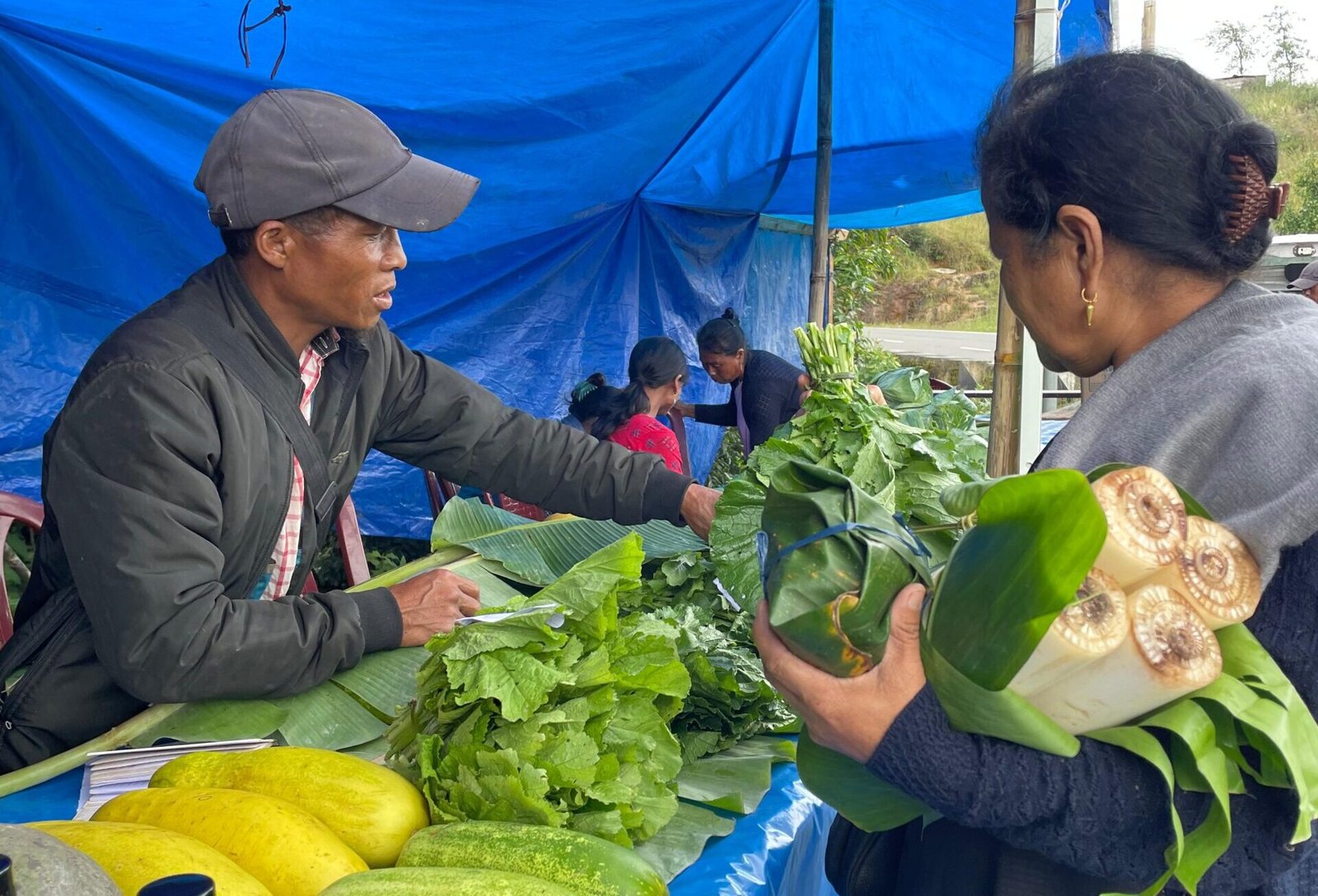
Shillong, Jun 26: The Meghalaya government is adopting a “just transition” approach to moving the state from chemical fertilisers to organic agriculture in order not to hurt farmers, Chief Minister Conrad K Sangma said today.
Two days ago Agriculture Minister Timothy D Shira talked up the state’s push towards organic farming. However, it was the current government that reintroduced fertiliser subsidies that had been turned off by the previous Congress Party-led administration in 2014. The Congress, at the time, had done so ostensibly to push the state towards organic farming.
Defending the cabinet’s decision to lift the ban on chemical fertilisers despite the push for organic farming, Sangma said the shift to organic agriculture cannot happen overnight.
“We call it a just transition. When we move from one practice to another, you cannot simply flip a coin and expect everything to change tomorrow. It has to be a gradual process,” he said.
The CM said farming practices that have been followed for decades cannot be stopped immediately, as doing so could affect the livelihoods of thousands of farmers. “If you suddenly stop something that people have depended on for years, you potentially harm their livelihoods and the way they live,” he said.
Sangma reiterated that the government’s long-term goal remains to make Meghalaya a fully organic state, but said the transition would take time and require careful planning.
“We may set targets to achieve certain milestones in three years, five years or even ten years. Our objective is clear that in the coming decades, we want Meghalaya to be 100 per cent organic,” he said.
The transition depends on several factors, including increasing the production of organic fertilisers, bringing down their cost, creating better markets for organic produce and improving logistics from farms to consumers.
“Organic farming is not only about replacing chemical fertilisers. The entire ecosystem has to be ready, including production, pricing, marketing and transportation,” Sangma said.
He added that these challenges make it impractical to immediately replace conventional farming practices with organic methods.
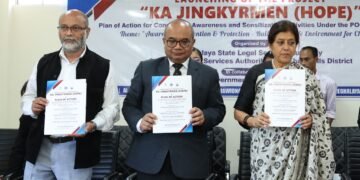
Meanwhile, the government rolled out the second phase of its Rs 295-crore organic farming mission and distributed ₹5.80 crore to Integrated Village Cooperative Societies (IVCS) during the opening day of a two-day conference on women farmers and sustainable organic agriculture to celebrate the UN International Year of the Woman Farmer.
The chief minister underlined the essential investment in preserving traditional agricultural knowledge while integrating modern sustainable technologies. He praised women farmers and said women who engage in farming unlock opportunities that resonate deeply with the state’s ethos, promoting not just sustainability, but a magical connection to their roots.
“Meghalaya is a matrilineal society, but what makes things more special is that when you connect farming, sustainability and organic farming to our matrilineal system, you actually end up unlocking something really magical,” he said.
The conference, organised by MEGNOLIA under the Department of Agriculture and Farmers’ Welfare in collaboration with IFOAM Organics Asia and KfW, brought together around 400 participants, including delegates from Nepal, Bhutan, Vietnam, Fiji, Sri Lanka, South Korea, Mongolia, New Zealand, Japan and the Philippines.