










Shillong, May 31: Meghalaya has recorded encouraging progress in child nutrition, with the latest National Family Health Survey (NFHS-6) showing a decline in stunting among children under five years from 46.5 percent in NFHS-5 to 36.8 percent in NFHS-6.
Stunting refers to a person being short for their age. Although the 36.8 percent figure is still high – representing more than 1 in 3 children, it is an improvement from the nearly 1 in every 2 children who suffered from stunting just two years ago.
The survey also highlights encouraging breastfeeding practices, with 76.4 percent of children breastfed within one hour of birth and 97.1 percent of infants under six months currently breastfeeding. These gains underscore the important role played by frontline workers, healthcare providers and communities in promoting better nutrition practices during the critical early years of life.
Behind these improvements lies a coordinated effort involving government departments, frontline workers, local institutions and communities working together to address malnutrition and improve health outcomes for mothers and children, a press release stated today.
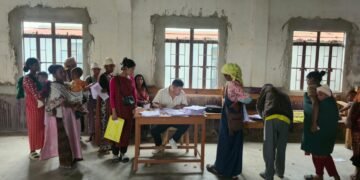
Despite persistent challenges such as geographic isolation, difficult terrain and limited access to health services in remote areas, Meghalaya has steadily strengthened its nutrition ecosystem through integrated multi-sectoral programmes and community-based interventions. Frontline workers, Accredited Social Health Activists (ASHAs), Anganwadi Workers and Auxiliary Nurse Midwives (ANMs), have played a pivotal role in this effort.
The state has also strengthened systems to identify malnutrition before it becomes severe. Regular Village Health and Nutrition Days (VHNDs) facilitate growth monitoring and early detection of children at risk. Children identified with Severe Acute Malnutrition (SAM) and Moderate Acute Malnutrition (MAM) are referred to Nutrition Rehabilitation Centres for appropriate care and support.
Additional support is provided through Home-Based Newborn Care (HBNC) and Home-Based Young Child Care (HBYC), enabling vulnerable children and their families to receive continued counselling and monitoring directly at home.
State efforts extend beyond child-focused interventions. Recognising that nutrition begins before birth, Meghalaya has expanded maternal health services, promoting early antenatal registration, regular check-ups, iron and folic acid supplementation, deworming, immunisation and nutrition counselling. Government schemes supporting institutional deliveries have further contributed to safer childbirth and improved birth outcomes.
Meanwhile, Anganwadi centres continue to serve as the foundation of Meghalaya’s nutrition ecosystem, providing supplementary nutrition, growth monitoring, preschool education and health awareness services to children, pregnant women and lactating mothers. Hot cooked meals and take-home rations have strengthened nutritional support for vulnerable households.
A significant factor behind the improvement in nutrition indicators reflected in NFHS-6 has been community ownership. Women’s groups, self-help groups, village leaders and families have become active participants in growth monitoring, awareness campaigns and support systems for vulnerable children. Households are increasingly adopting kitchen gardens and incorporating traditional nutrient-rich foods into everyday diets, the release added.
Among the state’s recent interventions, the Chief Minister’s Mission 1000 Days has emerged as a flagship initiative. Focused on the critical period from conception until a child’s second birthday, the mission emphasises strengthening frontline worker capacity, empowering mothers, providing nutrition support, promoting hot cooked meals with eggs and ensuring targeted assistance for children experiencing growth faltering.
While challenges remain, Meghalaya’s progress demonstrates the impact of sustained government commitment, strong frontline systems and active community participation. The encouraging gains reflected in NFHS-6 offer renewed momentum in the state’s journey towards ensuring every child has the opportunity to grow, learn and thrive.