







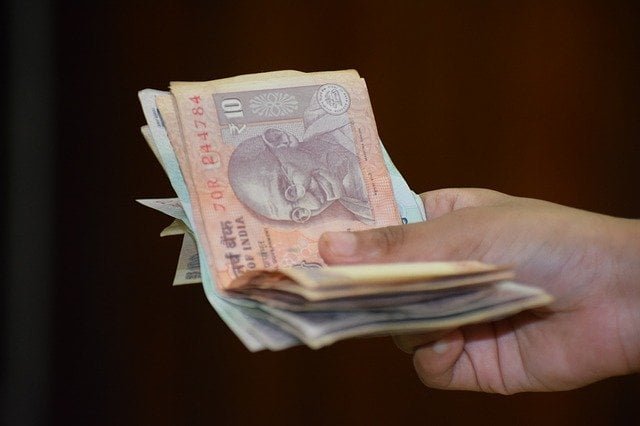
A money-lender from Laitkor has threatened a woman borrower with dire consequences if she failed to pay the usurious interest.
For borrowing an amount of Rs 50,000 in March this year, the lender is demanding that she pays him back a whopping Rs1,80,000.
The illegal money-lender had taken to coming to her residence and shouting. He recently threatened to take over her hut.
Her four children, the youngest about four years old and eldest 14 years old are terrorised by this frequent violent verbal assault.
The woman who is from Pomlakrai had no option but to seek the help of relatives who recommended she talk to some local activists.
She told the activists that she had borrowed Rs50,000 from him in desperation as her husband had become very ill and was hospitalised.
During the negotiations, he had told her that he had written everything down on paper. He had said the interest would be “ten”.
She on her part did not ask any further questions taking for granted he meant Rs 10 per day.
She explained that she could not read or write much and had no experience of ever dealing with a money-lender.
The lender asked her to sign on the paper, which she did in all good faith that things were fair and square.
The woman however got the shock of her life when she later came to know that “ten” meant Rs10,000 per week. She said she had paid him about six or seven times.
Once she also borrowed Rs 10,000 (on interest) from the money-lenders sister to pay him the weekly interest as he was threatening to run over her shop which is her livelihood. She had to close her shop as the antics of the money-lender outside her shop had become an eyesore for the landlord who asked her to vacate.
Rampant usury has become a menace as hundreds of poor tribal families in the Khasi Hills are trapped in the hands of unscrupulous money-lenders like this.
Usury is on the rampage in the tribal society where poverty levels and joblessness due to ill-health is on the rise.
Usury is a crime, and taking interest at exorbitant rates is punishable under many laws, but no action has ever been taken. The courts are uncertain what to do as several cases are pending in the courts, it is learnt.
Indebtedness and slavery to illegal money-lenders has always been a scourge of tribal society where the poor, simple, illiterate tribals were the victims of unscrupulous non-tribal money-lenders.
In fact the Sixth Schedule specifically forbids non-tribal money-lenders from operating without a licence.
But, the current money-lenders who hound their poor borrowers are not non-tribals. They are local indigenous persons who have taken over the dubious job.
Experts spoken to said that since the State government seems too blind to this dangerous social menace, it is high time the Khasi Hills Autonomous District Council (KHADC) step in and take matters into hand to protect the tribals from the local shylocks.
KHADC can take off from Para 10 where measures to rein in money lenders are mentioned (even though it is for non-tribal money-lenders).
Para 10 defines the power of the District Council to make regulations for the control of money-lending and trading by non-tribals.
It says that the District Council of an autonomous district may make regulations for the regulation and control of money-lending or trading within the district by persons other than Scheduled Tribes resident in the district.
It also prescribes that no one except the holder of a licence issued in that
behalf shall carry on the business of money-lending. The paragraph also said that the District Council should prescribe the maximum rate of interest which may be charged or recovered by a money-lender and also provides for the maintenance of accounts by money-lenders and for inspection of such accounts by officers appointed in that behalf by the District Council.