









By Divesh Ranjan
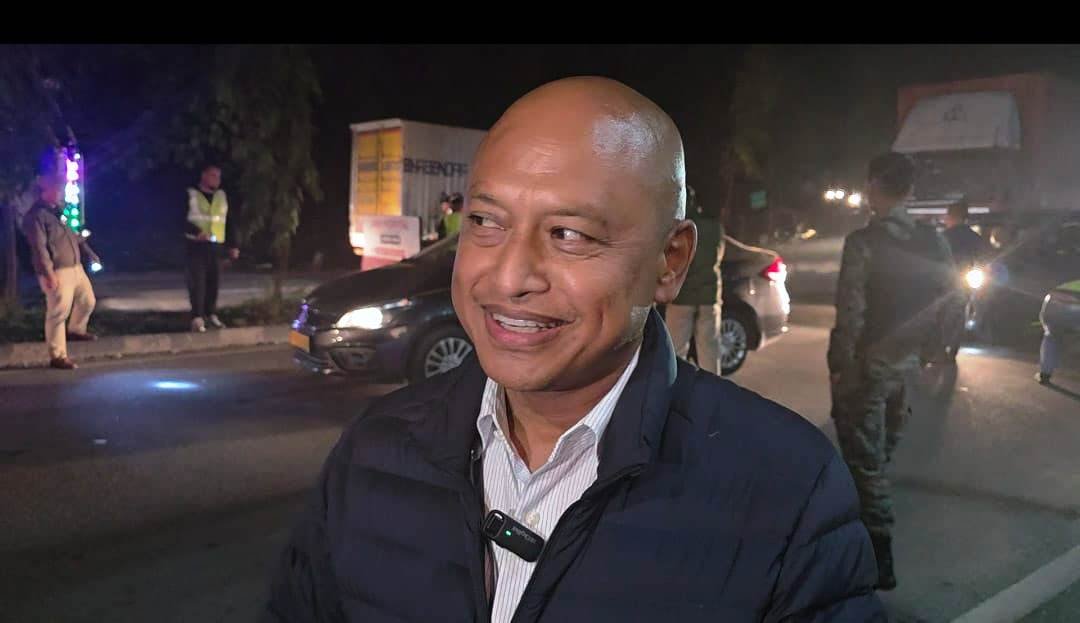
With the untimely passing of Dr Ricky Andrew J. Syngkon, Meghalaya has lost not only a Member of Parliament, but one of the most distinctive political voices of his generation. His transition from the lecture halls of North Eastern Hill University to the Lok Sabha floor represented a defining moment in the politics of the hill state for an entire generation. Few leaders in recent memory embodied the fusion of intellect and public responsibility as naturally as he did. The 2024 Lok Sabha election from the Shillong seat marked a decisive turning point in Meghalaya’s political course. For several decades, the electoral politics of the state were largely defined by the presence of established national parties and the ever-shifting regional coalitions that emerged as a result of the hill state movement. Dr Syngkon’s electoral victory represented a departure from this trend. He was the principal architect and General Secretary of the Voice of the People Party, which represented the emergence of scholarship-driven and ideologically informed leadership in a political culture that was often defined by personality and patronage.
Academic Roots and Intellectual Formation
Born on January 6, 1972, Dr Syngkon belonged to a generation of people who grew up in the early decades of statehood in Meghalaya. His growing up years were characterized by a time when the state was looking for its economic and cultural identity in the indigenous traditions of the state. His father, the late Sainbor Jones Syngkon, was a well-known personality in the Ri Bhoi District, and this has grounded him well in the social fabric of the Khasi Jaintia hills.
His academic background was based on disciplines that directly addressed the needs of his homeland. At North Eastern Hill University, he did his post-graduation in Economics and Commerce, and later pursued his doctorate in Economics. His doctoral work, titled “Development of Small Scale Industries in Meghalaya: A Case Study of East Khasi Hills,” addressed the structural issues in the growth of industries in a tribal-dominated economy.
On April 9, 2002, he joined the Department of Commerce at NEHU as an Assistant Professor. Over the years, he taught Managerial Economics and Small Business Management while pursuing research on entrepreneurship among hill tribes and tribal marketing systems. He always maintained that mainstream industrialization paradigms neglect the socio-cultural and geographical context of the Northeast. His focus remained on community-based enterprise and local agency as the key to sustainable development.
Persons who knew him in the academic community remember that his entry into politics was not unexpected. He often spoke about the unemployment problem that educated youth in Meghalaya were facing. The gap between education and job opportunities, he felt, needed to be addressed at the policy level. This conviction led him to move from the academic setting to the political arena.
The Rise of the Voice of the People Party
The Voice of the People Party was formally established on November 19, 2021, in Shillong. The party was founded on the ideals of Revive, Restore, and Transform, as it sought to counter the perception of entrenched corruption and the increasing role of money in politics. Dr. Syngkon, as General Secretary, brought intellectual rigor and organizational discipline to what was essentially a grassroots movement.
The symbol of the party, the winnowing tray or u prah, was a potent symbol. In agricultural terms, the winnowing tray is used to separate chaff from grain. In political terms, it symbolized the party’s promise to purge the system of corruption and restore integrity to governance.
In the 2023 Meghalaya Legislative Assembly Elections, the party contested eighteen seats and won four seats: Nongkrem, North Shillong, Mawryngkneng, and Mawlai. While small in number, this marked the beginning of the end, as it indicated that the voting public was open to reformist politics, particularly among the younger generation.
The 2024 Lok Sabha elections saw this momentum further amplified to a dramatic extent. Contesting from the Shillong seat, Dr. Syngkon won 5,71,078 votes with a vote share of over fifty-five per cent. Dr. Syngkon secured a commanding victory, defeating three-term parliamentarian Vincent H. Pala of the Indian National Congress and Dr. Mazel Ampareen Lyngdoh of the National People’s Party by a margin of 3,71,910 votes. The result of the election showed a clear political shift in the thirty-six Assembly segments that constitute the parliamentary seat.
Parliamentary Role and Legislative Priorities
Sworn into the 18th Lok Sabha in June 2024, Dr Syngkon introduced himself as a voice for the concerns of the Northeast. His presence in the House was at seventy-four per cent, and his interventions showed thematic consistency. He took part in nine major debates and asked eighteen focused questions between 2024 and early 2026.
His first speech was based on the Book of Nehemiah with the words, “Let us rise up and build.” This was both religious and institutional, urging the reconstruction of governance structures without giving up on minority rights and regional considerations.
Perhaps one of his most memorable interventions was related to the leadership crisis at NEHU. On March 25, 2025, he raised a Special Mention in Parliament demanding accountability and change in the university administration. For most students and faculty members, this only strengthened his role as a representative who remained grounded in his academic roots.
In matters of the environment, he held a complex stance on the National Green Tribunal’s restrictions on coal mining in Meghalaya. Instead of supporting extreme policies, he suggested that ambiguity is detrimental to illegal activities but disastrous for most people trying to survive.
His parliamentary questions were on important minerals found in Meghalaya, assistance to micro and small-scale enterprises in hill districts, digital connectivity in the Northeast, education on artificial intelligence in schools and colleges, and easing tax exemptions for Scheduled Tribes. Taken together, these concerns expressed a vision of development that was technologically driven, resourcefully managed, and constitutionally protective of indigenous peoples.
Personal Behaviour and Public Image
Despite his broad electoral mandate, Dr Syngkon led a humble life. Living in Nongsder in Ri Bhoi District, Even after entering Parliament, he carried himself more like a teacher entrusted with responsibility than a politician pursuing power. People who knew him tended to find him down-to-earth and accessible, a person who carried his public role without separating himself from ordinary people. His declaration of assets during the 2024 election campaign indicated a moderate lifestyle compared to many politicians of his time, supporting his public image as a professional who took up politics, not a politician who amassed riches.
Cultural and Social Engagement
In addition to questions of governance and development, he has always raised questions of cultural identity. In Parliament, he has said that the conferral of constitutional status on the Khasi language was necessary, since language is inextricably linked with the dignity and continuity of a community.
He was also very actively engaged with civil society and religious institutions. As a member of the National Council of Churches in India, he has spoken about Christmas as a cultural event that can unite people, and about gender justice in traditional social institutions. His speeches indicated that cultural identity and modern governance do not have to be at odds with each other.
In academic seminars like Look South, he encouraged a fresh economic engagement between Meghalaya and Bangladesh, reviving the historical trade links that had been severed following the division of India and Pakistan. This reflected his long-held view that regional economies need to be developed from within before large-scale external industrialization can take place.
Oratory and Political Style
The oratory style of Dr Syngkon was measured and organized. Unlike the high decibel political campaign, his speeches combined biblical quotes with economic logic. Such quotes as “We will separate the chaff from the grain” came to symbolize the party’s reformist position. In Parliament, his stand as a truthful voice of Meghalaya, regardless of his alignment with ruling coalitions, further consolidated his position as an independent Member of Parliament. He frequently stressed equal respect for every individual, including minorities, while questioning the narratives of national development that he believed ignored regional diversities.
Political Implications and the 2028 Horizon
The rise of Dr Syngkon has further bolstered the Voice of the People Party. What was a new regional party in 2021 has now, by 2024, become a major player in the Khasi and Jaintia Hills. Even mainstream parties like the United Democratic Party and the Hill State People’s Democratic Party were forced to re-evaluate their policies in light of the new voter expectations.
He was also seen as a possible Chief Ministerial face for the 2028 Meghalaya Legislative Assembly elections. Although party president Ardent Miller Basaiawmoit has remained the key grassroots mobilizer, Dr Syngkon brought legislative gravitas and intellectual heft to national politics. His capacity to connect with both the urban and rural masses made him a very versatile leader.
However, his death has now presented both emotional and strategic challenges for the party. The real test now lies ahead. Can the Voice of the People Party transform a movement shaped by one leader into a durable political institution? The focus on transparency, change, and review of the reservation policy had strongly appealed to the younger generation. Whether this momentum can be maintained without him in the picture is now in doubt.
Conclusion
The transition of Dr. Ricky Andrew J. Syngkon from an academic researcher to a national legislator was more than a personal aspiration. It represented a collective longing for a politics that is grounded in integrity, intellectual honesty, and cultural pride. His career demonstrated that scholarship and politics are not opposing worlds, and that regional leadership can be anchored in research as much as in rhetoric. The electoral mandate of 2024 was seen as a mandate for a politics of ethics and change. With his untimely death, Meghalaya is now in a phase of re-calibration. The future of the Voice of the People Party and the politics of Meghalaya will depend on whether the politics he espoused is institutionalized and not personalized.
His life leaves behind a compelling question for Meghalaya: whether the path he opened, where intellect informs leadership and integrity shapes power, will be continued by those who follow.