










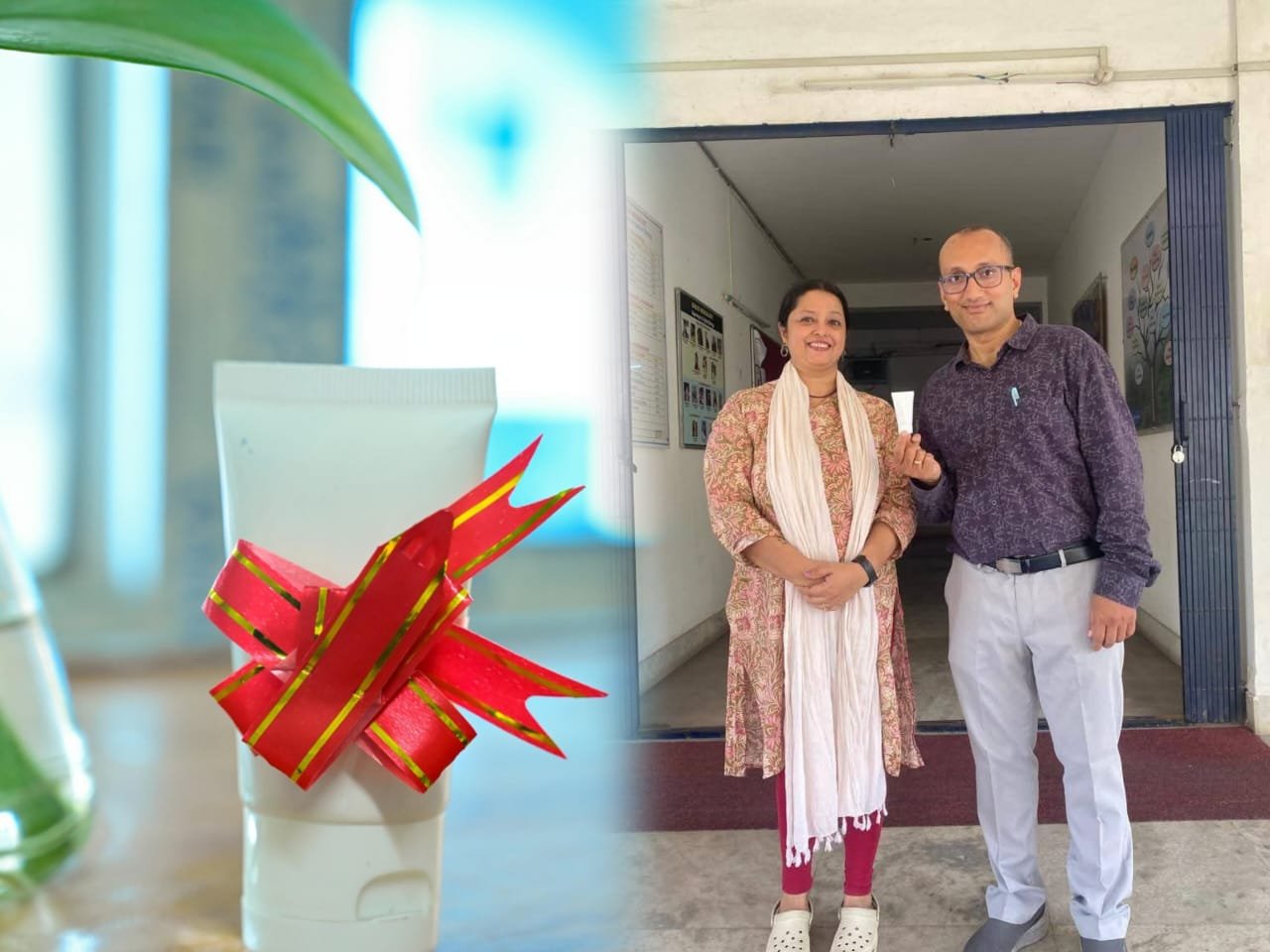
Shillong, Aug 4: A team of researchers at the University of Science and Technology Meghalaya (USTM) has claimed to make a breakthrough in herbal healthcare, with the formulation of a completely natural antimicrobial cream using rare black turmeric (Curcuma caesia Roxb.).
“This innovation marks a major step forward in plant-based skincare solutions, offering powerful healing properties, exhibiting good sensory appeal with smooth texture, pleasant colour, easy blending and cleansing without chemical additives,” USTM said in a press release today.
The university said that five years of rigorous scientific research and clinical testing have gone into the product, which has been developed in the North East. The formulation has been patented and details of it published in the Indian Patent Journal last month.
USTM claimed that the cream has “demonstrated remarkable results in treating a range of chronic skin conditions.”
The research was led by PhD scholar Rana Mukherjee from USTM’s Department of Applied Biology, under the supervision of Deboja Sharma, Associate Professor from the same department, and co-supervised by Prof GD Sharma, Vice Chancellor of USTM. Moumita Sarkar from Nagaon is also a co-inventor in the project.
“We took five years of intensive research to finally craft this groundbreaking formula,” said Sharma. “We tested it on 50 individuals with the human ethical permission, and the results were simply stunning. One patient suffering from chronic bedsores recovered completely. Others with severe acne, bacterial and fungal infections also saw dramatic improvements.”
During early investigational stages, the team benchmarked their formulation against herbal creams available in the local market, only to find that most contained chemical additives. In contrast, USTM’s innovation stands out as 100 percent pure and herbal, setting a new standard in natural skincare solutions, the press release stated.
USTM is currently engaging with pharmaceutical companies to bring this unique formulation to market, though funding remains a big challenge.