










Shillong, Nov 27: Umngot, the famous crystal clear river of the State was destroyed because the existing rules of the Central environmental laws on road construction has turned a blind eye to the special requirements for protection of the fragile mountain ecology.
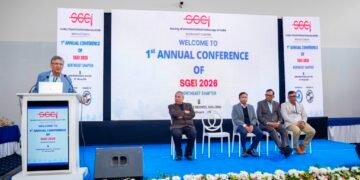
All this and many more interesting facts were thrown up by a powerful group of panellists on the topic “River pollution in Meghalaya’ which was held as part of the two-day celebration of the 42nd anniversary of the Meghalaya State Pollution Control Board (MSPCB) which began on Wednesday at the State Convention Centre.
With this topic at hand the discussion inevitably centred around the turbid images of Umngot and what had brought this colossal environmental disaster, which has not only the shamed the state as a eco-tourist destination, but destroyed the livelihood of thousands of people who depended on the river’s unparalleled clearness which drew tourists from all over.
It turns out that the JICA funded Shillong-Dawki road despite being one of the major projects of the state did not require the project proponents, in this case National Highways & Infrastructure Development Corporation Limited (NHIDCL), to take environmental clearances under the Environment Impact Assessment (EIA) rules.
One of the panellists said that a 2013 circular on high construction, stipulated that roads projects at an altitude below 1000 meters and below 100 kms, with width below 60 meters were exempted from these rigorous environmental assessments, to safeguard the surrounding ecology and the denizens of the area from the impacts of such projects.
The Shillong-Dawki road was below all these stipulated measurements and though being located in one of the most fragile and sensitive hilly regions was not covered under these safeguards. The contractors slipped through this loophole and thus were not required to hold even a few basic plans to make sure that they did not mess up wider catchment areas of the river and her tributaries.
But the MSPCB has stepped into the legal vacuum to get the mess cleared, they said. But the question arises as to their authority to take this step.
The speakers were one in the view that the urban rivers in the capital city and other district headquarters were mainly polluted by the flow of untreated sewage waste and construction and excavation wastes being dumped directly into the river.
Wahumkhrah and Umshyrpi, the main arterial rivers are the recipients of all these wastes and unless Sewage Treatment Plants are set up, there is no way that the state can have clean rivers, the panellists agreed on this.
As for the rural areas, the source of pollution is mining and acid mine drainage (AMD) that flows into the rivers. Whether it is stone quarrying, sand mining, mining for coal or limestone, the rivers and streams suffer because of the pollutants arising from these activities
The officials in the panellists maintained that they are continuing to fill and plug in illegal mines and other mined lands so that AMD is reduced.
Moderated by MSPCB Chief Environmental Engineer WR Kharkrang, the panellists were Member Secretary Dr GH Chyrmang, Regional Director Central Pollution Control Board Dr Shantanu Das, Dr V Saio, Scientist “D” Ministry of Environment and Forest, Regional Office, Naba Bhattacharya, Technical Advisor to Government of Meghalaya, I Syiem Chief Engineer(Roads) PWD Meghalaya, HBN Nonglang, Chairman Greentech Foundation, Ashish Shukla General Manager, NHIDCL, KJ Kharmani, Social-Eco activist, Shillong.
Earlier, the Secretary of MSPCB said that the celebration was being held to create a platform for industry managers and other stakeholders to interact with the MSPCB and understand the various laws that need to be complied with.