








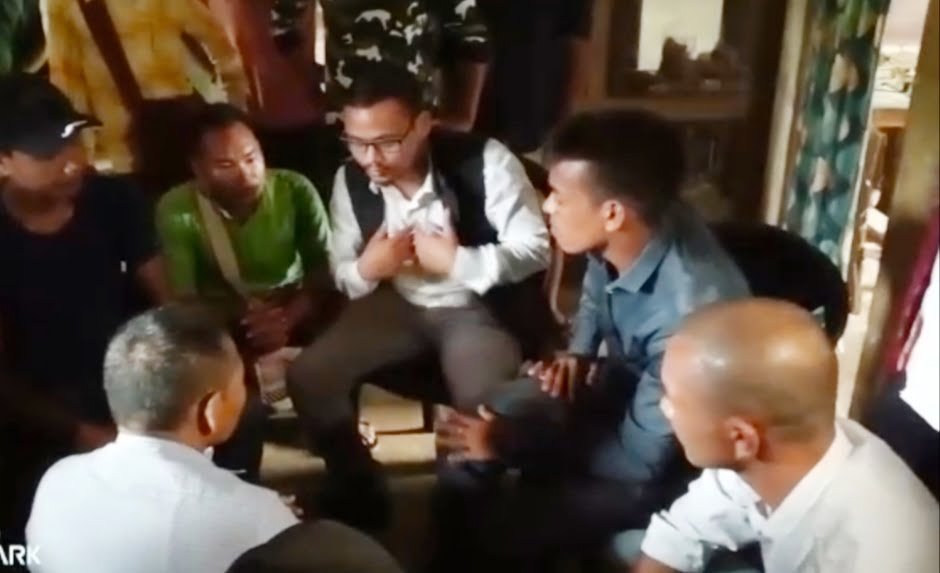
Villagers living in the Umlaper area between Ri-Bhoi and West Karbi Anglong should be left to sort out the troubles there by themselves because the participation of government and pressure groups will only make things worse, locals have told Highland Post.
It was at Umlaper earlier this week that a group of Khasi village youth were assaulted by Assam police. The villagers, in force, then took their vengeance by destroying the police check gate.
“What is happening in Umlaper is not at all an incident of border dispute,” a villager said. “It is a misunderstanding. A small incident happened which was blown up and it rolled on to almost become a huge Karbi-Khasi border dispute issue.”
As far as they are concerned, the people of these border villages should be allowed to sit down and talk to each other across the table on their own with no outside interference. Incidentally, Charles Marngar, the local MDC had said as much.
Longsing Bey Murap, a local community leader from West Karbi Anglong across from Umlaper, said he has been doing his best to tell people not to be misled or manipulated. If mishandled, the issue could get out of hand and become a major Khasi-Karbi ethnic clash, he fears. He has spoken to Meghalaya-based pressure group leaders and others at Umlaper and appealed for peace and calm thinking while harking back to the ancient kinship ties between the Karbi and Khasi living there. He urged the NGOs from both the tribes to keep out of this issue and let the people settle tempers among themselves.
“These NGOs don’t know anything about the incident or the history of the people living on both sides of the boundary and the only thing they can do is whip up anger. This should not be allowed to happen,” he said. Yesterday members of the Hynñiewtrep Youths Council (HYC) were prevented by some locals from visiting the area, which once again inflamed tensions.
The incident, as he related it, took place on the evening of August 24 when Khasi youth were stopped by Assam police at the Umlaper checkgate that they had set up and asked them to identify themselves because it was late at night.
“The youth were let off but, as they walked away, they hurled abuse at the police,” Murap said. “The police caught hold of them and thrashed them. The youth then went and sounded the alarm in their villages. The next day a crowd came with some NGOs and broke down the police check gate” and this is what set off the present tension.
However, what is clear is that the Assam government is attempting to stir up trouble by setting up police check posts in areas that are disputed with Meghalaya. Assam had put up a Central Reserve Police Force (CRPF) camp at Umlaper, which later was manned by Assam police on the pretext of security issues in the run-up to Independence Day. This check post was meant to be removed on August 16, according to Marngar. However, it was still standing after this date before being torn down by the people in the recent fracas.
“Police are the same everywhere. They’re rude. They harass villagers and assault and even kill. It is the way they are. So, these boys were the victims of these policemen. But the reprisal from them came in a different way. The people of their villages supporting them turned on the police check post and destroyed it, after which things took on a different turn,” Murap said.
From that point, things took on a Karbi versus Khasi colour, he pointed out, even though the two tribes have a close-knit history. Historically the Karbis in the areas under the traditional administration of the Khyrim and Mylliem Syiemships have had their own traditional units that are represented in the clan elder system of these two Syiemships.
“Ever since the world began, the Khasi and Karbi people of these areas have been living together peacefully in these areas. In Karbi Anglong we all live peacefully. The state boundaries have only come recently. So why should we fight over these issues? The same people live on both sides of the border and we have an ancient history of kinship,” he said. According to him, the involvement of police, the district administration, NGOs and government paraphernalia only stirred up things and divided the people on two sides of the border.
Murap also blamed the media for misreporting and adding fuel to the fire.
“They don’t try to understand the history of the issue. The media get one quarter of the story but go and add two or three kilos more, making up things on their own,” is how he put it.