



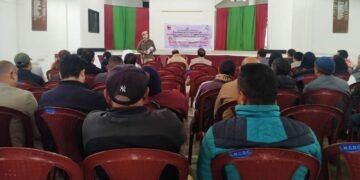





When playing poker you either play a strong hand, bluff or fold. For the All Khasi Meghalaya Tourist Taxi Association, they were, as it turned out, definitely bluffing and when they revealed their hand they had absolutely nothing.
It’s hard to see how they could have ever won but three days into their agitation against non-Meghalayan tourist taxis bringing visitors to rural sightseeing spots, the AKMTTA had to relent and called off their action.
The AKMTTA has had a long-term gripe against non-local tourist taxis, claiming that those from Assam in particular have too large a share in the business of taking tourists in Meghalaya around the sights. Assam not only provides a large number of visitors to Meghalaya but, as Guwahati is the entry point to the North East for most tourists from further afield, it is natural that they end up using Assam-registered tourist taxis when coming to Meghalaya.
The AKMTTA wants Assam taxis (and those from elsewhere) to be limited to bringing tourists to central locations like Shillong from where they can take local tourist taxis to places of interest. This would, the AKMTTA feels, spread the benefits of the tourism boom to its members.
Perhaps understanding how bad the reaction would be to such a unilateral ban, other tourism stakeholders in Meghalaya and the state government have almost universally opposed the move.
And the reaction was certainly negative. Although the AKMTTA, had said that its members had nothing against Assam-based taxis but rather against the Meghalaya government for apparently not acting with seriousness on the association’s demands, Assam taxi drivers did not take kindly to being kept away from a significant chunk of their livelihood and launched counter-demonstrations on highways entering Meghalaya.
With its tail between its legs, the AKMTTA has called off its agitation, though it will doubtless try to save face.
Visitor numbers have certainly increased exponentially in Meghalaya over the years and the AKMTTA’s argument that local tourist taxi drivers have not benefited from this boom are definitely plausible. But with Khasi-Jaintia Hills lacking a railway line and with an airport only capable of handling small aeroplanes, most tourists will come to Meghalaya through Guwahati for the foreseeable future.
Until the airport expands (currently in the works) or railways are introduced (unlikely given fierce opposition), the status quo is likely to be maintained. There may be ways for the Meghalaya government to support local drivers through rules and regulatory requirements but these have to be crafted intelligently and in a way that does not agitate Assam. Whether Meghalaya likes it or not, we need them more than they need us.