







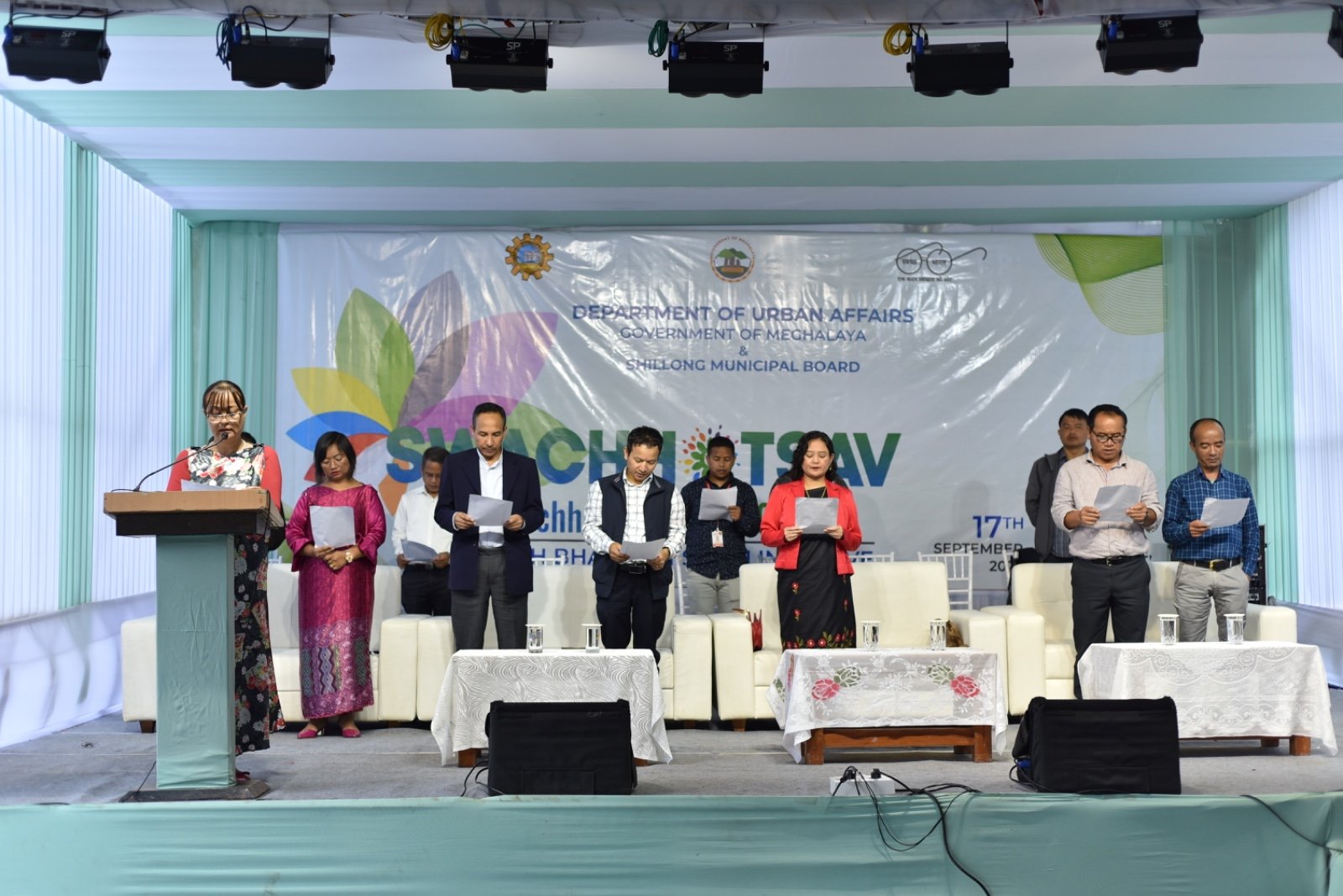
Shillong, Sep 19: The Department of Urban Affairs in collaboration with the Shillong Municipal Board launched the Swachhata Hi Seva campaign, a nationwide cleanliness drive, running from September 17 to October 2 under the theme “Swachhotsav,” festival of cleanliness.
Urban Affairs Secretary WAM Booth informed that since the inception of Swachh Bharat Mission in 2014, Meghalaya has conducted over 6,000 awareness programs reaching every corner of the state.
She highlighted the participation of over 3 lakh students in the zero-littering campaign, showcasing the Generation Z’s role in driving change in waste management and cleanliness drives.
A Swachhata Hi Seva pledge was also taken by the participants, reinforcing the commitment to cleanliness.
In his keynote address, Joint Director K. Kharumnuid emphasised the Swacch Bharat mission’s vision of a “garbage-free India” through sustainable solid waste management and sanitation. He noted that Meghalaya generates approximately 315 tonnes per day (TPD) of solid waste daily in urban areas. 215 TPD processing facilities is currently available out of which 91 TPD are developed under Swachh Bharat Mission 2.0.
He urged citizens to dispose of waste responsibly and recycle to optimize these facilities.
Kharumnuid also informed Meghalaya’s open defecation-free status and announced plans for sewage treatment systems across the capital under Swachh Bharat Mission 2.0.
The key focus of the campaign transformation of Cleanliness Target Units (CTUs) – Eliminating difficult, dark and neglected spots, clean public spaces, single-window Seva, Suraksha and Samman camps for health checkups and welfare of sanitation workers, clean green festivities, disseminating the message of Swachhata with a focus on Gram Sabha for the declaration of ODF Plus Model and Swachh Sujal Gaon in rural India.
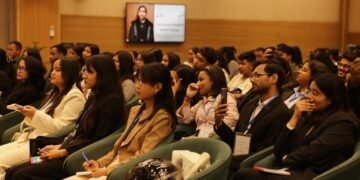
A highlight of the event was a panel discussion on “Segregation at Source: The Foundation for Effective Waste Management,” where experts deliberated on promoting cleanliness, environmental awareness, and sustainable waste segregation practices.