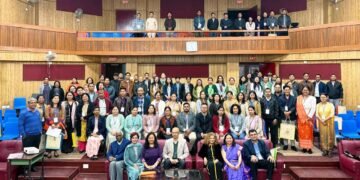
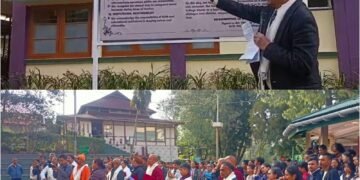

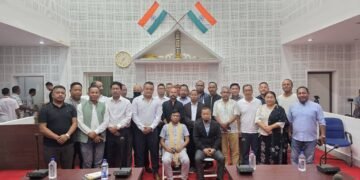



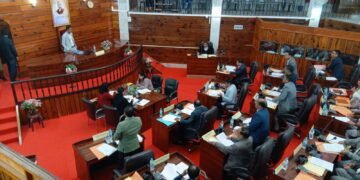





With an aim to understand the current state of preparedness for response in the public health sector, ensuring that the governments in the North East provide full-day, holistic quality child care for their overall well-being, a two-day regional consultation workshop was conducted at the Shillong Club, here today.
The workshop also aims to ensure women can work and earn with peace of mind, thereby enhancing women’s workforce participation and their economic empowerment for Assam, Meghalaya, Manipur, Sikkim, Tripura, Nagaland and Mizoram.
The consultation programme was organised by the North East Network (NEN) in collaboration with the Self Employed Women’s Association (SEWA).
During the programme, the SEWA demonstrates that adequate childcare encourages school-going among children and helps tackle social barriers promoting overall community development.
The main objective of the regional consultancy was to have an open dialogue with the respective government officials in the NER, where informal women workers from different trades will speak of their needs for quality childcare, nutrition, health, and early childhood education, a statement said.
Commissioner & Principal Secretary Health Sampath Kumar said, ‘’We strongly believe in quality education and through state level, we wanted to understand the deeper concern and root cause of the most neglected subject regarding childcare.’’
He said that barriers and issues were encountered when attempting to provide high quality. It was then agreed that overall educational quality should be one of the priorities and purpose needs to be often asked to bring the sense of accountability.
‘’We started having a more open conversation within the state machinery and the state government is taking a systematic approach by involving all stakeholders to address the problem in Meghalaya,’’ said Kumar.
He also spoke at length about various government interventions in the state and informed that that community engagement has been at the centre of problem-solving and therefore, realizing this, the Village Health Councils (VHCs) have been created across the state where headmen, women-led self-help groups and the community as a whole play an important role.
Formed in 1992 as India’s first women’s federation, SEWA celebrated its 30th anniversary with a series of events culminating with a national workshop in Delhi on 13-14 December. The workshop explored a range of issues around the ease of doing business for women’s co-operatives, says SEWA chair Mirai Chatterjee, who also serves as director of its Social Security Unit.
The other resources officials present were Susan Thomas, National Health coordinator, SEWA, Joy Grace Syiem, State Coordinator, NEN Meghalaya, Dr Sandra Albert, Director, IIPH, Shillong along with the Editor of The Shillong times, Patricia Mukhim among others.
The event also witnessed participation from different associations and NGOs from the North Eastern states. The batch was divided into small groups of six where they could interact with the facilitator faculty, give feedback to each other, and could learn together with problem-based and peer-driven learning.