













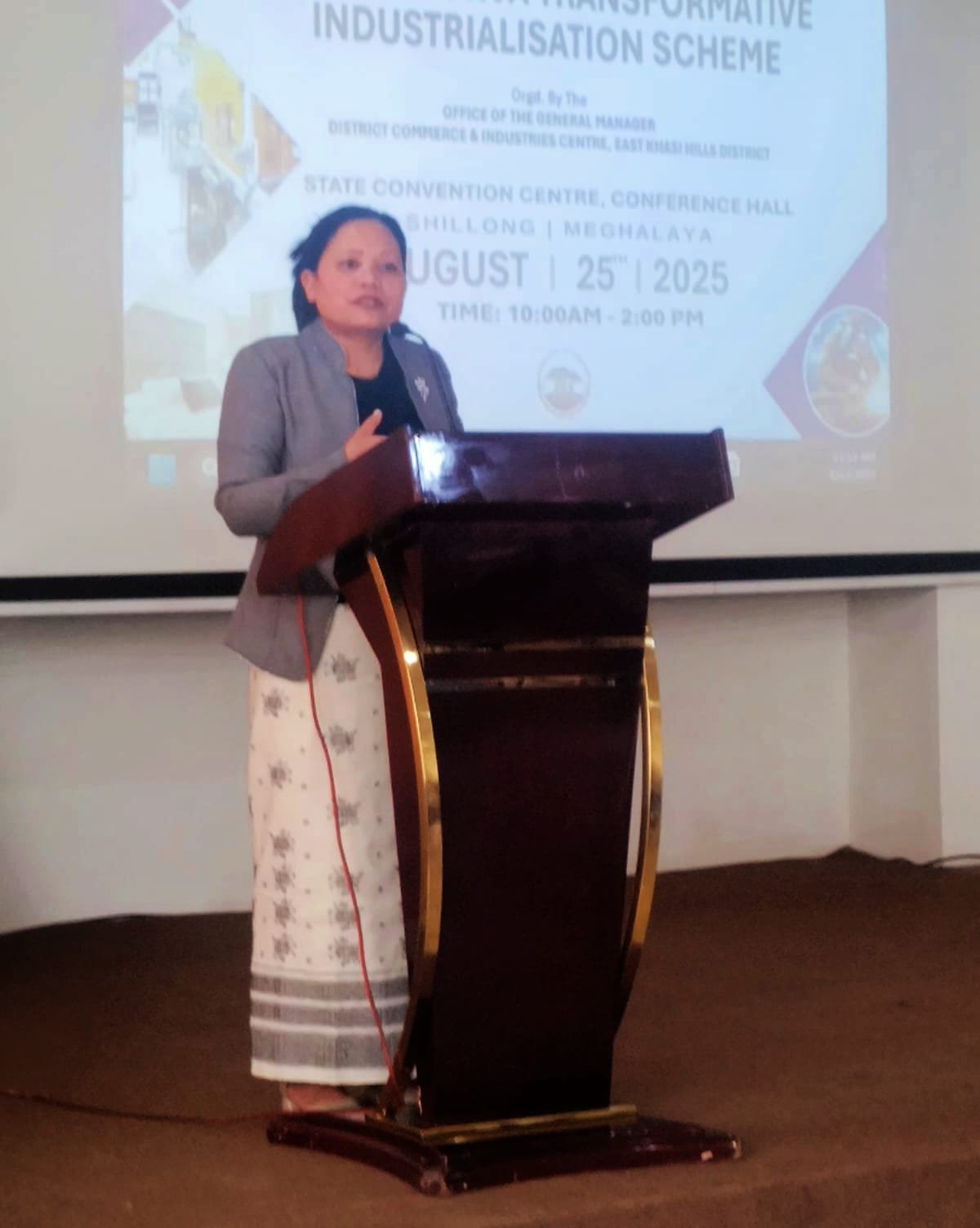
Shillong, Aug 25: Additional Deputy Commissioner of East Khasi Hills District, Prettylisa K. Sangma highlighted the potential of the Uttar Poorva Transformative Industrialization (UNNATI) scheme, 2024, to drive industrial growth in Meghalaya.
Speaking as the chief guest at the district level workshop on UNNATI, organised by the office of General Manager, District Commerce & Industries Centre, Sangma emphasised that the scheme would provide ample opportunities for entrepreneurs to boost their industrial activities.
Sangma appealed to the state’s entrepreneurs to utilise the scheme, cautioning against a lackadaisical attitude that might hinder its success. She termed the scheme a rare opportunity for upscaling the state’s industrial growth, given Meghalaya’s rich mineral resources.
DCIC General Manager Albert Malngniang, provided insights into the scheme’s objectives and benefits. “With an outlay of Rs 10,037 crore over the next 10 years, Unnati is projected to attract over 2,180 applications and generate nearly 83,000 direct jobs in the North East,” Malngiang said, adding that the allocation for Meghalaya is Rs 635 crore.
He emphasised that the scheme has been designed to strengthen the Industrial Eco-System in the North Eastern Region (NER) and attract new investment. It is administered by the Department of Promotion of Industries & Internal Trade (DPIIT), Ministry of Commerce & Industries, Government of India, with NEDFi as the nodal agency for disbursing subsidies.
“Meghalaya has set an ambitious objective to expand its economy from 5.9 to 10 billion $ by 2028,” Malngiang added. “To attain this target, the strategy involves boosting private investments, enhancing trade, tourism, high-value agriculture, and fostering a knowledge-based economy.”
Malngniang highlighted that UNNATI holds tremendous potential for Meghalaya, revitalizing traditional strengths in agro-processing, bamboo, handicrafts, eco-tourism, and food industries, while paving the way for new sectors such as IT-enabled services and green industries.
“This scheme is not just about financial aid; it is about technology adoption, modern infrastructure, market access, and sustainable job creation for our youth,” Malngniang emphasised.