








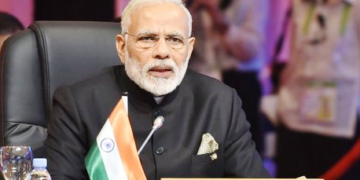





Chandrapuram Ponnusamy Radhakrishnan, 67, is poised to become India’s Vice-President. Elections to pick the new VP will be held on September 9, and the last date for filing of nominations is August 21. The vacancy arose after the incumbent, Jagdeep Dhankhar, announced a sudden resignation on July 21, citing health concerns.
Radhakrishnan is likely to have a higher chance of winning the Vice Presidential elections if he contests against an INDIA bloc candidate making him the third Tamil Nadu-born leader to occupy the nation’s second-highest constitutional office. He follows in the footsteps of Dr Sarvepalli Radhakrishnan (1952–57) and R Venkataraman (1984–87), both of whom later rose to the presidency.
Born on October 20, 1957, in Tiruppur — the “knitwear capital of India” in Tamil Nadu’s Kongu belt — Radhakrishnan was drawn to the Rashtriya Swayamsevak Sangh (RSS) early. At just 17, he joined the Bharatiya Jan Sangh, the political forerunner to the Bharatiya Janata Party (BJP).
The VP candidate belongs to the OBC Gounder community, specifically the Kongu Vellalar sub-caste, which has a dominant presence in western Tamil Nadu- an area widely known as the Kongu region. Traditionally associated with agriculture, this community plays a decisive role in shaping electoral outcomes in the region. It is said that the shared caste identity between the Bharatiya Janata Party’s (BJP) Tamil Nadu face, K Annamalai, and All India Anna Dravida Munnetra Kazhagam (AIADMK) chief Edappadi K Palaniswami (EPS), who both hail from the Gounder background, has significant electoral weight and Radhakrishnan’s elevation is seen as a move to consolidate the Gounder vote base.
Radhakrishnan’s nomination serves two purposes for the NDA. Reinforcing the alliance with AIADMK by recognising the political influence of the Kongu Gounder community and to rebuild connections with disillusioned cadres and voters in western Tamil Nadu, ensuring the party enters the 2026 assembly elections without alienating one of the state’s most influential OBC groups.
When the BJP replaced Annamalai as state president earlier this year, reportedly under pressure from the AIADMK while negotiating an alliance, there was disquiet within the Gounder voter base. Analysts noted that this shift risked alienating a sizeable portion of the Kongu Vellalar community and therefore by nominating Radhakrishnan to the second-highest constitutional office, the NDA is attempting a damage-control exercise, reassuring the community of its relevance within the party’s broader political narrative.
With Tamil Nadu scheduled to hold Assembly elections in 2026, this nomination signals to voters in the Kongu belt that the BJP values their representation not just locally, but also at the national level. Another factor that strengthens Radhakrishnan’s candidacy is his ideological anchoring. Associated with the RSS, he is seen as both a grassroots representative and a loyal organisational man, balancing caste appeal with ideological credibility.
Radhakrishnan’s career already reflects resilience, loyalty, and decades of dedicated political service. But his candidature has also sparked reactions from opposition leaders, who say the ruling alliance has fielded “another RSS man”. The BJP leader is said to be rooted in RSS ideology and is known in the party as a soft-spoken, non-controversial figure.