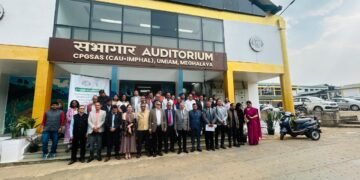









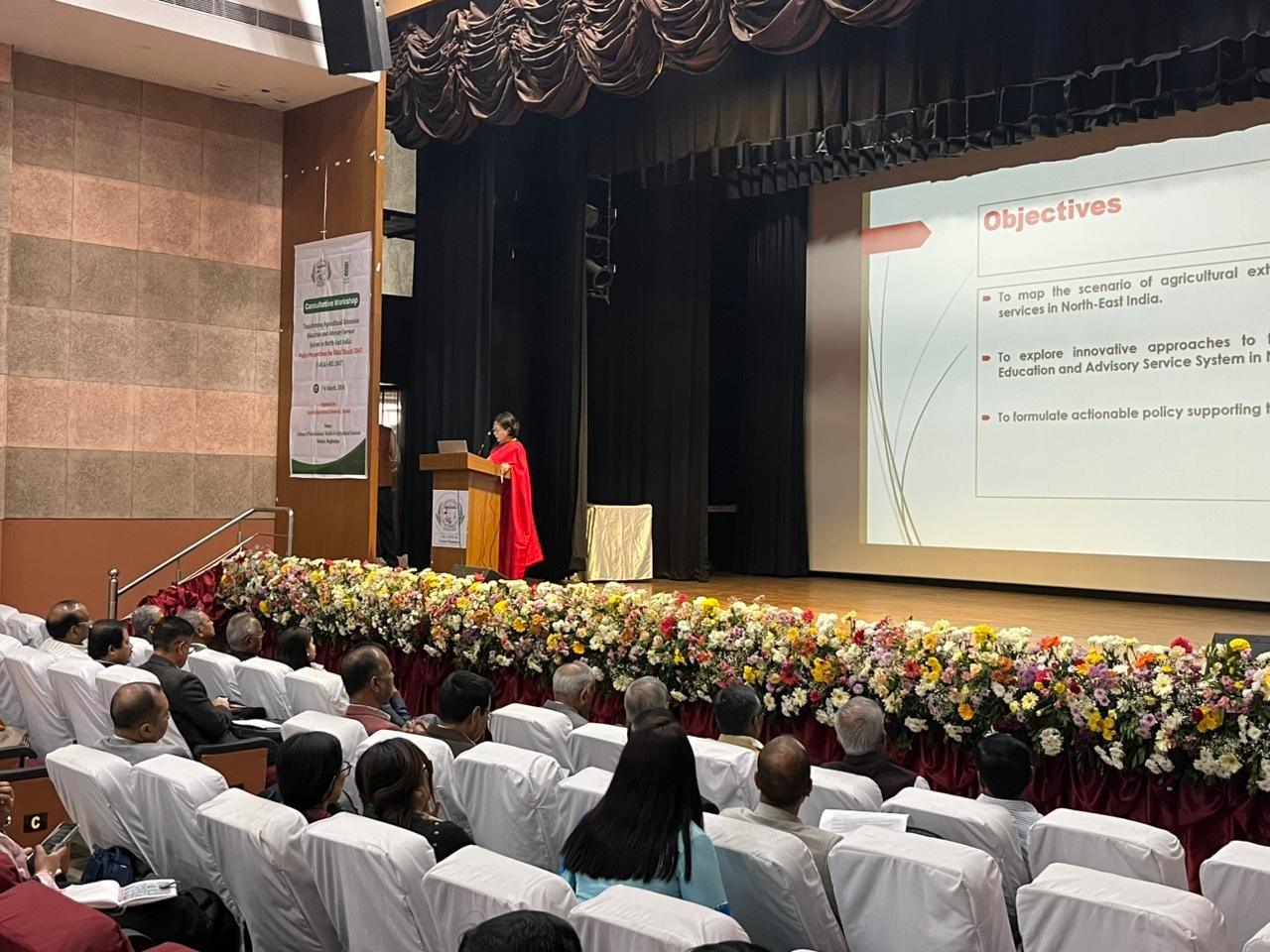
Shillong, Mar 8: A two-day national consultative workshop on ‘Transforming Agricultural Extension Education and Advisory Service System in North East India: Policy Perspectives for Viksit Bharat 2047’ concluded today at the College of Post Graduate Studies in Agricultural Sciences (CPGSAS) at Umiam, Ri-Bhoi.
The programme was organised under the guidance of Anupam Mishra, Vice-Chancellor of the Central Agricultural University, Imphal.
The workshop brought together policymakers, agricultural scientists, extension experts, academics and development practitioners from across the country to deliberate on strengthening agricultural extension education and advisory services in the North Eastern region.
During the second day, theme-wise group discussions and presentations were conducted where experts deliberated on various issues related to market-oriented extension, value chain development, governance reforms, institutional convergence and policy innovations in extension systems. The groups critically examined the current status of agricultural extension services in the region and presented practical policy recommendations for strengthening farmer-centric extension systems aligned with the vision of Viksit Bharat 2047.
The valedictory session was graced by Rajbir Singh, Deputy Director General (Agricultural Extension) of ICAR New Delhi as chief guest, who emphasised the need to modernise agricultural extension systems through digital technologies, artificial intelligence and collaborative institutional frameworks to address emerging challenges in agriculture. He highlighted the importance of digital agriculture platforms in improving farmers’ welfare and strengthening the agricultural extension system. He also suggested the creation of a national farmers’ platform where farmers can share experiences, innovations and best practices and also proposed the establishment of a Farmer Youth Forum, expected to be launched on March 12, to actively engage rural youth in agriculture and agri-entrepreneurship.
In his presidential remarks, Mishra emphasised the need for a futuristic agricultural extension strategy to support India’s vision of becoming a $30 trillion economy by 2047. He noted that earlier agricultural progress was largely achieved through interpersonal communication and traditional extension approaches, whereas today advanced technologies such as remote sensing, satellite imagery, artificial intelligence, digital analytics and language translation tools provide new opportunities to strengthen extension services. He highlighted the importance of satellite-based crop monitoring, yield estimation and market planning, while stressing the need to improve digital literacy and human resource capacity among farmers and extension professionals.